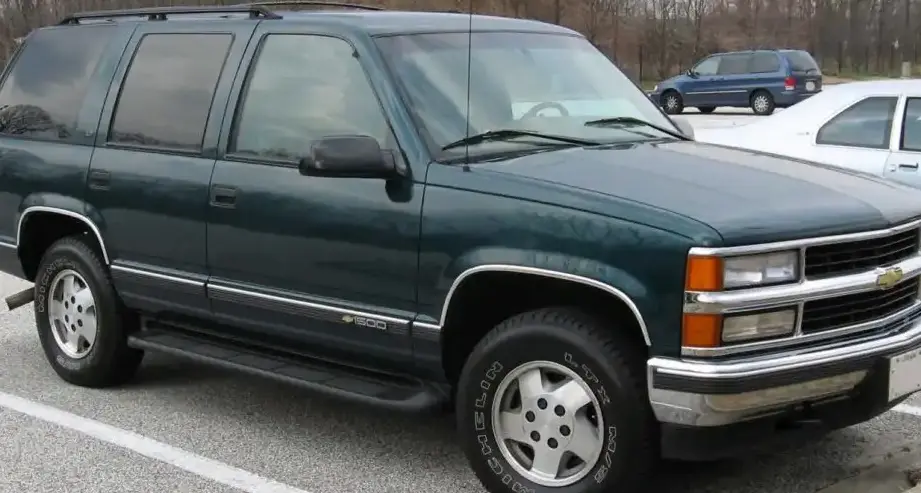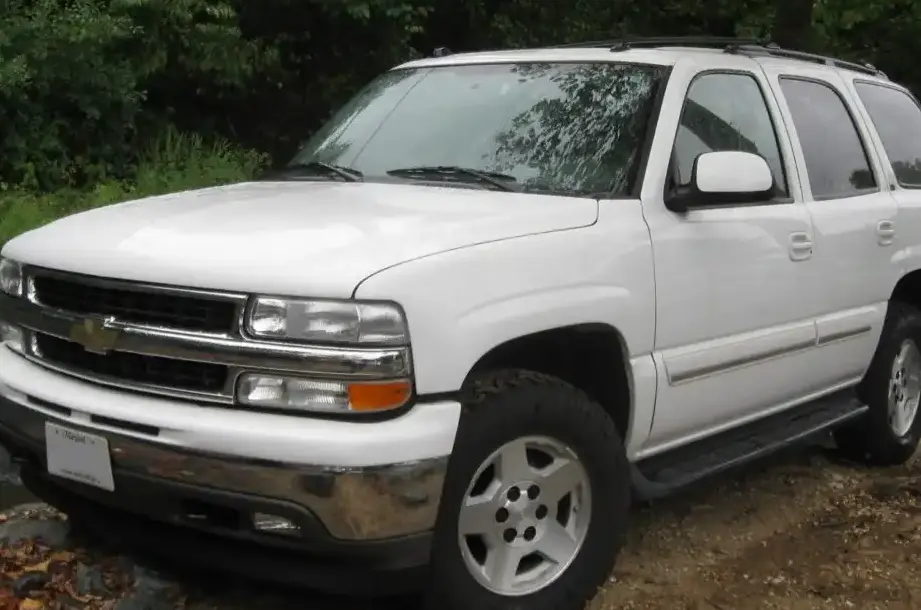
The Chevrolet Tahoe (GMT820) 4.8L V8 4WD, produced from 1999 to 2004, represented a significant update to Chevrolet’s full-size SUV lineup. Part of the second generation of the Tahoe, designated the GMT820 platform, this variant occupied a middle ground in the Tahoe range, offering a balance between capability, space, and affordability. It served as a popular choice for families and those needing a robust vehicle for towing and hauling, particularly in North America where full-size SUVs were, and continue to be, highly sought after. This specific configuration – the 4.8-liter V8 paired with a four-speed automatic transmission and four-wheel drive – aimed to provide a more economical option compared to the larger 5.3L and 6.0L engine choices, while still delivering ample power for everyday use and occasional heavy-duty tasks.
Technical Specifications
| Brand | Chevrolet |
| Model | Tahoe |
| Generation | Tahoe (GMT820) |
| Type (Engine) | 4.8L i V8 4WD (278 Hp) |
| Start of production | 1999 |
| End of production | 2004 |
| Powertrain Architecture | Internal Combustion engine |
| Body type | SUV |
| Seats | 9 |
| Doors | 5 |
| Fuel consumption (urban) | 15.7 l/100 km (15 US mpg, 18 UK mpg, 6.4 km/l) |
| Fuel consumption (extra urban) | 13.1 l/100 km (18 US mpg, 21.6 UK mpg, 7.6 km/l) |
| Fuel Type | Petrol (Gasoline) |
| Maximum speed | 170 km/h (105.63 mph) |
| Weight-to-power ratio | 8.5 kg/Hp, 117.7 Hp/tonne |
| Weight-to-torque ratio | 6 kg/Nm, 166.4 Nm/tonne |
| Power | 278 Hp @ 5200 rpm |
| Power per litre | 57.8 Hp/l |
| Torque | 393 Nm @ 4000 rpm (289.86 lb.-ft. @ 4000 rpm) |
| Engine layout | Front, Longitudinal |
| Engine displacement | 4807 cm3 (293.34 cu. in.) |
| Number of cylinders | 8 |
| Engine configuration | V-engine |
| Cylinder Bore | 96 mm (3.78 in.) |
| Piston Stroke | 83 mm (3.27 in.) |
| Compression ratio | 9.5:1 |
| Number of valves per cylinder | 2 |
| Fuel injection system | Multi-port manifold injection |
| Engine aspiration | Naturally aspirated engine |
| Engine oil capacity | 5.7 l (6.02 US qt, 5.02 UK qt) |
| Coolant capacity | 13.6 l (14.37 US qt, 11.97 UK qt) |
| Kerb Weight | 2362 kg (5207.32 lbs.) |
| Max. weight | 3085 kg (6801.26 lbs.) |
| Max load | 723 kg (1593.94 lbs.) |
| Trunk (boot) space – minimum | 460 l (16.24 cu. ft.) |
| Trunk (boot) space – maximum | 2920 l (103.12 cu. ft.) |
| Fuel tank capacity | 98 l (25.89 US gal, 21.56 UK gal) |
| Length | 5052 mm (198.9 in.) |
| Width | 2004 mm (78.9 in.) |
| Height | 1881 mm (74.06 in.) |
| Wheelbase | 2946 mm (115.98 in.) |
| Front track | 1651 mm (65 in.) |
| Rear (Back) track | 1676 mm (65.98 in.) |
| Drive wheel | All wheel drive (4×4) |
| Number of gears and type of gearbox | 4 gears, automatic transmission |
| Front suspension | Torsion |
| Rear suspension | Transverse stabilizer |
| Front brakes | Ventilated discs |
| Rear brakes | Disc |
| Assisting systems | ABS (Anti-lock braking system) |
| Power steering | Hydraulic Steering |
| Tires size | 245/75 R16 |
Introduction
The Chevrolet Tahoe GMT820, specifically the 4.8L V8 4WD variant, debuted in 1999 as a thoroughly redesigned model. Replacing the GMT400 series, the GMT820 brought a more modern aesthetic, increased interior space, and improved ride quality. The Tahoe, along with its GMC Yukon counterpart, was positioned as Chevrolet’s full-size SUV offering, competing with the Ford Expedition and the Dodge Durango. The 4.8L engine option was introduced to provide a more accessible entry point into the Tahoe lineup, appealing to buyers who didn’t necessarily require the extra power of the larger engines but still desired the capability of a full-size SUV. This generation Tahoe saw production continue through 2004, establishing a strong presence in the American SUV market.
Powertrain & Engine Architecture
The heart of this Tahoe variant is the 4.8L (293 cubic inch) Vortec 4800 V8 engine. This engine, designated with codes like LU3, is a member of Chevrolet’s small-block V8 family. It features a cast iron block with aluminum cylinder heads, a 9.5:1 compression ratio, and a two-valve-per-cylinder configuration. Fuel delivery is managed by a multi-port fuel injection system, providing precise fuel metering for optimal performance and efficiency. The engine’s design prioritized durability and low-end torque, making it well-suited for towing and hauling. Paired with the 4.8L is a 4L60E four-speed automatic transmission. This transmission is known for its robustness, but also for its potential maintenance needs as it ages. The 4L60E features electronic control for smoother shifting and improved fuel economy. The combination of the 4.8L engine and 4L60E transmission delivers power to all four wheels via a transfer case, providing enhanced traction in various driving conditions.
Driving Characteristics
The 4.8L Tahoe 4WD offers a driving experience focused on comfort and capability rather than outright performance. With 278 horsepower and 393 lb-ft of torque, acceleration is adequate for everyday driving, but it won’t provide the briskness of the 5.3L or 6.0L equipped models. The four-speed automatic transmission, while reliable, has relatively wide gear ratios, which can sometimes result in the engine feeling strained during highway passing maneuvers. The 4WD system provides confident traction in slippery conditions, making it a capable vehicle for inclement weather or light off-road use. The suspension, tuned for comfort, absorbs bumps and irregularities in the road well, but can exhibit some body roll during cornering. Overall, the driving experience is best described as relaxed and composed, prioritizing practicality and ease of use.
Equipment & Trim Levels
The 4.8L Tahoe 4WD typically came standard with features like air conditioning, power windows and locks, an AM/FM stereo, and cloth upholstery. Higher trim levels, such as the LT, added features like leather upholstery, upgraded audio systems, and alloy wheels. Optional extras included a sunroof, rear entertainment system, and a towing package. Interior appointments were generally functional and durable, reflecting the Tahoe’s intended use as a family vehicle. The dashboard layout was straightforward and easy to use, with clearly labeled controls. The 4.8L trim often served as a base for those wanting the Tahoe’s size and 4WD without the premium price tag of the larger engines and more luxurious features.
Chassis & Braking
The GMT820 Tahoe utilizes a body-on-frame construction, providing a robust and durable platform. The front suspension consists of independent torsion bars, while the rear suspension employs a solid axle with leaf springs. This setup prioritizes load-carrying capacity and towing stability. Braking duties are handled by ventilated disc brakes at the front and solid discs at the rear. Anti-lock brakes (ABS) were standard, enhancing safety by preventing wheel lockup during hard braking. The steering system is hydraulic power-assisted, providing responsive and predictable steering feel. The Tahoe’s substantial weight necessitates a robust braking system, and while adequate, it doesn’t offer the same stopping power as lighter vehicles.
Market Reception & Comparison
The 4.8L Tahoe 4WD was generally well-received by critics and consumers alike. It was praised for its spacious interior, comfortable ride, and capable 4WD system. However, some reviewers noted that the 4.8L engine could feel underpowered when fully loaded or towing heavy trailers. Compared to the 5.3L and 6.0L variants, the 4.8L offered better fuel economy, but at the expense of performance. The 4.8L also tended to be more reliable than the larger engines, as it was less stressed. In terms of fuel economy, the 4.8L Tahoe typically achieved around 15 mpg in the city and 18 mpg on the highway, which was competitive for a full-size SUV of its era.
Legacy
The Chevrolet Tahoe GMT820 4.8L V8 4WD has proven to be a durable and reliable vehicle, with many examples still on the road today. The 4.8L engine, while not the most powerful option, is known for its longevity and relatively low maintenance costs. The 4L60E transmission, however, can be prone to issues as it ages, requiring occasional rebuilds or repairs. In the used car market, these Tahoes are often sought after by those looking for a capable and affordable full-size SUV. They remain popular choices for towing, hauling, and family transportation, demonstrating the enduring appeal of the Tahoe nameplate and the practicality of this particular configuration.