
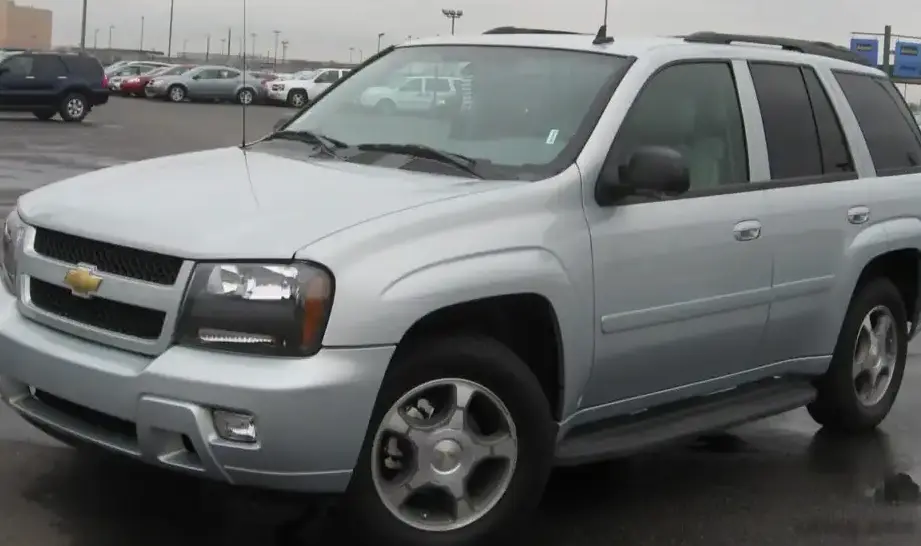
The Chevrolet Trailblazer, introduced for the 2002 model year, represented Chevrolet’s entry into the mid-size SUV market, positioned above the smaller Tracker and below the full-size Suburban. Built on a truck-based platform derived from the Chevrolet Colorado pickup, the Trailblazer aimed to offer a blend of truck-like capability and family-friendly comfort. Production of the first generation (Trailblazer I) continued through 2005, with a minor refresh in 2006. The 4.2-liter inline-six engine paired with a five-speed manual transmission, designated the LL8 engine code, was a significant offering within the Trailblazer lineup, providing a balance between power and affordability. This configuration was primarily available in the base and LS trims.
Technical Specifications
| Brand | Chevrolet |
| Model | Trailblazer |
| Generation | Trailblazer I |
| Type (Engine) | 4.2 i 24V 2WD (279 Hp) |
| Start of production | 2002 year |
| End of production | 2005 year |
| Powertrain Architecture | Internal Combustion engine |
| Body type | SUV |
| Seats | 5 |
| Doors | 5 |
| Fuel consumption (urban) | 14.7 l/100 km (16 US mpg, 19.2 UK mpg) |
| Fuel consumption (extra urban) | 10.7 l/100 km (22 US mpg, 26.4 UK mpg) |
| Fuel consumption (combined) | 13 l/100 km (18.1 US mpg, 21.7 UK mpg) |
| Fuel Type | Petrol (Gasoline) |
| Acceleration 0 – 100 km/h | 9 sec |
| Acceleration 0 – 62 mph | 9 sec |
| Acceleration 0 – 60 mph | 8.6 sec |
| Maximum speed | 192 km/h (119.3 mph) |
| Weight-to-power ratio | 7.2 kg/Hp |
| Weight-to-torque ratio | 5.4 kg/Nm |
| Power | 279 Hp @ 6000 rpm |
| Torque | 373 Nm @ 3600 rpm (275.11 lb.-ft. @ 3600 rpm) |
| Engine layout | Front, Longitudinal |
| Engine Model/Code | LL8 |
| Engine displacement | 4157 cm3 (253.68 cu. in.) |
| Number of cylinders | 6 |
| Engine configuration | Inline |
| Cylinder Bore | 93 mm (3.66 in.) |
| Piston Stroke | 102 mm (4.02 in.) |
| Compression ratio | 10.1:1 |
| Number of valves per cylinder | 4 |
| Fuel injection system | Multi-port manifold injection |
| Engine aspiration | Naturally aspirated engine |
| Valvetrain | DOHC |
| Engine oil capacity | 6.6 l (6.97 US qt | 5.81 UK qt) |
| Coolant capacity | 13.1 l (13.84 US qt | 11.53 UK qt) |
| Kerb Weight | 2015 kg (4442.31 lbs.) |
| Max. weight | 2517 kg (5549.04 lbs.) |
| Max load | 502 kg (1106.72 lbs.) |
| Trunk (boot) space – minimum | 1127 l (39.8 cu. ft.) |
| Trunk (boot) space – maximum | 2268 l (80.09 cu. ft.) |
| Fuel tank capacity | 71 l (18.76 US gal | 15.62 UK gal) |
| Length | 4872 mm (191.81 in.) |
| Width | 1895 mm (74.61 in.) |
| Height | 1892 mm (74.49 in.) |
| Wheelbase | 2870 mm (112.99 in.) |
| Front track | 1603 mm (63.11 in.) |
| Rear track | 1577 mm (62.09 in.) |
| Drivetrain Architecture | Rear wheel drive |
| Number of gears | 5 |
| Gearbox type | Manual transmission |
| Front suspension | Double wishbone |
| Rear suspension | Coil spring |
| Front brakes | Ventilated discs |
| Rear brakes | Ventilated discs |
| Assisting systems | ABS (Anti-lock braking system) |
| Steering type | Steering rack and pinion |
| Power steering | Hydraulic Steering |
| Tires size | 245/70 R16 S |
Powertrain & Engine Architecture
The heart of this Trailblazer variant is the 4.2-liter (253.68 cubic inches) LL8 inline-six engine. This engine, part of Chevrolet’s 3400 V6 family, featured a cast iron block and aluminum cylinder heads. It utilized a double overhead camshaft (DOHC) valvetrain with four valves per cylinder, contributing to its respectable power output. Fuel delivery was managed by a multi-port fuel injection system, providing precise fuel metering for optimal combustion. The engine produced 279 horsepower at 6000 rpm and 373 Nm (275.11 lb-ft) of torque at 3600 rpm. The five-speed manual transmission offered a more engaging driving experience compared to the available four-speed automatic, and provided closer gear ratios for improved acceleration and control.
Driving Characteristics
The 4.2-liter engine, coupled with the five-speed manual transmission, provided adequate performance for everyday driving and towing. Acceleration from 0-60 mph was achieved in approximately 8.6 seconds, making it competitive with other mid-size SUVs of the era. The manual transmission allowed drivers to fully utilize the engine’s torque band, providing responsive acceleration. While not a sports car, the Trailblazer 4.2L offered a noticeable step up in performance compared to the base 4.0-liter engine option. The rear-wheel-drive configuration contributed to a more truck-like feel, offering good stability when towing or driving in inclement weather. However, it lacked the all-weather capability of four-wheel-drive models.
Equipment & Trim Levels
The 4.2-liter engine was typically found in the base and LS trim levels of the Trailblazer. Standard features included air conditioning, power windows and locks, and an AM/FM stereo. The LS trim added features such as upgraded cloth upholstery, cruise control, and a tilt steering wheel. Optional extras included a premium sound system, leather upholstery, and a power sunroof. The interior design was functional and straightforward, prioritizing practicality over luxury. The Trailblazer offered a spacious cabin with comfortable seating for five passengers.
Chassis & Braking
The Trailblazer utilized a body-on-frame construction, providing a robust and durable chassis. The front suspension featured an independent double wishbone design, while the rear suspension employed a coil spring setup. This suspension configuration offered a comfortable ride quality, although it could feel somewhat bouncy when fully loaded. Braking duties were handled by ventilated discs on all four wheels, providing adequate stopping power. An anti-lock braking system (ABS) was standard, enhancing safety and control during emergency braking situations.
Market Reception & Comparison
The Trailblazer 4.2L was generally well-received by automotive critics, who praised its powerful engine and truck-like capabilities. However, some reviewers noted its relatively basic interior and less refined ride quality compared to some of its competitors, such as the Ford Explorer. Fuel economy was also a concern, with the 4.2-liter engine returning approximately 13 l/100 km (18.1 US mpg) in combined driving. Compared to the 4.0-liter engine, the 4.2L offered a significant performance boost, but at the cost of slightly lower fuel efficiency. The 4.2L was a more affordable alternative to the more expensive 5.3-liter V8 engine option.
Legacy
The Chevrolet Trailblazer I, particularly the 4.2-liter variant, has developed a reputation for being a relatively reliable and durable SUV. The LL8 engine, while not without its quirks, is generally considered to be a robust and long-lasting powerplant. Common issues include oil leaks and occasional sensor failures, but these are typically relatively inexpensive to repair. Today, the Trailblazer I can be found on the used car market at affordable prices, making it an attractive option for buyers seeking a capable and dependable SUV. Its simple mechanical design and readily available parts contribute to its continued appeal among enthusiasts and budget-conscious consumers.
