
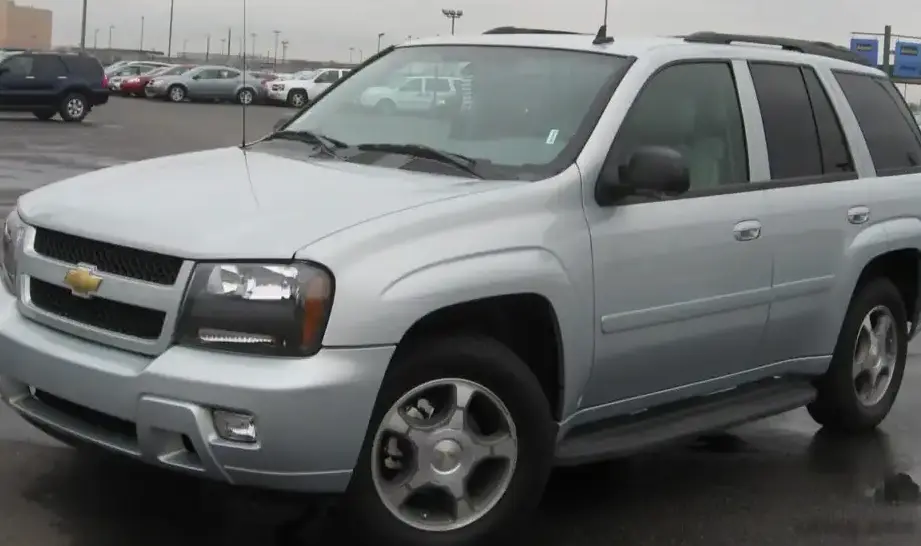
The Chevrolet Trailblazer SS, specifically the first generation model produced between 2006 and 2009, represented Chevrolet’s foray into the high-performance SUV segment. Positioned as the top-tier trim level, the 6.0L V8 SS offered a significant performance upgrade over the base and LT models. Built on the GMT360 platform, shared with the GMC Envoy and Buick Rainier, the Trailblazer SS aimed to deliver truck-based utility with sports car-like acceleration. This variant was exclusively offered with rear-wheel drive and a four-speed automatic transmission, catering to buyers seeking a powerful and capable SUV with a focus on performance rather than all-weather capability.
Technical Specifications
| Brand | Chevrolet |
| Model | Trailblazer |
| Generation | Trailblazer I |
| Type (Engine) | 6.0 i V8 16V SS (400 Hp) |
| Start of production | 2006 |
| End of production | 2009 |
| Powertrain Architecture | Internal Combustion engine |
| Body type | SUV |
| Seats | 5 |
| Doors | 5 |
| Fuel consumption (urban) | 15.7 l/100 km (15 US mpg, 18 UK mpg, 6.4 km/l) |
| Fuel consumption (extra urban) | 12.4 l/100 km (19 US mpg, 22.8 UK mpg, 8.1 km/l) |
| Fuel Type | Petrol (Gasoline) |
| Acceleration 0 – 100 km/h | 5.5 sec |
| Acceleration 0 – 62 mph | 5.5 sec |
| Acceleration 0 – 60 mph | 5.2 sec |
| Maximum speed | 210 km/h (130.49 mph) |
| Weight-to-power ratio | 5.3 kg/Hp, 189.6 Hp/tonne |
| Weight-to-torque ratio | 3.9 kg/Nm, 256.9 Nm/tonne |
| Power | 400 Hp @ 6000 rpm |
| Power per litre | 67 Hp/l |
| Torque | 542 Nm @ 4000 rpm (399.76 lb.-ft. @ 4000 rpm) |
| Engine layout | Front, Longitudinal |
| Engine Model/Code | LS2 |
| Engine displacement | 5967 cm3 (364.13 cu. in.) |
| Number of cylinders | 8 |
| Engine configuration | V-engine |
| Cylinder Bore | 101.6 mm (4 in.) |
| Piston Stroke | 92 mm (3.62 in.) |
| Compression ratio | 10.9:1 |
| Number of valves per cylinder | 2 |
| Fuel injection system | Multi-port manifold injection |
| Engine aspiration | Naturally aspirated engine |
| Engine oil capacity | 5.7 l (6.02 US qt | 5.02 UK qt) |
| Coolant capacity | 10.6 l (11.2 US qt | 9.33 UK qt) |
| Kerb Weight | 2110 kg (4651.75 lbs.) |
| Max. weight | 2722 kg (6000.98 lbs.) |
| Max load | 612 kg (1349.23 lbs.) |
| Trunk (boot) space – minimum | 1162 l (41.04 cu. ft.) |
| Trunk (boot) space – maximum | 2268 l (80.09 cu. ft.) |
| Fuel tank capacity | 83 l (21.93 US gal | 18.26 UK gal) |
| Length | 4872 mm (191.81 in.) |
| Width | 1895 mm (74.61 in.) |
| Height | 1723 mm (67.83 in.) |
| Wheelbase | 2869 mm (112.95 in.) |
| Front track | 1603 mm (63.11 in.) |
| Rear (Back) track | 1577 mm (62.09 in.) |
| Drivetrain Architecture | Rear wheel drive |
| Number of gears and type of gearbox | 4 gears, automatic transmission |
| Front suspension | Independent, type McPherson with coil spring and anti-roll bar |
| Rear suspension | Coil spring |
| Front brakes | Disc |
| Rear brakes | Disc |
| Assisting systems | ABS (Anti-lock braking system) |
| Tires size | 255/50 R20 |
Powertrain & Engine Architecture
The heart of the Trailblazer SS is the 6.0-liter LS2 V8 engine. This engine, a member of General Motors’ Small-Block family, features an iron block with aluminum cylinder heads. The LS2 utilizes a cast iron crankshaft, connecting rods, and pistons. Fuel delivery is managed by a multi-port fuel injection system, and the engine boasts a 10.9:1 compression ratio. The 16-valve configuration (two valves per cylinder) is operated by a single camshaft. The engine’s 400 horsepower and 542 Nm (399.76 lb-ft) of torque were substantial figures for an SUV of this class. The engine is mated to a four-speed 4L60-E automatic transmission, known for its durability but relatively conservative gear ratios compared to more modern automatics. This transmission was chosen for its ability to handle the engine’s power output and provide smooth shifts, though it wasn’t optimized for fuel efficiency.
Driving Characteristics
The Trailblazer SS delivers a markedly different driving experience compared to its lower-trim siblings. The 6.0L V8 provides strong acceleration, capable of propelling the heavy SUV from 0 to 60 mph in around 5.2 seconds. The four-speed automatic transmission, while reliable, doesn’t offer the tight gear ratios found in more modern transmissions. This results in a noticeable shift between gears, and the engine can feel somewhat strained at higher speeds. The rear-wheel-drive configuration contributes to a more engaging driving experience, offering better balance and handling than the available all-wheel-drive options in other Trailblazer trims. However, it also means that traction can be a concern in inclement weather. The suspension, while tuned for comfort, is firm enough to minimize body roll during cornering, providing a surprisingly sporty feel for a large SUV.
Equipment & Trim Levels
The Trailblazer SS came standard with a comprehensive list of features. Interior appointments included leather upholstery, power-adjustable front seats, and a premium sound system. Exterior features included unique SS badging, a color-matched grille and bumpers, and 20-inch alloy wheels. Optional extras included a sunroof, rear-seat entertainment system, and upgraded audio options. The SS trim was positioned as the luxury and performance flagship of the Trailblazer lineup, offering a more refined and powerful experience than the base and LT models.
Chassis & Braking
The Trailblazer SS utilizes a body-on-frame construction, typical of SUVs of its era. The front suspension features an independent McPherson strut design with coil springs and an anti-roll bar. The rear suspension employs a solid axle with coil springs. Braking duties are handled by disc brakes on all four wheels, equipped with an Anti-lock Braking System (ABS). The braking system is adequate for the vehicle’s weight and performance, but it lacks the sophistication of more modern braking systems. The SS trim typically featured slightly thicker stabilizer bars compared to lower trims, further enhancing handling.
Market Reception & Comparison
The Trailblazer SS received mixed reviews from automotive critics. While the engine’s power and acceleration were widely praised, the SUV’s size, weight, and fuel economy were often criticized. Compared to the base and LT models, the SS offered a significant performance upgrade but came at a higher price point. The 1.8L and 4.2L engine options offered in other Trailblazer trims prioritized fuel efficiency and affordability, appealing to a different segment of buyers. The SS competed with other high-performance SUVs, such as the Jeep Grand Cherokee SRT8, but generally offered a more affordable alternative.
Legacy
The Chevrolet Trailblazer SS, despite its relatively short production run, has gained a following among enthusiasts. The LS2 V8 engine is known for its reliability and potential for modification. The 4L60-E transmission, while not the most efficient, is also relatively durable and can be rebuilt to handle increased power. Today, well-maintained Trailblazer SS models are sought after by collectors and those looking for a unique and powerful SUV. Common issues include wear and tear on suspension components and potential oil leaks from the engine. However, with proper maintenance, the Trailblazer SS remains a capable and enjoyable vehicle.
