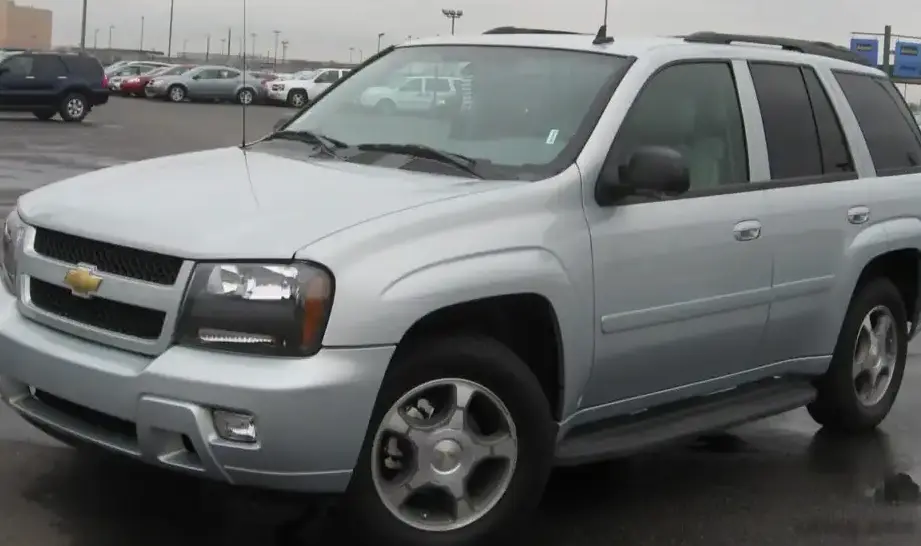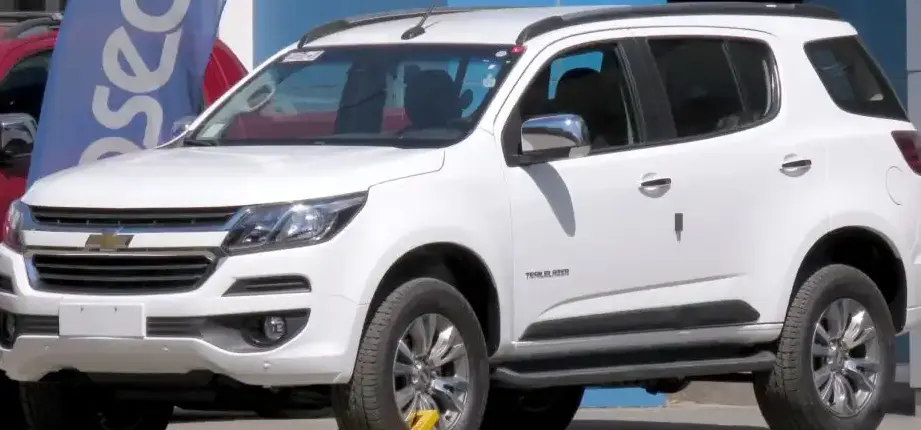
The Chevrolet Trailblazer II, specifically the facelifted version introduced in 2016, represented a significant step forward for Chevrolet’s mid-size SUV offering. Produced from 2016 to 2020, this generation Trailblazer was primarily aimed at international markets, particularly in South America, Australia, and parts of Asia. The 3.6 SIDI V6 4WD Automatic variant occupied the premium position within the Trailblazer lineup, offering a blend of power, capability, and comfort. Built on a body-on-frame chassis, it was designed to compete with vehicles like the Toyota Fortuner, Mitsubishi Pajero Sport, and Ford Everest, offering a robust and versatile platform for families and those requiring off-road capability.
Technical Specifications
| Brand | Chevrolet |
| Model | Trailblazer |
| Generation | Trailblazer II (facelift 2016) |
| Type (Engine) | 3.6 SIDI V6 (279 Hp) 4WD Automatic |
| Start of production | 2016 |
| End of production | 2020 |
| Powertrain Architecture | Internal Combustion engine |
| Body type | SUV |
| Seats | 7 |
| Doors | 5 |
| Fuel consumption (economy) – combined | 9.8 l/100 km (24 US mpg, 28.8 UK mpg, 10.2 km/l) |
| Fuel Type | Petrol (Gasoline) |
| Acceleration 0 – 100 km/h | 7.6 sec |
| Acceleration 0 – 62 mph | 7.6 sec |
| Acceleration 0 – 60 mph | 7.2 sec |
| Weight-to-power ratio | 7.5 kg/Hp, 132.5 Hp/tonne |
| Weight-to-torque ratio | 6 kg/Nm, 166.2 Nm/tonne |
| Power | 279 Hp @ 6400 rpm |
| Power per litre | 78.3 Hp/l |
| Torque | 350 Nm @ 3700 rpm (258.15 lb.-ft. @ 3700 rpm) |
| Engine layout | Front, Longitudinal |
| Engine Model/Code | LFX |
| Engine displacement | 3564 cm3 (217.49 cu. in.) |
| Number of cylinders | 6 |
| Engine configuration | V-engine |
| Cylinder Bore | 94 mm (3.7 in.) |
| Piston Stroke | 85.6 mm (3.37 in.) |
| Compression ratio | 11.5:1 |
| Number of valves per cylinder | 4 |
| Fuel injection system | Direct injection |
| Engine aspiration | Naturally aspirated engine |
| Valvetrain | DOHC, VVT |
| Engine oil capacity | 5.7 l (6.02 US qt | 5.02 UK qt) |
| Coolant | 10.5 l (11.1 US qt | 9.24 UK qt) |
| Kerb Weight | 2106 kg (4642.94 lbs.) |
| Max. weight | 2720 kg (5996.57 lbs.) |
| Max load | 614 kg (1353.64 lbs.) |
| Trunk (boot) space – minimum | 205 l (7.24 cu. ft.) |
| Trunk (boot) space – maximum | 1830 l (64.63 cu. ft.) |
| Fuel tank capacity | 76 l (20.08 US gal | 16.72 UK gal) |
| Permitted trailer load with brakes (12%) | 2480 kg (5467.46 lbs.) |
| Length | 4887 mm (192.4 in.) |
| Width | 1902 mm (74.88 in.) |
| Width including mirrors | 2132 mm (83.94 in.) |
| Height | 1835-1845 mm (72.24 – 72.64 in.) |
| Wheelbase | 2845 mm (112.01 in.) |
| Front track | 1570 mm (61.81 in.) |
| Rear (Back) track | 1588 mm (62.52 in.) |
| Front overhang | 957 mm (37.68 in.) |
| Rear overhang | 1085 mm (42.72 in.) |
| Ride height (ground clearance) | 222-229 mm (8.74 – 9.02 in.) |
| Minimum turning circle | 12 m (39.37 ft.) |
| Drivetrain Architecture | The Internal combustion engine (ICE) drives the rear wheels permanently, and the front wheels are driven through an electrically or mechanically operated clutch if necessary. |
| Drive wheel | All wheel drive (4×4) |
| Number of gears and type of gearbox | 6 gears, automatic transmission |
| Front suspension | Double wishbone, Independent coil spring, Transverse stabilizer |
| Rear suspension | Independent multi-link spring suspension with stabilizer |
| Front brakes | Ventilated discs, 300×27 mm |
| Rear brakes | Ventilated discs, 318×18 mm |
| Assisting systems | ABS (Anti-lock braking system) |
| Steering type | Steering rack and pinion |
| Power steering | Electric Steering |
| Tires size | 265/60 R18 |
| Wheel rims size | 7.5J x 18 |
INTRODUCTION
The 2016-2020 Chevrolet Trailblazer II, equipped with the 3.6-liter SIDI V6 engine and a six-speed automatic transmission, represented the top-tier offering in many markets. This variant was positioned as the premium choice for buyers seeking a capable, comfortable, and well-equipped SUV. The “SIDI” designation stands for Spark Ignition Direct Injection, highlighting the engine’s advanced fuel delivery system. The facelift introduced in 2016 brought updated styling, improved interior materials, and enhanced technology features compared to the original Trailblazer II launched in 2012. It was built on the GM 700 platform, shared with other global Chevrolet and Holden vehicles.
Powertrain & Engine Architecture
The heart of this Trailblazer variant is the LFX 3.6-liter V6 engine. This engine is a naturally aspirated, 60-degree V6 featuring direct fuel injection and a double overhead camshaft (DOHC) valvetrain with variable valve timing (VVT). The direct injection system allows for precise fuel delivery, improving efficiency and power output. The engine produces 279 horsepower at 6400 rpm and 258 lb-ft of torque at 3700 rpm. The six-speed automatic transmission, typically a 6L48E or similar variant, was chosen for its smooth operation and ability to handle the engine’s torque. This transmission features electronically controlled shifting and overdrive capabilities. The 4WD system is typically an on-demand system, engaging the front wheels when rear wheel slip is detected, providing enhanced traction in various conditions.
Driving Characteristics
The 3.6L V6 and six-speed automatic combination provided a noticeable performance upgrade compared to the lower-trim Trailblazers equipped with diesel engines or smaller gasoline engines. Acceleration from 0-60 mph was achieved in around 7.2-7.6 seconds, making it relatively quick for a mid-size SUV. The automatic transmission offered smooth and responsive shifts, although it wasn’t as sporty or engaging as some of the newer eight or ten-speed automatics found in more modern vehicles. The gear ratios were tuned for a balance of acceleration and fuel economy. In real-world driving, the Trailblazer felt confident and capable, with ample power for highway cruising, overtaking, and towing. The 4WD system provided surefootedness on loose surfaces and in inclement weather.
Equipment & Trim Levels
The 3.6 SIDI V6 4WD Automatic trim typically came standard with a comprehensive list of features. These included leather upholstery, automatic climate control, a touchscreen infotainment system with navigation, rear parking sensors, and a rearview camera. Higher sub-trims often added features like heated and ventilated front seats, a premium sound system, and advanced safety technologies such as lane departure warning and forward collision alert. Optional extras could include a sunroof, power-adjustable pedals, and upgraded alloy wheels. Interior color schemes typically offered a choice of dark or light leather options.
Chassis & Braking
The Trailblazer II utilized a traditional body-on-frame construction, providing a robust and durable platform. The suspension consisted of independent double wishbones at the front and an independent multi-link setup at the rear, both with coil springs and stabilizer bars. This configuration offered a comfortable ride quality while maintaining good handling characteristics. Braking duties were handled by ventilated discs on all four wheels, providing ample stopping power. The ABS (Anti-lock Braking System) was standard, enhancing safety during emergency braking situations. The chassis was designed to handle the vehicle’s weight and provide a stable platform for both on-road and off-road driving.
Market Reception & Comparison
The 3.6L V6 Trailblazer generally received positive reviews for its performance, comfort, and capability. Critics praised the engine’s smooth power delivery and the transmission’s responsiveness. However, some noted that the fuel economy wasn’t class-leading, especially compared to diesel-powered competitors. Compared to the diesel variants, the V6 offered more refined power delivery but at the cost of fuel efficiency. Against rivals like the Toyota Fortuner and Mitsubishi Pajero Sport, the Trailblazer offered a competitive package with a more spacious interior and a more powerful engine in some markets.
Legacy
The Chevrolet Trailblazer II, particularly the 3.6 SIDI V6 4WD Automatic variant, has proven to be a relatively reliable vehicle. The LFX V6 engine is known for its durability, and the six-speed automatic transmission has a good track record. Common maintenance items include regular oil changes, coolant flushes, and transmission fluid services. On the used car market, these Trailblazers hold their value reasonably well, particularly those in good condition with low mileage. They remain a popular choice for buyers seeking a capable and comfortable mid-size SUV with a proven powertrain.