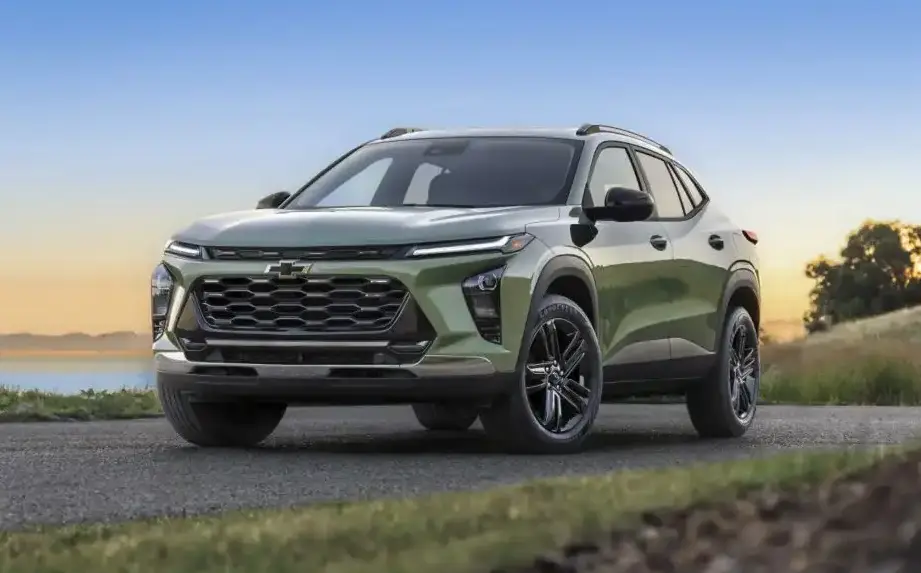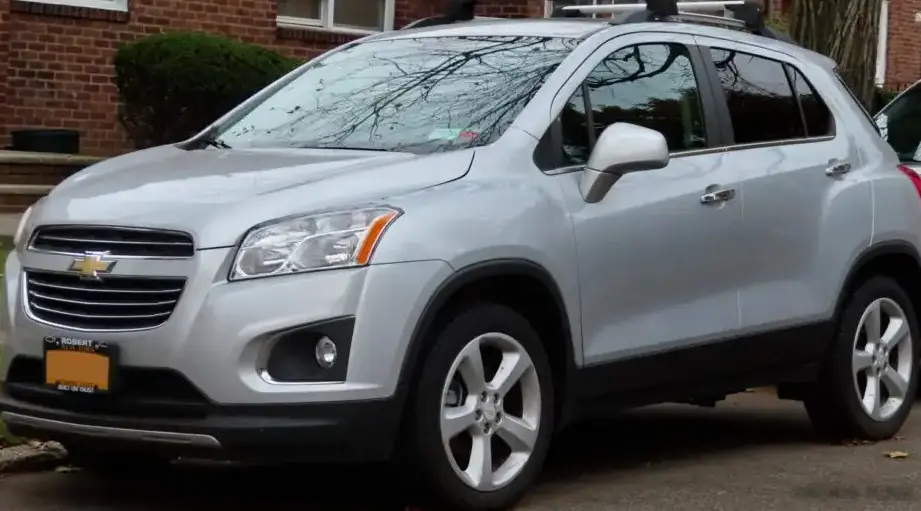
The Chevrolet Trax, introduced for the 2013 model year, represented Chevrolet’s entry into the burgeoning subcompact SUV segment in North America and globally. Built on the Gamma II platform (also known as the J410), the Trax aimed to provide an affordable and versatile option for buyers seeking a small, practical crossover. The 1.4 Turbo AWD variant, produced from 2013 to 2017, occupied a mid-range position within the Trax lineup, offering all-wheel drive capability and a turbocharged engine for improved performance compared to the base model. This model was particularly significant in markets where all-weather capability was valued, and it served as a stepping stone for Chevrolet in establishing a stronger foothold in the compact SUV market.
Technical Specifications
| Brand | Chevrolet |
| Model | Trax |
| Generation | Trax I |
| Type (Engine) | 1.4 Turbo (140 Hp) AWD |
| Start of production | 2013 |
| End of production | 2017 |
| Powertrain Architecture | Internal Combustion engine |
| Body type | SUV |
| Seats | 5 |
| Doors | 5 |
| Fuel consumption (urban) | 8 l/100 km (29.4 US mpg) |
| Fuel consumption (extra urban) | 5.5 l/100 km (42.8 US mpg) |
| Fuel consumption (combined) | 6.4 l/100 km (36.8 US mpg) |
| Fuel Type | Petrol (Gasoline) |
| Acceleration 0 – 100 km/h | 9.8 sec |
| Acceleration 0 – 62 mph | 9.8 sec |
| Acceleration 0 – 60 mph | 9.3 sec |
| Maximum speed | 195 km/h (121.17 mph) |
| Emission standard | Euro 5 |
| Weight-to-power ratio | 9.9 kg/Hp |
| Weight-to-torque ratio | 6.9 kg/Nm |
| Power | 140 Hp @ 6000 rpm |
| Power per litre | 102.6 Hp/l |
| Torque | 200 Nm @ 1850 rpm (147.51 lb.-ft. @ 1850 rpm) |
| Engine layout | Front, Transverse |
| Engine Model/Code | LUV |
| Engine displacement | 1364 cm3 (83.24 cu. in.) |
| Number of cylinders | 4 |
| Engine configuration | Inline |
| Cylinder Bore | 72.5 mm (2.85 in.) |
| Piston Stroke | 82.6 mm (3.25 in.) |
| Compression ratio | 10.5:1 |
| Number of valves per cylinder | 4 |
| Fuel injection system | Multi-port manifold injection |
| Engine aspiration | Turbocharger, Intercooler |
| Engine oil capacity | 4 l (4.23 US qt | 3.52 UK qt) |
| Coolant | 7.3 l (7.71 US qt | 6.42 UK qt) |
| Kerb Weight | 1380 kg (3042.38 lbs.) |
| Max. weight | 1884 kg (4153.51 lbs.) |
| Max load | 504 kg (1111.13 lbs.) |
| Trunk (boot) space – minimum | 356 l (12.57 cu. ft.) |
| Trunk (boot) space – maximum | 785 l (27.72 cu. ft.) |
| Fuel tank capacity | 53 l (14 US gal | 11.66 UK gal) |
| Length | 4248 mm (167.24 in.) |
| Width | 1776 mm (69.92 in.) |
| Height | 1674 mm (65.91 in.) |
| Wheelbase | 2555 mm (100.59 in.) |
| Front track | 1540 mm (60.63 in.) |
| Rear (Back) track | 1540 mm (60.63 in.) |
| Minimum turning circle | 10.9 m (35.76 ft.) |
| Drive wheel | All wheel drive (4×4) |
| Number of gears | 6 gears, manual transmission |
| Front suspension | Independent type McPherson |
| Rear suspension | Torsion |
| Front brakes | Disc |
| Assisting systems | ABS (Anti-lock braking system) |
| Steering type | Steering rack and pinion |
| Power steering | Electric Steering |
Powertrain & Engine Architecture
The heart of the 1.4 Turbo AWD Trax is the LUJ engine, a 1.4-liter inline-four cylinder gasoline engine. This engine utilizes a single-scroll turbocharger with an intercooler to boost power and efficiency. The engine employs multi-port fuel injection and features a double overhead camshaft (DOHC) valvetrain with four valves per cylinder. The engine code, often seen as A14NET in European markets, is a key identifier for service and parts. The six-speed manual transmission was standard, providing drivers with direct control over gear selection. The transmission’s gear ratios were tuned for a balance between fuel economy and responsiveness, with a relatively tall sixth gear for highway cruising. The all-wheel-drive system is an on-demand system, primarily operating in front-wheel drive and engaging the rear wheels when traction is lost.
Driving Characteristics
The 1.4 Turbo AWD Trax offered a noticeable step up in performance compared to the base 1.6-liter engine. While not a sports SUV, the 140 horsepower and 200 Nm (147 lb-ft) of torque provided adequate acceleration for everyday driving. The 0-60 mph time of around 9.3 seconds was respectable for the class. The turbocharger did exhibit some lag at lower RPMs, but power delivery became more linear as the engine revved. The manual transmission allowed for precise control, but the shift quality was sometimes criticized for being slightly notchy. The all-wheel-drive system provided enhanced stability and traction in inclement weather, making it a practical choice for regions with snow or rain. Compared to higher-trim levels with more powerful engines, the 1.4 Turbo felt less refined and had a more pronounced engine note under hard acceleration.
Equipment & Trim Levels
The 1.4 Turbo AWD trim typically included standard features such as air conditioning, power windows and locks, a basic audio system with USB connectivity, and steel wheels with covers. Safety features included ABS, stability control, and multiple airbags. Optional extras included alloy wheels, a rearview camera, a more advanced infotainment system with a touchscreen display, and upgraded interior trim. Interior upholstery was typically cloth, with a relatively simple dashboard layout. The Trax prioritized functionality over luxury, with a focus on providing a practical and durable interior.
Chassis & Braking
The Trax utilized a McPherson strut front suspension and a torsion beam rear suspension. This setup provided a comfortable ride quality, although it wasn’t particularly sporty. The torsion beam rear suspension was a cost-effective solution, but it limited the vehicle’s handling capabilities. Front disc brakes and rear drum brakes were standard. The ABS system helped to maintain control during hard braking. The steering was electrically assisted, providing light and easy steering feel. Stabilizer bars were included to reduce body roll during cornering, but the Trax was not designed for aggressive driving.
Market Reception & Comparison
The Chevrolet Trax 1.4 Turbo AWD received mixed reviews from automotive critics. It was praised for its affordability, practicality, and all-wheel-drive capability. However, it was also criticized for its somewhat unrefined engine, basic interior, and lackluster handling. Compared to competitors like the Honda HR-V and Mazda CX-3, the Trax offered a lower price point but lacked the same level of refinement and driving enjoyment. Fuel economy was generally considered to be good for its class, with combined fuel consumption around 36.8 US mpg. Reliability was generally average, with some reports of minor issues with the turbocharger and fuel system.
Legacy
The Chevrolet Trax, particularly the 1.4 Turbo AWD variant, established Chevrolet as a contender in the subcompact SUV segment. While not a class leader in terms of performance or refinement, it offered a compelling value proposition for buyers seeking an affordable and practical crossover. On the used car market, these Traxes are generally available at attractive prices, making them a popular choice for budget-conscious buyers. The LUJ engine, while not known for being exceptionally durable, has proven to be reasonably reliable with proper maintenance. The Trax paved the way for the second-generation Trax/Tracker, which built upon the original’s strengths and addressed some of its weaknesses.