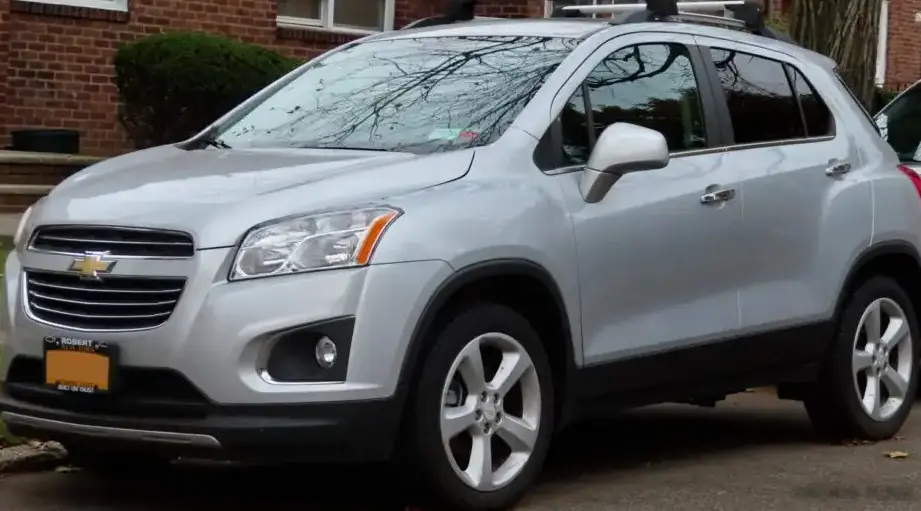
The Chevrolet Trax I 1.7D (130 hp) was a subcompact SUV produced by Chevrolet from 2013 to 2017. Positioned as an entry-level offering within the first generation Trax lineup (2013-2016 in North America, continuing in other markets until 2017), it aimed to provide an affordable and fuel-efficient option in the burgeoning crossover segment. The Trax I, based on the Gamma platform shared with the Opel/Vauxhall Mokka and Buick Encore, represented Chevrolet’s attempt to capture a larger share of the small SUV market, particularly appealing to first-time buyers and those seeking a practical, urban-focused vehicle. This diesel variant was primarily sold in European and other international markets where diesel fuel was more prevalent and economically advantageous.
Technical Specifications
| Brand | Chevrolet |
| Model | Trax |
| Generation | Trax I |
| Type (Engine) | 1.7D (130 Hp) |
| Start of production | 2013 |
| End of production | 2017 |
| Powertrain Architecture | Internal Combustion engine |
| Body type | SUV |
| Seats | 5 |
| Doors | 5 |
| Fuel consumption (urban) | 5.4 l/100 km (43.6 US mpg) |
| Fuel consumption (extra urban) | 4 l/100 km (58.8 US mpg) |
| Fuel consumption (combined) | 4.5 l/100 km (52.3 US mpg) |
| Fuel Type | Diesel |
| Acceleration 0 – 100 km/h | 9.6 sec |
| Acceleration 0 – 62 mph | 9.6 sec |
| Acceleration 0 – 60 mph | 9.1 sec |
| Maximum speed | 186 km/h (115.58 mph) |
| Emission standard | Euro 5 |
| Weight-to-power ratio | 10.6 kg/Hp |
| Weight-to-torque ratio | 4.6 kg/Nm |
| Power | 130 Hp @ 4000 rpm |
| Torque | 300 Nm @ 2000 rpm (221.27 lb.-ft. @ 2000 rpm) |
| Engine layout | Front, Transverse |
| Engine Model/Code | LUD |
| Engine displacement | 1686 cm3 (102.89 cu. in.) |
| Number of cylinders | 4 |
| Engine configuration | Inline |
| Cylinder Bore | 79 mm (3.11 in.) |
| Piston Stroke | 86 mm (3.39 in.) |
| Compression ratio | 16.5:1 |
| Number of valves per cylinder | 4 |
| Fuel injection system | Diesel Commonrail |
| Engine aspiration | Turbocharger, Intercooler |
| Engine oil capacity | 5.4 l (5.71 US qt | 4.75 UK qt) |
| Coolant capacity | 7.1 l (7.5 US qt | 6.25 UK qt) |
| Kerb Weight | 1384 kg (3051.2 lbs.) |
| Max. weight | 1888 kg (4162.33 lbs.) |
| Max load | 504 kg (1111.13 lbs.) |
| Trunk (boot) space – minimum | 356 l (12.57 cu. ft.) |
| Fuel tank capacity | 52 l (13.74 US gal | 11.44 UK gal) |
| Length | 4248 mm (167.24 in.) |
| Width | 1776 mm (69.92 in.) |
| Height | 1674 mm (65.91 in.) |
| Wheelbase | 2555 mm (100.59 in.) |
| Front track | 1540 mm (60.63 in.) |
| Rear track | 1540 mm (60.63 in.) |
| Minimum turning circle | 10.9 m (35.76 ft.) |
| Drivetrain Architecture | Front wheel drive |
| Number of gears | 6 |
| Gearbox type | Manual transmission |
| Front suspension | Independent type McPherson |
| Rear suspension | Torsion |
| Front brakes | Disc |
| Assisting systems | ABS (Anti-lock braking system) |
| Steering type | Steering rack and pinion |
| Power steering | Electric Steering |
Introduction
The Chevrolet Trax I 1.7D, produced between 2013 and 2017, was a key component of Chevrolet’s strategy to expand its presence in the compact SUV market, particularly in Europe and other regions where diesel engines were favored. Sharing its platform with the Opel/Vauxhall Mokka and Buick Encore, the Trax offered a relatively affordable and practical option for buyers seeking a small, versatile vehicle. The 1.7-liter diesel engine, paired with a six-speed manual transmission, represented the entry point into the Trax range, prioritizing fuel economy and reasonable performance over outright speed. It was designed to appeal to urban commuters and those needing a small, efficient vehicle for everyday use.
Powertrain & Engine Architecture
The heart of the Trax I 1.7D is the LUD engine, a 1.7-liter inline-four cylinder diesel engine. This engine utilizes a common rail direct injection system, delivering fuel directly into the combustion chamber at extremely high pressure for improved efficiency and reduced emissions. The engine is turbocharged and intercooled, enhancing power output and torque. The turbocharger forces more air into the engine, while the intercooler cools the compressed air, increasing its density and further improving combustion. The engine produces 130 horsepower at 4000 rpm and 300 Nm (221 lb-ft) of torque at 2000 rpm. The six-speed manual transmission was the standard offering for this variant, providing a balance between fuel efficiency and driver control. The transmission’s gear ratios were tuned to maximize fuel economy and provide adequate acceleration for everyday driving conditions. The engine’s 16.5:1 compression ratio is typical for a diesel engine, contributing to its efficiency.
Driving Characteristics
The 1.7D-equipped Trax offered a comfortable, if not particularly exhilarating, driving experience. With 130 hp and 221 lb-ft of torque, acceleration was adequate for merging onto highways and navigating city streets, but it wasn’t designed for rapid acceleration. The six-speed manual transmission allowed drivers to maintain optimal engine speed for fuel efficiency or to downshift for more responsive acceleration. Compared to higher-trim Trax models equipped with larger gasoline engines, the 1.7D felt noticeably less powerful, especially when fully loaded with passengers and cargo. However, the diesel engine’s strong low-end torque made it well-suited for navigating hilly terrain and providing effortless cruising at highway speeds. The gear ratios were spaced to prioritize fuel economy, meaning the engine could feel slightly strained at higher RPMs.
Equipment & Trim Levels
The 1.7D Trax typically came with a base level of equipment, focusing on practicality and affordability. Standard features generally included air conditioning, power windows, power door locks, and a basic audio system with USB connectivity. Safety features such as ABS, electronic stability control, and multiple airbags were also standard. Interior upholstery was typically cloth, and the dashboard featured a functional, if somewhat basic, design. Optional extras included alloy wheels, a more advanced audio system, a rearview camera, and parking sensors. Higher trim levels offered additional features such as leather upholstery, heated seats, and a navigation system, but these were not typically available with the 1.7D engine.
Chassis & Braking
The Chevrolet Trax I utilized a front-wheel-drive configuration with an independent McPherson strut suspension in the front and a torsion beam suspension in the rear. This suspension setup provided a comfortable ride quality, absorbing bumps and imperfections in the road surface effectively. The front brakes were disc brakes, providing adequate stopping power, while the rear brakes were drum brakes, a cost-saving measure common in entry-level vehicles. The steering was electrically assisted, providing light and easy steering feel, making it well-suited for urban driving. Stabilizer bars were included on both the front and rear axles to reduce body roll during cornering.
Market Reception & Comparison
The Chevrolet Trax I 1.7D was generally well-received as an affordable and fuel-efficient option in the subcompact SUV segment. Critics praised its practicality, spacious interior, and low running costs. However, some reviewers noted its relatively modest performance and somewhat basic interior. Compared to other trims in the Trax lineup, such as those equipped with the 1.4-liter turbocharged gasoline engine, the 1.7D offered superior fuel economy but less power. The 1.7D was often compared to similar diesel-powered subcompact SUVs from competitors like Peugeot and Renault, often holding its own in terms of fuel efficiency and value for money. Reliability reports generally indicated that the 1.7D engine was relatively robust, although diesel particulate filter (DPF) maintenance was a consideration for owners.
Legacy
The Chevrolet Trax I 1.7D has established a reputation as a reliable and economical used car. The LUD diesel engine, while requiring regular maintenance, is known for its durability. The availability of affordable spare parts and a relatively simple mechanical design contribute to its continued appeal in the used car market. However, potential buyers should be aware of the potential for DPF issues, particularly if the vehicle has primarily been used for short trips. The Trax I 1.7D remains a popular choice for those seeking a practical, fuel-efficient, and affordable subcompact SUV.