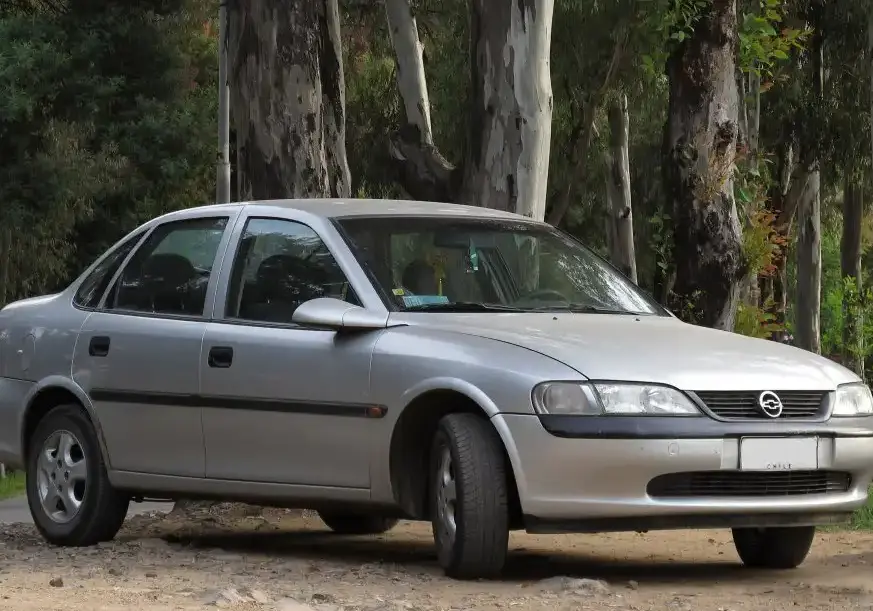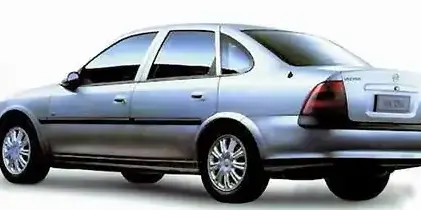
The Chevrolet Vectra, specifically the 2.0 i variant produced between 1996 and 1998, represents a significant entry in the mid-size sedan market for General Motors in Europe. Part of the GM2900 platform generation, this Vectra aimed to provide a balance of practicality, comfort, and reasonable performance for family buyers. Positioned as a mid-range offering within the Vectra lineup, the 2.0 i served as a step up from the base 1.6L models, offering increased power and torque without the higher price tag of the flagship 2.5L or performance-oriented variants. It was primarily sold in Europe, where it competed with rivals like the Ford Mondeo, Opel/Vauxhall Calais, and Peugeot 406.
Technical Specifications
| Brand | Chevrolet |
| Model | Vectra |
| Generation | Vectra (GM2900) |
| Type (Engine) | 2.0 i (110 Hp) |
| Start of production | 1996 |
| End of production | 1998 |
| Powertrain Architecture | Internal Combustion engine |
| Body type | Sedan |
| Seats | 5 |
| Doors | 4 |
| Fuel consumption (urban) | 14.5 l/100 km (16.2 US mpg, 19.5 UK mpg) |
| Fuel consumption (extra urban) | 10.2 l/100 km (23.1 US mpg, 27.7 UK mpg) |
| Fuel Type | Petrol (Gasoline) |
| Acceleration 0 – 100 km/h | 11.7 sec |
| Acceleration 0 – 62 mph | 11.7 sec |
| Acceleration 0 – 60 mph | 11.1 sec |
| Maximum speed | 187 km/h (116.2 mph) |
| Weight-to-power ratio | 11.1 kg/Hp |
| Weight-to-torque ratio | 7.1 kg/Nm |
| Power | 110 Hp @ 5200 rpm |
| Torque | 173 Nm @ 2600 rpm (127.6 lb.-ft. @ 2600 rpm) |
| Engine layout | Front, Transverse |
| Engine Model/Code | 20NEJ |
| Engine displacement | 1998 cm3 (121.93 cu. in.) |
| Number of cylinders | 4 |
| Engine configuration | Inline |
| Cylinder Bore | 86 mm (3.39 in.) |
| Piston Stroke | 86 mm (3.39 in.) |
| Compression ratio | 9.2:1 |
| Number of valves per cylinder | 2 |
| Fuel injection system | Multi-port manifold injection |
| Engine aspiration | Naturally aspirated engine |
| Valvetrain | OHC |
| Engine oil capacity | 4 l (4.23 US qt | 3.52 UK qt) |
| Kerb Weight | 1220 kg (2689.64 lbs.) |
| Max. weight | 1750 kg (3858.09 lbs.) |
| Max load | 530 kg (1168.45 lbs.) |
| Trunk (boot) space – minimum | 500 l (17.66 cu. ft.) |
| Fuel tank capacity | 57 l (15.06 US gal | 12.54 UK gal) |
| Length | 4480 mm (176.38 in.) |
| Width | 1710 mm (67.32 in.) |
| Height | 1410 mm (55.51 in.) |
| Wheelbase | 2640 mm (103.94 in.) |
| Front track | 1480 mm (58.27 in.) |
| Rear (Back) track | 1470 mm (57.87 in.) |
| Drivetrain Architecture | The Internal combustion engine (ICE) drives the front wheels of the vehicle. |
| Drive wheel | Front wheel drive |
| Number of gears and type of gearbox | 5 gears, manual transmission |
| Front suspension | Coil spring |
| Rear suspension | Coil spring |
| Front brakes | Disc |
| Rear brakes | Drum |
| Assisting systems | ABS (Anti-lock braking system) |
| Steering type | Steering rack and pinion |
| Power steering | Hydraulic Steering |
| Tires size | 185/70 R14 |
Powertrain & Engine Architecture
The heart of the Vectra 2.0 i is the 20NEJ engine, a 1.998-liter inline-four cylinder gasoline engine. This engine is a naturally aspirated unit featuring a single overhead camshaft (OHC) design and multi-port fuel injection. The 20NEJ is known for its relatively simple construction and robust design, contributing to its overall reliability. The engine produces 110 horsepower at 5200 rpm and 173 Nm (127.6 lb-ft) of torque at 2600 rpm. The engine’s design prioritized smooth operation and fuel efficiency over outright performance. The five-speed manual transmission was the standard offering, providing a reasonable balance between acceleration and fuel economy. The transmission’s gear ratios were tuned for everyday driving, with a focus on comfortable cruising rather than sporty performance.
Driving Characteristics
The 2.0 i Vectra offered a comfortable and predictable driving experience. Acceleration from 0-60 mph took approximately 11.1 seconds, which was adequate for the time but not particularly brisk. The engine delivered its peak torque at a relatively low 2600 rpm, providing decent responsiveness in everyday driving situations. However, it lacked the punch of the higher-output 2.5L V6 models. The five-speed manual transmission allowed drivers to maintain optimal engine speed for various driving conditions. The suspension, tuned for comfort, absorbed bumps and imperfections in the road well, providing a smooth ride. Steering was light and precise, making the car easy to maneuver in urban environments.
Equipment & Trim Levels
The 2.0 i trim level typically included features such as power steering, central locking, electric front windows, and an adjustable steering column. Interior upholstery was generally cloth, with a functional and durable design. Optional extras included air conditioning, a sunroof, and upgraded audio systems. The dashboard layout was straightforward and user-friendly, with clearly labeled controls. Safety features included ABS anti-lock brakes as standard equipment, a notable inclusion for the time. The overall interior ambiance was practical and comfortable, aimed at providing a pleasant environment for both driver and passengers.
Chassis & Braking
The Vectra 2.0 i utilized a front-engine, front-wheel-drive layout. Suspension consisted of coil springs all around, providing a comfortable ride. The front brakes were disc brakes, offering good stopping power, while the rear brakes were drum brakes, a cost-saving measure common in this class of vehicle. The ABS system helped to maintain steering control during emergency braking situations. The chassis was designed to provide a balance between handling and ride comfort, prioritizing stability and predictability over sporty agility. Stabilizer bars were included to reduce body roll during cornering.
Market Reception & Comparison
The Vectra 2.0 i was generally well-received by automotive critics as a practical and reliable family sedan. It offered a good balance of features and performance for its price point. Compared to the base 1.6L models, the 2.0 i provided a noticeable improvement in acceleration and overall driving experience. However, it lacked the refinement and performance of the more expensive 2.5L V6 variants. Fuel economy was reasonable for the time, averaging around 23.1 US mpg on the highway. Reliability was generally good, with the 20NEJ engine proving to be a durable and long-lasting unit.
Legacy
The Chevrolet Vectra 2.0 i (GM2900) has established a reputation as a dependable and affordable used car. The 20NEJ engine is known for its longevity and relatively low maintenance costs. While not a particularly exciting vehicle, it provided a solid and practical transportation solution for many families in Europe. Today, well-maintained examples are still found on the road, a testament to the vehicle’s overall durability. Parts availability remains reasonable, making it a viable option for those seeking a classic, affordable sedan. The Vectra 2.0 i represents a significant chapter in Chevrolet’s history in Europe, demonstrating the brand’s commitment to providing practical and reliable vehicles to the mass market.