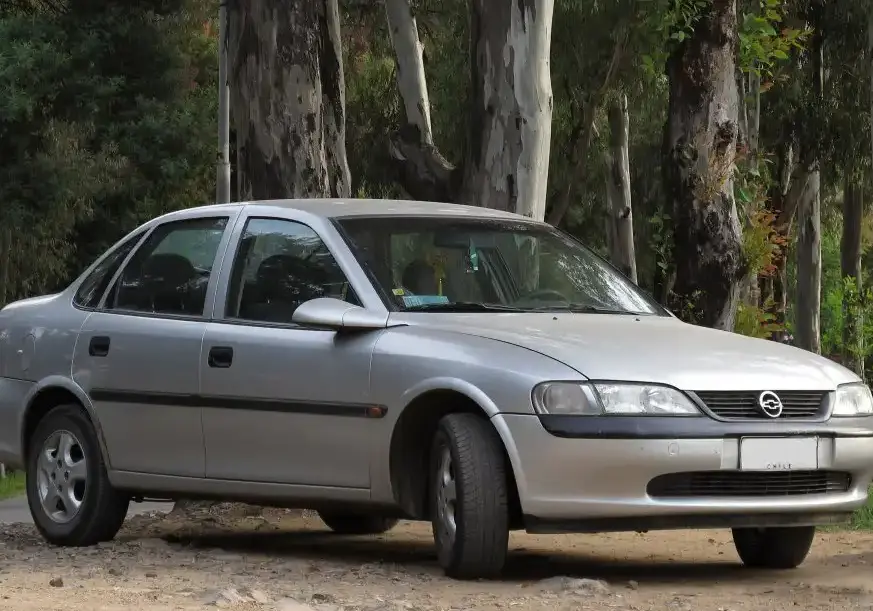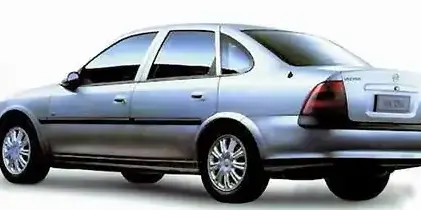
The Chevrolet Vectra, specifically the GM2900 series produced between 1996 and 1998, represented Chevrolet’s entry into the mid-size family sedan market in Europe. While Chevrolet had a presence in other global markets, the Vectra was primarily aimed at European consumers seeking a practical and reasonably priced vehicle. The 2.0 i 16V variant, producing 136 horsepower, occupied a middle ground within the Vectra lineup, offering a balance between performance and fuel economy. It served as a step up from the base 1.6L models, while remaining more accessible than the more powerful and often more expensive V6 options. This generation Vectra was a significant update over its predecessor, featuring improved styling, a more refined interior, and enhanced safety features.
Technical Specifications
| Brand | Chevrolet |
| Model | Vectra |
| Generation | Vectra (GM2900) |
| Type (Engine) | 2.0 i 16V (136 Hp) |
| Start of production | 1996 |
| End of production | 1998 |
| Powertrain Architecture | Internal Combustion engine |
| Body type | Sedan |
| Seats | 5 |
| Doors | 4 |
| Fuel consumption (urban) | 16.3 l/100 km (14.4 US mpg, 17.3 UK mpg, 6.1 km/l) |
| Fuel consumption (extra urban) | 11.1 l/100 km (21.2 US mpg, 25.4 UK mpg, 9 km/l) |
| Fuel Type | Petrol (Gasoline) |
| Acceleration 0 – 100 km/h | 10.3 sec |
| Acceleration 0 – 62 mph | 10.3 sec |
| Acceleration 0 – 60 mph | 9.8 sec |
| Maximum speed | 210 km/h (130.49 mph) |
| Weight-to-power ratio | 9.8 kg/Hp, 102.3 Hp/tonne |
| Weight-to-torque ratio | 7.1 kg/Nm, 141.4 Nm/tonne |
| Power | 136 Hp @ 5600 rpm |
| Power per litre | 68.1 Hp/l |
| Torque | 188 Nm @ 4000 rpm (138.66 lb.-ft. @ 4000 rpm) |
| Engine layout | Front, Transverse |
| Engine Model/Code | X20XEV |
| Engine displacement | 1998 cm3 (121.93 cu. in.) |
| Number of cylinders | 4 |
| Engine configuration | Inline |
| Cylinder Bore | 86 mm (3.39 in.) |
| Piston Stroke | 86 mm (3.39 in.) |
| Compression ratio | 9.6:1 |
| Number of valves per cylinder | 4 |
| Fuel injection system | Multi-port manifold injection |
| Engine aspiration | Naturally aspirated engine |
| Valvetrain | DOHC |
| Engine oil capacity | 4 l (4.23 US qt | 3.52 UK qt) |
| Kerb Weight | 1330 kg (2932.15 lbs.) |
| Max. weight | 1810 kg (3990.37 lbs.) |
| Max load | 480 kg (1058.22 lbs.) |
| Trunk (boot) space – minimum | 500 l (17.66 cu. ft.) |
| Fuel tank capacity | 57 l (15.06 US gal | 12.54 UK gal) |
| Length | 4480 mm (176.38 in.) |
| Width | 1710 mm (67.32 in.) |
| Height | 1410 mm (55.51 in.) |
| Wheelbase | 2640 mm (103.94 in.) |
| Front track | 1480 mm (58.27 in.) |
| Rear (Back) track | 1470 mm (57.87 in.) |
| Drivetrain Architecture | The Internal combustion engine (ICE) drives the front wheels of the vehicle. |
| Drive wheel | Front wheel drive |
| Number of gears and type of gearbox | 5 gears, manual transmission |
| Front suspension | Coil spring |
| Rear suspension | Coil spring |
| Front brakes | Disc |
| Rear brakes | Drum |
| Assisting systems | ABS (Anti-lock braking system) |
| Steering type | Steering rack and pinion |
| Power steering | Hydraulic Steering |
| Tires size | 195/65 R15 |
Powertrain & Engine Architecture
The heart of the Vectra 2.0 i 16V was the X20XEV engine, a 1.998-liter inline-four cylinder powerplant. This engine was a member of Chevrolet’s ‘Ecotec’ family, known for its relatively lightweight construction and focus on efficiency. The ‘16V’ designation indicated a dual overhead camshaft (DOHC) valvetrain with four valves per cylinder, contributing to improved breathing and higher-end power. Fuel delivery was handled by a multi-port fuel injection system, providing precise fuel metering for optimal combustion. The X20XEV featured a compression ratio of 9.6:1, a balance between performance and the ability to run on readily available gasoline grades. The engine was transversely mounted in the front of the vehicle, driving the front wheels. The standard transmission for this variant was a five-speed manual gearbox, although a four-speed automatic transmission was also offered as an option.
Driving Characteristics
The 136 horsepower and 188 Nm (138.66 lb-ft) of torque provided by the X20XEV engine delivered adequate performance for everyday driving. Acceleration from 0 to 60 mph took approximately 9.8 seconds, and the car had a top speed of around 130 mph. While not a sports sedan, the 2.0 i 16V offered a noticeable improvement in responsiveness compared to the lower-powered 1.6L models. The five-speed manual transmission allowed drivers to keep the engine in its optimal power band, while the optional automatic provided a more relaxed driving experience. Compared to the more powerful V6 Vectras, the 2.0 i 16V felt less strained during highway cruising and offered better fuel economy. However, it lacked the outright acceleration and passing power of its larger-engined siblings.
Equipment & Trim Levels
The 2.0 i 16V Vectra typically came with a reasonable level of standard equipment. This included power steering, central locking, electric front windows, and an adjustable steering column. Interior upholstery was typically cloth, with a relatively simple dashboard layout. Optional extras included air conditioning, alloy wheels, a sunroof, and upgraded audio systems. Trim levels varied slightly depending on the market, but generally, the 2.0 i 16V was positioned as a mid-range offering, bridging the gap between the basic models and the more luxurious trims.
Chassis & Braking
The Vectra GM2900 utilized a relatively conventional chassis setup. Front suspension consisted of coil springs and MacPherson struts, while the rear employed a coil spring independent suspension. This configuration provided a comfortable ride quality, suitable for everyday use. Braking duties were handled by disc brakes at the front and drum brakes at the rear. Anti-lock Braking System (ABS) was standard, enhancing safety by preventing wheel lockup during hard braking. The steering system was a rack-and-pinion setup with hydraulic power assistance, providing precise and responsive steering feel.
Market Reception & Comparison
The Chevrolet Vectra 2.0 i 16V was generally well-received by automotive critics as a competent and practical family sedan. It was praised for its comfortable ride, spacious interior, and reasonable fuel economy. However, some critics noted that the interior materials were not as refined as those found in some of its competitors, such as the Ford Mondeo or Volkswagen Passat. In terms of fuel economy, the 2.0 i 16V offered a good balance, achieving around 21 mpg in combined driving. Reliability was generally considered to be good, although some owners reported minor issues with the electrical system.
Legacy
The Chevrolet Vectra GM2900, and specifically the 2.0 i 16V variant, has become a relatively affordable and readily available classic car in the used market. The X20XEV engine is known for its durability and relatively straightforward maintenance. While not a particularly sought-after model by enthusiasts, the Vectra 2.0 i 16V remains a practical and reliable choice for those seeking a comfortable and affordable family sedan. Parts availability is generally good, and the car’s relatively simple mechanical design makes it accessible to home mechanics. Today, these vehicles represent a snapshot of late 1990s European automotive design and engineering.