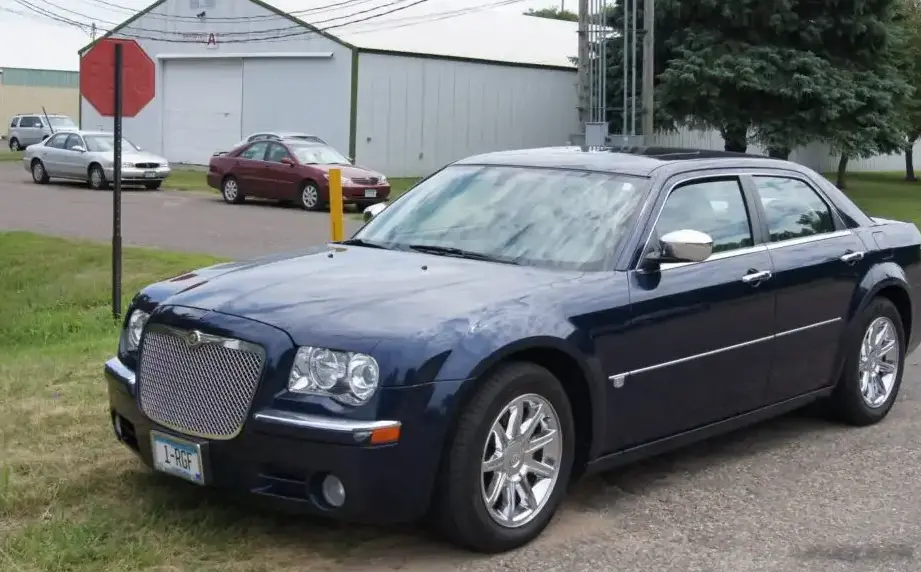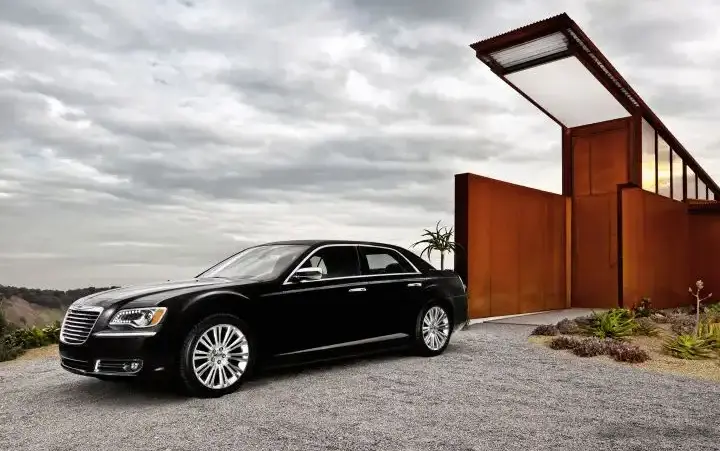
The Chrysler 300 Touring 3.5L V6 AWD, produced from 2004 to 2010, represented a significant departure for Chrysler, aiming to recapture the spirit of the original 1950s 300 series while offering modern comfort and performance. This variant, positioned as a mid-range offering within the 300 lineup, blended a capable all-wheel-drive system with a smooth-shifting automatic transmission and a respectable 249 horsepower V6 engine. It was primarily marketed towards American consumers seeking a large, comfortable sedan with all-weather capability, and served as a key model in Chrysler’s attempt to revitalize its brand image.
Technical Specifications
| Brand | Chrysler |
| Model | 300 |
| Generation | 300 Touring |
| Type (Engine) | 3.5L i V6 24V AWD (249 Hp) |
| Start of production | 2004 |
| End of production | 2010 |
| Powertrain Architecture | Internal Combustion engine |
| Body type | Station wagon (estate) |
| Seats | 5 |
| Doors | 5 |
| Fuel consumption (urban) | 17.2 l/100 km (13.7 US mpg) |
| Fuel consumption (extra urban) | 8.9 l/100 km (26.4 US mpg) |
| Fuel consumption (combined) | 11.9 l/100 km (19.8 US mpg) |
| Fuel Type | Petrol (Gasoline) |
| Acceleration 0 – 100 km/h | 9.2 sec |
| Acceleration 0 – 62 mph | 9.2 sec |
| Acceleration 0 – 60 mph | 8.7 sec |
| Maximum speed | 219 km/h (136.08 mph) |
| Weight-to-power ratio | 7.6 kg/Hp |
| Weight-to-torque ratio | 7.6 kg/Nm |
| Power | 249 Hp @ 6400 rpm |
| Torque | 250 Nm @ 3800 rpm (184.39 lb.-ft. @ 3800 rpm) |
| Engine layout | Front, Longitudinal |
| Engine Model/Code | EGG |
| Engine displacement | 3518 cm3 (214.68 cu. in.) |
| Number of cylinders | 6 |
| Engine configuration | V-engine |
| Cylinder Bore | 96 mm (3.78 in.) |
| Piston Stroke | 81 mm (3.19 in.) |
| Compression ratio | 10:1 |
| Number of valves per cylinder | 4 |
| Fuel injection system | Multi-port manifold injection |
| Engine aspiration | Naturally aspirated |
| Engine oil capacity | 5.7 l (6.02 US qt | 5.02 UK qt) |
| Coolant capacity | 10.8 l (11.41 US qt | 9.5 UK qt) |
| Kerb Weight | 1902 kg (4193.19 lbs.) |
| Trunk (boot) space – minimum | 603 l (21.29 cu. ft.) |
| Trunk (boot) space – maximum | 1602 l (56.57 cu. ft.) |
| Fuel tank capacity | 71 l (18.76 US gal | 15.62 UK gal) |
| Length | 4999 mm (196.81 in.) |
| Width | 1881 mm (74.06 in.) |
| Height | 1507 mm (59.33 in.) |
| Wheelbase | 3048 mm (120 in.) |
| Front track | 1600 mm (62.99 in.) |
| Rear track | 1603 mm (63.11 in.) |
| Drive wheel | All wheel drive (4×4) |
| Number of gears | 5 |
| Gearbox type | Automatic transmission |
| Front suspension | Spring Strut |
| Rear suspension | Transverse stabilizer |
| Front brakes | Ventilated discs |
| Rear brakes | Disc |
| Assisting systems | ABS (Anti-lock braking system) |
| Steering type | Steering rack and pinion |
| Tires size | 225/60 R18 |
| Wheel rims size | 7.5J x 18 |
Powertrain & Engine Architecture
The heart of the 300 Touring was the 3.5-liter EGG V6 engine. This engine, part of Chrysler’s then-new modular engine family, featured a 60-degree V-angle and a cast iron block with aluminum cylinder heads. It utilized a multi-port fuel injection system and a single overhead camshaft (SOHC) design with four valves per cylinder. The 24-valve configuration contributed to its relatively smooth power delivery. The engine produced 249 horsepower at 6400 rpm and 250 Nm (184 lb-ft) of torque at 3800 rpm. The five-speed automatic transmission, sourced from Chrysler, was tuned for comfortable cruising rather than aggressive shifting. It featured a torque converter lock-up clutch to improve fuel efficiency at highway speeds. The all-wheel-drive system was a full-time system, utilizing a viscous coupling to distribute power between the front and rear axles, providing enhanced traction in various weather conditions.
Driving Characteristics
The 300 Touring 3.5L AWD offered a comfortable and composed driving experience. While not a sports sedan, the 249 hp V6 provided adequate power for everyday driving and highway passing. The automatic transmission, while smooth, wasn’t particularly quick to downshift, resulting in a slightly less responsive feel compared to the manual transmission options available on other 300 models. The all-wheel-drive system instilled confidence in slippery conditions, making it a practical choice for drivers in regions with inclement weather. The 0-60 mph time of around 8.7 seconds was respectable for a large sedan of its era. The suspension was tuned for comfort, absorbing bumps and road imperfections effectively, but this came at the expense of sharp handling.
Equipment & Trim Levels
The 300 Touring trim level offered a good balance of features and value. Standard equipment typically included air conditioning, power windows and locks, a CD player with an auxiliary input, and cloth upholstery. Optional extras included leather seats, a premium sound system, a sunroof, and a navigation system. The interior design was generally straightforward and functional, with a focus on providing a comfortable and spacious cabin. The Touring trim often featured unique exterior accents, such as chrome trim and alloy wheels, to differentiate it from the base model.
Chassis & Braking
The 300 Touring utilized a traditional body-on-frame construction, contributing to its substantial weight of approximately 1902 kg (4193 lbs). The front suspension consisted of independent spring struts, while the rear featured a multi-link setup with a transverse stabilizer bar. The braking system employed ventilated discs at the front and solid discs at the rear, along with ABS (Anti-lock Braking System) as standard. The steering was rack-and-pinion, providing reasonably precise control, although it lacked the feedback of more performance-oriented systems.
Market Reception & Comparison
The Chrysler 300 Touring 3.5L AWD was generally well-received by critics as a comfortable and capable family sedan. However, its fuel economy was often cited as a weakness, with combined fuel consumption averaging around 19.8 US mpg. Compared to the higher-performance 300C with its 5.7L HEMI V8, the 3.5L Touring offered significantly less power and acceleration. However, it was more fuel-efficient and more affordable. Compared to the 300’s diesel options available in Europe, the 3.5L V6 offered a different driving experience, prioritizing smoothness and refinement over fuel economy and low-end torque. The all-wheel-drive system was a key selling point, setting it apart from many competitors in its class.
Legacy
The Chrysler 300 Touring 3.5L AWD has proven to be a relatively reliable vehicle, with the 3.5L V6 engine generally considered durable. Common issues include occasional problems with the transmission and the ABS system. In the used car market, these models represent a good value for buyers seeking a large, comfortable sedan with all-wheel-drive capability. While not a collector’s item, the 300 Touring remains a popular choice for those looking for a practical and affordable vehicle with a touch of American style. The model helped to re-establish Chrysler as a contender in the full-size sedan segment and paved the way for future generations of the 300.