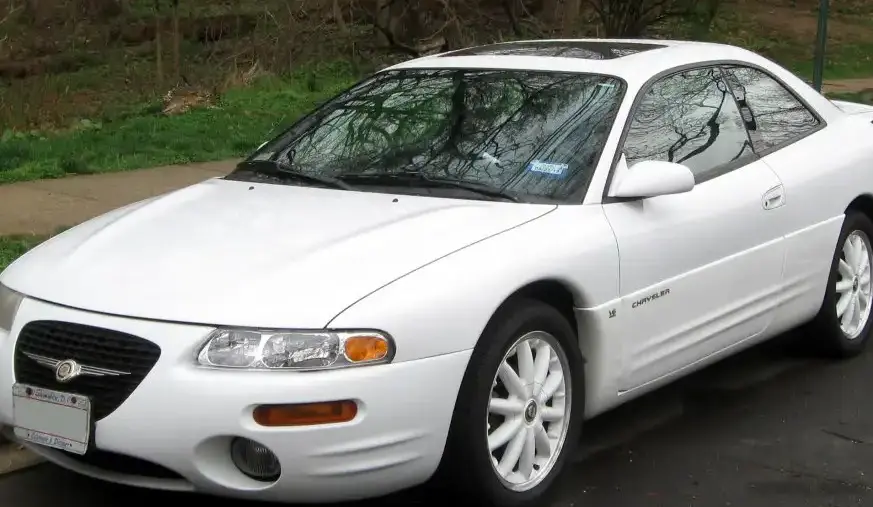
The Chrysler Cirrus 2.5i V6 24V Automatic, produced between 1995 and 2000, represented Chrysler’s entry into the mid-size sedan market, aiming to compete with established rivals like the Honda Accord and Toyota Camry. Positioned as a more upscale offering within the Chrysler lineup, the Cirrus was built on the ‘JH’ platform, shared with the Dodge Stratus and Plymouth Breeze. The 2.5L V6 with an automatic transmission was a popular configuration, offering a balance of power and convenience for the average American driver. It served as a step up from the base 2.0L four-cylinder models, providing a more refined driving experience without the higher price tag of the more powerful options.
Technical Specifications
| Brand | Chrysler |
| Model | Cirrus |
| Generation | Cirrus |
| Type (Engine) | 2.5 i V6 24V (168 Hp) Automatic |
| Start of production | 1995 |
| End of production | 2000 |
| Powertrain Architecture | Internal Combustion engine |
| Body type | Sedan |
| Seats | 5 |
| Doors | 4 |
| Fuel consumption (urban) | 13 l/100 km (18.1 US mpg, 21.7 UK mpg, 7.7 km/l) |
| Fuel consumption (extra urban) | 11 l/100 km (21.4 US mpg, 25.7 UK mpg, 9.1 km/l) |
| Fuel Type | Petrol (Gasoline) |
| Acceleration 0 – 100 km/h | 10.5 sec |
| Acceleration 0 – 62 mph | 10.5 sec |
| Acceleration 0 – 60 mph | 10 sec |
| Maximum speed | 210 km/h (130.49 mph) |
| Weight-to-power ratio | 8.4 kg/Hp, 119.5 Hp/tonne |
| Weight-to-torque ratio | 6.1 kg/Nm, 163.6 Nm/tonne |
| Power | 168 Hp @ 5800 rpm |
| Power per litre | 67.3 Hp/l |
| Torque | 230 Nm @ 4350 rpm (169.64 lb.-ft. @ 4350 rpm) |
| Engine layout | Front, Transverse |
| Engine Model/Code | 6G73 |
| Engine displacement | 2497 cm3 (152.38 cu. in.) |
| Number of cylinders | 6 |
| Engine configuration | V-engine |
| Cylinder Bore | 83.5 mm (3.29 in.) |
| Piston Stroke | 76 mm (2.99 in.) |
| Compression ratio | 9.4:1 |
| Number of valves per cylinder | 4 |
| Fuel injection system | Multi-port manifold injection |
| Engine aspiration | Naturally aspirated engine |
| Valvetrain | SOHC |
| Engine oil capacity | 4.25 l (4.49 US qt | 3.74 UK qt) |
| Coolant | 9.9 l (10.46 US qt | 8.71 UK qt) |
| Kerb Weight | 1406 kg (3099.7 lbs.) |
| Max. weight | 1930 kg (4254.92 lbs.) |
| Max load | 524 kg (1155.22 lbs.) |
| Trunk (boot) space – minimum | 445 l (15.72 cu. ft.) |
| Fuel tank capacity | 61 l (16.11 US gal | 13.42 UK gal) |
| Permitted trailer load without brakes | 454 kg (1000.9 lbs.) |
| Length | 4724 mm (185.98 in.) |
| Width | 1803 mm (70.98 in.) |
| Height | 1374 mm (54.09 in.) |
| Wheelbase | 2743 mm (107.99 in.) |
| Front track | 1529 mm (60.2 in.) |
| Rear (Back) track | 1529 mm (60.2 in.) |
| Drag coefficient (Cd) | 0.31 |
| Minimum turning circle | 11.3 m (37.07 ft.) |
| Drivetrain Architecture | The Internal combustion engine (ICE) drives the front wheels of the vehicle. |
| Drive wheel | Front wheel drive |
| Number of gears and type of gearbox | 4 gears, automatic transmission |
| Front suspension | Double wishbone |
| Rear suspension | Double wishbone |
| Front brakes | Ventilated discs |
| Rear brakes | Drum |
| Assisting systems | ABS (Anti-lock braking system) |
| Steering type | Steering rack and pinion |
| Power steering | Hydraulic Steering |
| Tires size | 185/65 R15 |
| Wheel rims size | 15 |
Powertrain & Engine Architecture
The heart of the Cirrus 2.5i was the 6G73 2.5-liter V6 engine. This engine, a member of Chrysler’s robust V6 family, featured a single overhead camshaft (SOHC) design with four valves per cylinder. The 6G73 utilized a multi-port fuel injection system, delivering fuel directly to each intake port for improved efficiency and power delivery. The engine’s 9.4:1 compression ratio was a compromise between performance and the ability to run on readily available 87 octane gasoline. Paired with this engine was a four-speed automatic transmission, providing smooth and convenient shifting. This transmission was a typical torque-converter automatic, prioritizing comfort over outright performance. The transmission’s gear ratios were tuned for everyday driving, emphasizing fuel economy and ease of use rather than aggressive acceleration.
Driving Characteristics
The 168 horsepower and 230 lb-ft of torque produced by the 2.5L V6 and automatic transmission combination provided adequate, though not exhilarating, performance. Acceleration from 0-60 mph took around 10 seconds, making it competitive with other mid-size sedans of the era. The automatic transmission, while smooth, did contribute to a slight loss of power compared to the available five-speed manual transmission. The gear ratios were spaced to prioritize fuel efficiency, meaning the engine often felt slightly strained during quick overtaking maneuvers. However, for typical commuting and highway cruising, the powertrain proved comfortable and reliable. The front-wheel-drive configuration offered predictable handling, though it lacked the dynamic capabilities of rear-wheel-drive alternatives.
Equipment & Trim Levels
The Cirrus 2.5i Automatic typically came standard with features such as air conditioning, power windows and locks, an AM/FM stereo, and cloth upholstery. Higher trim levels, such as the LX, added features like alloy wheels, a power driver’s seat, and upgraded audio systems. Optional extras included a sunroof, leather upholstery, and a CD player. The interior design was generally considered functional and comfortable, though it lacked the premium feel of some competitors. The dashboard layout was straightforward and easy to use, with clearly labeled controls.
Chassis & Braking
The Cirrus utilized a double wishbone suspension system at both the front and rear, providing a comfortable ride quality. Front brakes were ventilated discs, offering good stopping power, while the rear brakes were drums, a cost-saving measure common in this class of vehicle. Anti-lock brakes (ABS) were standard, enhancing safety by preventing wheel lockup during hard braking. The steering was rack-and-pinion with hydraulic power assist, providing light and responsive steering feel. The chassis was designed to balance ride comfort with handling stability, resulting in a predictable and easy-to-drive vehicle.
Market Reception & Comparison
The Cirrus 2.5i Automatic was generally well-received by critics as a competent and comfortable mid-size sedan. However, it often faced criticism for its somewhat bland styling and lack of a truly sporty driving experience. Compared to the base 2.0L four-cylinder models, the 2.5L V6 offered a significant improvement in performance, but at the cost of slightly reduced fuel economy. The 2.5L automatic version was often seen as a sweet spot in the lineup, offering a good balance of power, convenience, and affordability. Reliability was generally good, though some owners reported issues with the automatic transmission over the long term.
Legacy
The Chrysler Cirrus, while not a groundbreaking vehicle, played an important role in Chrysler’s mid-size sedan offerings during the late 1990s. The 2.5L V6 and automatic transmission combination proved to be a durable and reliable powertrain, and many examples are still on the road today. In the used car market, the Cirrus 2.5i is often valued for its affordability and practicality. While it may not offer the prestige or performance of some competitors, it remains a viable option for those seeking a comfortable and reliable used sedan. The 6G73 engine, in particular, is known for its longevity and relatively simple maintenance requirements, making it a popular choice among budget-conscious car buyers.