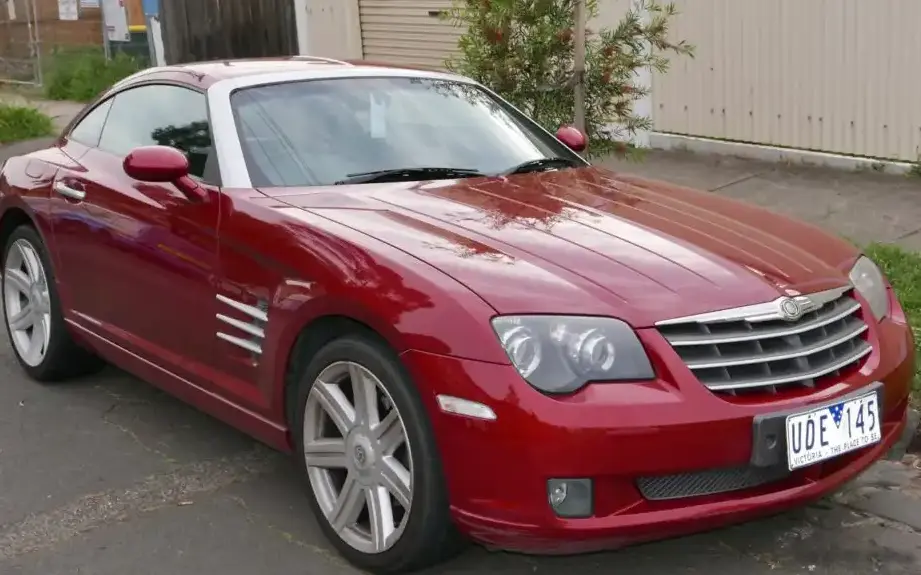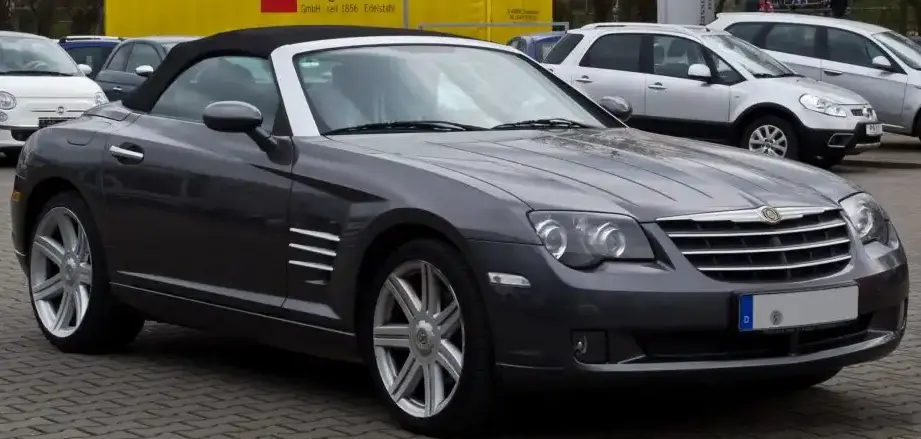
The Chrysler Crossfire Roadster 3.2i V6, produced from 2004 to 2007, represented a bold attempt by DaimlerChrysler to inject some sporting flair into the Chrysler lineup. Built in Pacheco, Argentina, the Crossfire was heavily based on the Mercedes-Benz SLK platform (R170), a result of the DaimlerChrysler merger. The Roadster variant, specifically the 3.2i with the five-speed automatic transmission, occupied a mid-range position within the Crossfire family, offering a balance between performance and relative affordability compared to the higher-spec trims. It aimed to appeal to buyers seeking a stylish, two-seat roadster with a more powerful engine than the base 2.4L four-cylinder models.
Technical Specifications
| Brand | Chrysler |
| Model | Crossfire |
| Generation | Crossfire Roadster |
| Type (Engine) | 3.2i V6 18V (215 Hp) Automatic |
| Start of production | 2004 |
| End of production | 2007 |
| Powertrain Architecture | Internal Combustion engine |
| Body type | Cabriolet |
| Seats | 2 |
| Doors | 2 |
| Fuel consumption (urban) | 15.4 l/100 km (15.3 US mpg, 18.3 UK mpg, 6.5 km/l) |
| Fuel consumption (extra urban) | 7.6 l/100 km (30.9 US mpg, 37.2 UK mpg, 13.2 km/l) |
| Fuel consumption (combined) | 10.4 l/100 km (22.6 US mpg, 27.2 UK mpg, 9.6 km/l) |
| CO2 emissions | 250 g/km |
| Fuel Type | Petrol (Gasoline) |
| Acceleration 0 – 100 km/h | 6.5 sec |
| Acceleration 0 – 62 mph | 6.5 sec |
| Acceleration 0 – 60 mph | 6.2 sec |
| Maximum speed | 250 km/h (155.34 mph) |
| Weight-to-power ratio | 6.6 kg/Hp, 151.4 Hp/tonne |
| Weight-to-torque ratio | 4.6 kg/Nm, 218.3 Nm/tonne |
| Power | 215 Hp @ 5700 rpm |
| Power per litre | 67.2 Hp/l |
| Torque | 310 Nm @ 3000 rpm (228.64 lb.-ft. @ 3000 rpm) |
| Engine layout | Front, Longitudinal |
| Engine Model/Code | M112 E32 |
| Engine displacement | 3199 cm3 (195.21 cu. in.) |
| Number of cylinders | 6 |
| Engine configuration | V-engine |
| Cylinder Bore | 89.9 mm (3.54 in.) |
| Piston Stroke | 84 mm (3.31 in.) |
| Compression ratio | 10:1 |
| Number of valves per cylinder | 3 |
| Fuel injection system | Multi-port manifold injection |
| Engine aspiration | Naturally aspirated engine |
| Valvetrain | OHC |
| Engine oil capacity | 8 l (8.45 US qt | 7.04 UK qt) |
| Coolant | 11.2 l (11.83 US qt | 9.85 UK qt) |
| Kerb Weight | 1420 kg (3130.56 lbs.) |
| Max. weight | 1665 kg (3670.7 lbs.) |
| Max load | 245 kg (540.13 lbs.) |
| Trunk (boot) space – minimum | 105 l (3.71 cu. ft.) |
| Trunk (boot) space – maximum | 190 l (6.71 cu. ft.) |
| Fuel tank capacity | 60 l (15.85 US gal | 13.2 UK gal) |
| Length | 4060 mm (159.84 in.) |
| Width | 1765 mm (69.49 in.) |
| Height | 1305 mm (51.38 in.) |
| Wheelbase | 2400 mm (94.49 in.) |
| Front track | 1495 mm (58.86 in.) |
| Rear (Back) track | 1500 mm (59.06 in.) |
| Minimum turning circle | 10.6 m (34.78 ft.) |
| Drivetrain Architecture | Rear wheel drive |
| Drive wheel | Rear wheel drive |
| Number of gears | 5 gears, automatic transmission |
| Front suspension | Double wishbone |
| Rear suspension | Spring Strut |
| Front brakes | Ventilated discs |
| Rear brakes | Disc |
| Assisting systems | ABS (Anti-lock braking system) |
| Tires size | 225/40 R18; 255/35 R19 |
| Wheel rims size | 7.5J x 18; 9J x 19 |
Powertrain & Engine Architecture
The heart of the Crossfire Roadster 3.2i is the M112 E32 3.2-liter V6 engine, a naturally aspirated powerplant originally designed by Mercedes-Benz. This 60-degree V6 features three valves per cylinder (two intake, one exhaust) and utilizes a single overhead camshaft (SOHC) design. Fuel delivery is handled by a multi-port fuel injection system, providing precise fuel metering for optimal combustion. The engine produces 215 horsepower at 5700 rpm and 310 Nm (228.64 lb-ft) of torque at 3000 rpm. The five-speed automatic transmission, sourced from Mercedes-Benz, was the standard transmission for this variant. It’s a conventional torque converter automatic, tuned for smooth shifts rather than outright performance. While not the sportiest automatic available, it provided a comfortable driving experience suitable for the Crossfire’s grand touring aspirations.
Driving Characteristics
The 3.2i automatic Crossfire Roadster offered a noticeable step up in performance compared to the base 2.4L models. Acceleration from 0 to 60 mph took around 6.2-6.5 seconds, making it reasonably quick for its time. However, the automatic transmission did detract somewhat from the driving experience. Shifts weren’t particularly rapid, and the transmission sometimes felt hesitant when downshifting. The gear ratios were geared more towards cruising comfort than aggressive acceleration. Compared to the six-speed manual transmission available on other Crossfire models, the automatic felt less engaging. The rear-wheel-drive layout provided a balanced feel, but the relatively soft suspension tuning prioritized ride comfort over sharp handling.
Equipment & Trim Levels
The 3.2i automatic Roadster typically came standard with features such as leather upholstery, power seats, air conditioning, a premium sound system, and alloy wheels. Optional extras included a power-retractable hardtop (converting it to a coupe), upgraded audio systems, and various cosmetic enhancements. Interior trim options were relatively limited, with most models featuring a dark color scheme. The overall interior design, while influenced by Mercedes-Benz, felt somewhat dated even at the time of its release.
Chassis & Braking
The Crossfire Roadster utilized a double wishbone suspension setup at the front and a spring strut arrangement at the rear. This configuration provided a comfortable ride, but didn’t offer the same level of precision as more sophisticated suspension systems. Braking duties were handled by ventilated discs at the front and solid discs at the rear. Anti-lock brakes (ABS) were standard. The steering was hydraulically assisted, providing a reasonable level of feedback. The chassis, while structurally sound, wasn’t particularly lightweight, contributing to the car’s somewhat portly curb weight of around 1420 kg (3130.56 lbs).
Market Reception & Comparison
The Chrysler Crossfire Roadster received mixed reviews from automotive critics. While praised for its styling and powerful engine, it was often criticized for its dated interior, compromised practicality, and the somewhat lackluster performance of the automatic transmission. Fuel economy was also a concern, with combined fuel consumption averaging around 10.4 l/100 km (22.6 US mpg). Compared to rivals like the Mazda MX-5 Miata and BMW Z4, the Crossfire offered a different proposition – a more comfortable, grand touring-oriented roadster with a larger engine. However, it lacked the agility and driver engagement of its competitors.
Legacy
The Chrysler Crossfire, while not a commercial success, remains a distinctive and somewhat polarizing vehicle. The 3.2i V6 engine proved to be relatively reliable, although regular maintenance is crucial. The automatic transmission, while not known for its speed, is generally durable. Today, the Crossfire Roadster 3.2i is gaining a following among enthusiasts who appreciate its unique styling and powerful engine. Parts availability can be a challenge, but the shared components with Mercedes-Benz vehicles help to mitigate this issue. The car represents a unique chapter in Chrysler’s history, a bold attempt to create a stylish and sporty roadster with a touch of European flair.