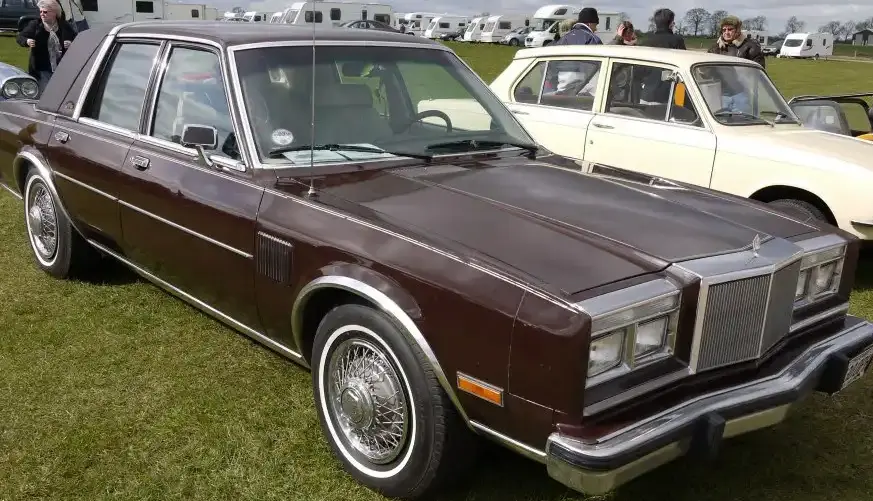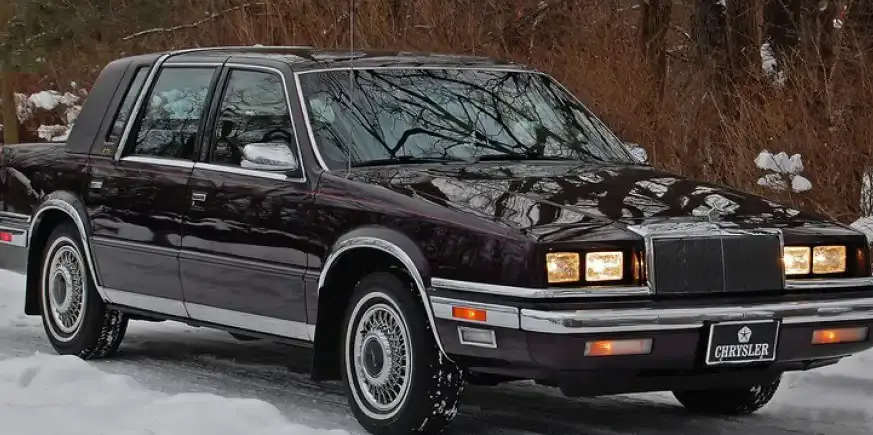
The Chrysler Fifth Avenue II 3.8i, produced between 1990 and 1993, represented a refinement of Chrysler’s full-size luxury sedan. Positioned as a more upscale offering within the Fifth Avenue lineup, the 3.8i variant aimed to provide a comfortable and well-equipped experience, appealing to buyers seeking a traditional American luxury car. It was built on the Y-body platform, a design that dated back to the late 1970s, but received updates throughout its production run to maintain competitiveness. The Fifth Avenue II, and specifically the 3.8i trim, was Chrysler’s attempt to recapture a segment of the market increasingly dominated by imported luxury brands.
Technical Specifications
| Brand | Chrysler |
| Model | Fifth Avenue |
| Generation | Fifth Avenue II |
| Type (Engine) | 3.8i (162 Hp) |
| Start of production | 1990 |
| End of production | 1993 |
| Powertrain Architecture | Internal Combustion engine |
| Body type | Sedan |
| Seats | 5 |
| Doors | 4 |
| Fuel Type | Petrol (Gasoline) |
| Power | 162 Hp |
| Engine aspiration | Naturally aspirated engine |
| Length | 5044 mm (198.58 in.) |
| Width | 1750 mm (68.9 in.) |
| Height | 1400 mm (55.12 in.) |
| Wheelbase | 2784 mm (109.61 in.) |
Powertrain & Engine Architecture
The heart of the Fifth Avenue II 3.8i was the 3.8-liter (230 cubic inch) V6 engine, designated the 3.8L I. This engine was part of Chrysler’s “LA” engine family, known for its durability and relatively simple design. The 3.8L I featured a 60-degree V6 configuration with a cast iron block and aluminum cylinder heads. It utilized a multi-port fuel injection system, contributing to its 162 horsepower output. The engine’s valvetrain employed two valves per cylinder, operated by a single overhead camshaft. The 3.8i was exclusively paired with a three-speed Torqueflite A727 automatic transmission, a mainstay of Chrysler vehicles for decades. This transmission was known for its robustness but lacked the efficiency of more modern automatic gearboxes. The drivetrain was rear-wheel drive, maintaining the traditional layout favored by Chrysler for its larger sedans.
Driving Characteristics
The Fifth Avenue II 3.8i prioritized comfort over outright performance. The 162 horsepower engine, while adequate for cruising, didn’t provide particularly brisk acceleration. The three-speed automatic transmission, while smooth, had relatively wide gear ratios, which meant the engine often operated at lower RPMs during highway driving. This contributed to a relaxed driving experience but limited responsiveness when needing to pass or merge onto highways. Compared to the base Fifth Avenue models with smaller engines, the 3.8i offered a noticeable improvement in power and drivability. However, it didn’t match the performance of the larger V8 engines found in some of Chrysler’s other offerings. The car’s substantial weight (around 3,700 pounds) further dampened its acceleration capabilities. Steering was power-assisted and relatively light, contributing to ease of maneuverability, but lacked the precision found in European luxury cars.
Equipment & Trim Levels
The Fifth Avenue II 3.8i was positioned as a mid-to-upper trim level within the Fifth Avenue range. Standard features included air conditioning, power windows and locks, a tilt steering wheel, and a premium sound system. Upholstery typically consisted of plush cloth or optional leather seating. The dashboard featured woodgrain accents and a traditional analog instrument cluster. Optional extras included a sunroof, upgraded sound systems with cassette or even early CD players, and a digital instrument cluster. The 3.8i trim often included features like cruise control and a higher level of interior trim as standard equipment compared to the base models. Exterior features typically included full wheel covers and chrome trim accents, enhancing the car’s luxurious appearance.
Chassis & Braking
The Fifth Avenue II utilized a traditional body-on-frame construction, which contributed to its substantial weight and comfortable ride. The suspension consisted of independent front suspension with torsion bars and a solid rear axle with leaf springs. This setup prioritized ride comfort over handling precision. The braking system featured power-assisted front disc brakes and rear drum brakes. While adequate for normal driving conditions, the rear drum brakes were a point of criticism, as they didn’t offer the same stopping power as disc brakes on all four wheels. Stabilizer bars were included at both the front and rear to reduce body roll during cornering, but the car’s inherent weight and suspension design limited its cornering ability. The steering system was a recirculating ball system, providing a comfortable but somewhat vague steering feel.
Market Reception & Comparison
The Chrysler Fifth Avenue II 3.8i received mixed reviews from automotive critics. It was generally praised for its comfortable ride, spacious interior, and relatively affordable price compared to imported luxury cars. However, it was often criticized for its outdated design, lack of modern features, and relatively lackluster performance. Fuel economy was also a concern, averaging around 17-20 mpg in combined driving. Compared to the base Fifth Avenue models, the 3.8i offered a significant improvement in performance and refinement. However, it didn’t match the performance or handling of competitors like the Buick Park Avenue or the Lincoln Town Car. The 3.8i offered a good value proposition for buyers seeking a comfortable and reliable full-size sedan, but it struggled to compete with the more technologically advanced and performance-oriented offerings from other manufacturers.
Legacy
The Chrysler Fifth Avenue II 3.8i, while not a groundbreaking vehicle, holds a place in automotive history as a representative of the traditional American luxury car. The 3.8L V6 engine proved to be remarkably durable and reliable, and many examples are still on the road today. The Torqueflite A727 automatic transmission is also known for its longevity. In the used car market, the Fifth Avenue II 3.8i is often sought after by enthusiasts who appreciate its classic styling and comfortable ride. Maintenance costs are generally reasonable, as parts are readily available and the engine and transmission are relatively simple to work on. However, potential buyers should be aware of potential issues with rust, particularly in areas with harsh winters. The Fifth Avenue II 3.8i remains a testament to a bygone era of American automotive design, offering a glimpse into a time when comfort and spaciousness were prioritized over performance and technology.