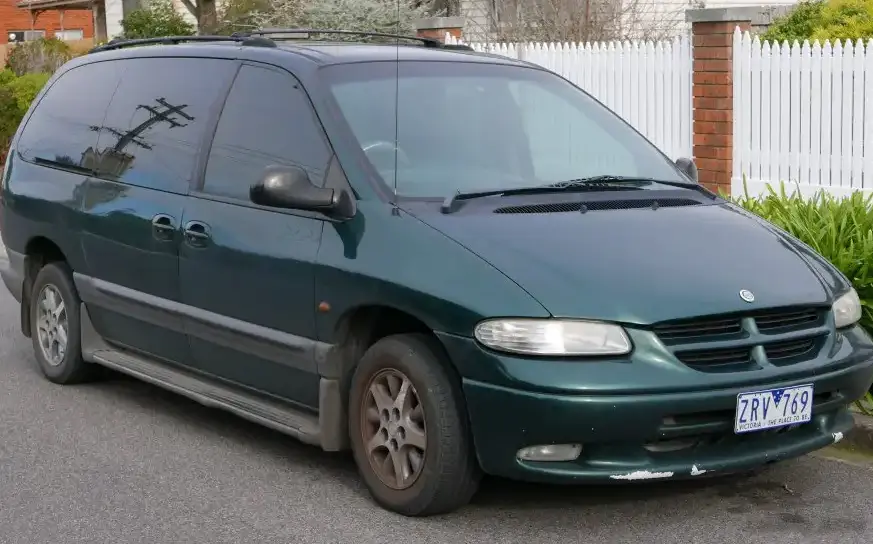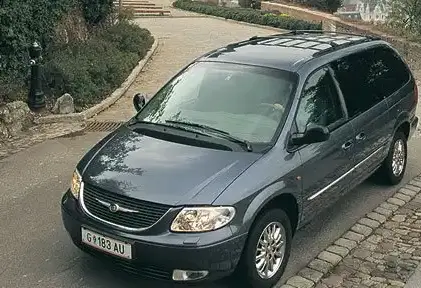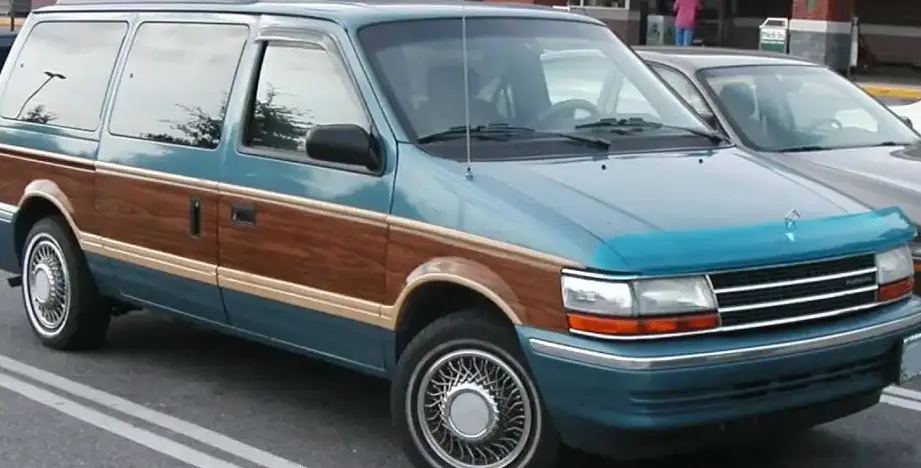
The Chrysler Grand Voyager II, specifically the 3.3 V6 AWD variant produced between 1990 and 1995, represented a significant step forward in the American minivan market. Positioned as a more premium offering within the Voyager lineup, this model combined a larger displacement V6 engine with all-wheel drive capability, appealing to families needing space, practicality, and enhanced traction. It was part of the second generation of the Voyager (and its Dodge Caravan counterpart), known internally as the AS platform, and built upon the success of the original minivan formula. This particular configuration aimed to provide a balance between performance and usability, though it wasn’t the top-tier trim – that distinction belonged to models with more luxurious appointments.
Technical Specifications
| Brand | Chrysler |
| Model | Voyager |
| Generation | Grand Voyager II |
| Type (Engine) | 3.3 V6 AWD (163 Hp) |
| Start of production | 1990 |
| End of production | 1995 |
| Powertrain Architecture | Internal Combustion engine |
| Body type | Minivan |
| Seats | 7 |
| Doors | 3 |
| Fuel consumption (combined) | 12.1 l/100 km |
| Fuel consumption (US mpg) | 19.4 US mpg |
| Fuel consumption (UK mpg) | 23.3 UK mpg |
| Fuel consumption (km/l) | 8.3 km/l |
| Fuel Type | Petrol (Gasoline) |
| Acceleration 0 – 100 km/h | 13.9 sec |
| Acceleration 0 – 62 mph | 13.9 sec |
| Acceleration 0 – 60 mph | 13.2 sec |
| Maximum speed | 180 km/h (111.85 mph) |
| Weight-to-power ratio | 11.3 kg/Hp |
| Weight-to-torque ratio | 7.1 kg/Nm |
| Power | 163 Hp @ 4800 rpm |
| Power per litre | 49.4 Hp/l |
| Torque | 260 Nm @ 3750 rpm (191.77 lb.-ft. @ 3750 rpm) |
| Engine layout | Front, Longitudinal |
| Engine displacement | 3301 cm3 (201.44 cu. in.) |
| Number of cylinders | 6 |
| Engine configuration | V-engine |
| Cylinder Bore | 93 mm (3.66 in.) |
| Piston Stroke | 81 mm (3.19 in.) |
| Compression ratio | 8.9:1 |
| Number of valves per cylinder | 2 |
| Fuel injection system | Multi-port manifold injection |
| Engine aspiration | Naturally aspirated |
| Engine oil capacity | 4.3 l (4.54 US qt | 3.78 UK qt) |
| Coolant capacity | 9.5 l (10.04 US qt | 8.36 UK qt) |
| Kerb Weight | 1835 kg (4045.48 lbs.) |
| Max. weight | 2590 kg (5709.97 lbs.) |
| Max load | 755 kg (1664.49 lbs.) |
| Trunk (boot) space – minimum | 328 l (11.58 cu. ft.) |
| Trunk (boot) space – maximum | 3990 l (140.91 cu. ft.) |
| Fuel tank capacity | 68 l (17.96 US gal | 14.96 UK gal) |
| Length | 4896 mm (192.76 in.) |
| Width | 1830 mm (72.05 in.) |
| Height | 1722 mm (67.8 in.) |
| Wheelbase | 3031 mm (119.33 in.) |
| Front track | 1521 mm (59.88 in.) |
| Rear track | 1578 mm (62.13 in.) |
| Drive wheel | All wheel drive (4×4) |
| Number of gears | 4 |
| Gearbox type | Automatic transmission |
| Front suspension | Wishbone |
| Rear suspension | Rigid axle |
| Front brakes | Ventilated discs |
| Rear brakes | Drum |
| Assisting systems | ABS (Anti-lock braking system) |
| Steering type | Steering rack and pinion |
| Power steering | Hydraulic |
| Tires size | 205/70 R15 |
Powertrain & Engine Architecture
The heart of the Grand Voyager II 3.3 AWD was the 3.3-liter V6 engine, internally designated as the 3.3L VG. This engine was a naturally aspirated, 60-degree V-engine featuring a cast iron block and aluminum cylinder heads. It utilized a multi-port fuel injection system, delivering fuel directly to each intake port for improved efficiency and power delivery. The engine produced 163 horsepower at 4800 rpm and 260 Nm (191.77 lb-ft) of torque at 3750 rpm. The 8.9:1 compression ratio was typical for the era, balancing performance with the use of readily available unleaded gasoline. Paired with this engine was a four-speed automatic transmission, providing smooth shifts but lacking the fuel efficiency of a manual gearbox. The all-wheel-drive system was typically a viscous coupling system, automatically engaging the rear wheels when front wheel slippage was detected.
Driving Characteristics
The 3.3L V6 and automatic transmission combination in the Grand Voyager II delivered adequate, but not exhilarating, performance. Acceleration from 0-60 mph took around 13.2 seconds, making it slower than some of its competitors and significantly slower than models equipped with the optional 3.8L V6. The automatic transmission, while convenient, contributed to this slower acceleration and a less engaging driving experience. Gear ratios were optimized for cruising and towing, rather than outright speed. The all-wheel-drive system provided enhanced stability and traction in inclement weather, making it a popular choice in regions with snow or rain. However, the added weight of the AWD system did slightly impact fuel economy and handling compared to front-wheel-drive versions.
Equipment & Trim Levels
The Grand Voyager II 3.3 V6 AWD typically came standard with features like air conditioning, power windows and locks, and an AM/FM stereo. The interior usually featured cloth upholstery, though leather was available as an option. Higher trim levels offered features such as upgraded sound systems, cruise control, and power seats. The Grand Voyager II was positioned above the base Voyager models, offering a more comprehensive list of standard equipment. Optional extras included a rear entertainment system, sunroof, and alloy wheels.
Chassis & Braking
The Grand Voyager II utilized a front independent suspension with wishbone components and a rear rigid axle suspension. This setup provided a comfortable ride, but handling was not particularly sporty. The front brakes were ventilated discs, offering good stopping power, while the rear brakes were drums, a cost-saving measure common in this class of vehicle. An anti-lock braking system (ABS) was included as standard equipment, enhancing safety. Steering was handled by a hydraulic power steering system, making it easy to maneuver at low speeds.
Market Reception & Comparison
The Chrysler Grand Voyager II 3.3 V6 AWD was generally well-received by critics as a practical and spacious family vehicle. However, the 3.3L engine was often criticized for being underpowered, especially when paired with the automatic transmission and all-wheel-drive system. Compared to the more powerful 3.8L V6 models, the 3.3L offered lower performance but better fuel economy (though still relatively poor by modern standards). Reliability was generally good, though some owners reported issues with the automatic transmission and the all-wheel-drive system. The 3.3L engine was considered relatively easy to maintain, with readily available parts.
Legacy
The Chrysler Grand Voyager II 3.3 V6 AWD, while not the most powerful or fuel-efficient minivan of its time, remains a popular choice among collectors and enthusiasts seeking a classic American vehicle. The 3.3L V6 engine, while not known for its longevity, is generally reliable if properly maintained. Today, these vans can be found in reasonable condition, often at affordable prices. The all-wheel-drive system continues to be a desirable feature, particularly in regions with harsh winters. The Grand Voyager II represents a pivotal moment in minivan history, solidifying Chrysler’s position as a leader in the segment.