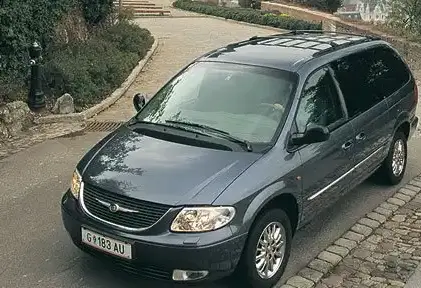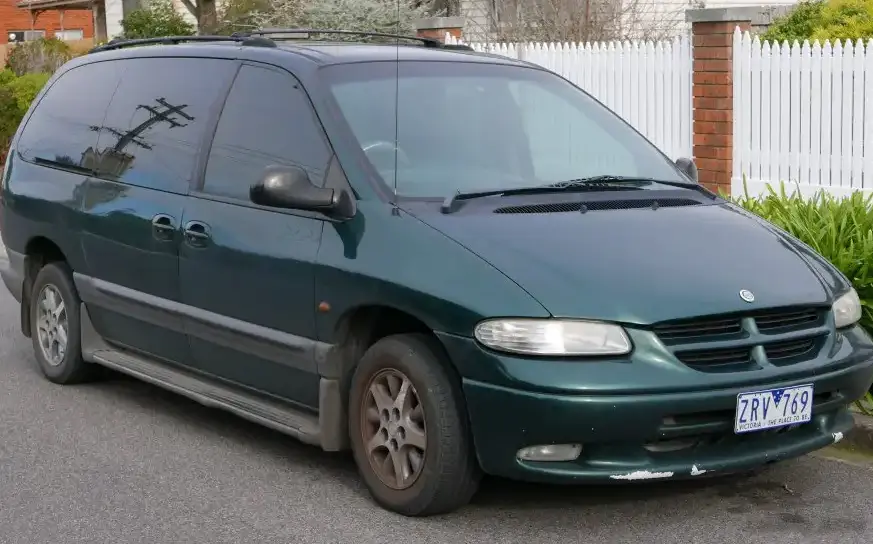
The Chrysler Grand Voyager III 2.5 TD (115 hp) was a diesel-powered variant of the third-generation Chrysler Voyager minivan, produced from 1995 to 2000. Positioned as a more economical option within the Grand Voyager lineup, it catered to buyers prioritizing fuel efficiency and practicality over outright performance. This model was primarily sold in European markets, where diesel engines held a significant share of the minivan segment. It represented Chrysler’s attempt to compete in a market increasingly demanding fuel-conscious vehicles, offering a seven-passenger capacity and the versatility expected of a minivan.
Technical Specifications
| Brand | Chrysler |
| Model | Voyager |
| Generation | Grand Voyager III |
| Type (Engine) | 2.5 TD (115 Hp) |
| Start of production | 1995 |
| End of production | 2000 |
| Powertrain Architecture | Internal Combustion engine |
| Body type | Minivan |
| Seats | 7 |
| Doors | 4 |
| Fuel consumption (urban) | 11.4 l/100 km (20.6 US mpg) |
| Fuel consumption (extra urban) | 7.2 l/100 km (32.7 US mpg) |
| Fuel Type | Diesel |
| Acceleration 0 – 100 km/h | 12.6 sec |
| Acceleration 0 – 62 mph | 12.6 sec |
| Acceleration 0 – 60 mph | 12 sec |
| Maximum speed | 175 km/h (108.74 mph) |
| Weight-to-power ratio | 16.8 kg/Hp |
| Weight-to-torque ratio | 7.4 kg/Nm |
| Power | 115 Hp @ 4000 rpm |
| Power per litre | 46 Hp/l |
| Torque | 262 Nm @ 1800 rpm (193.24 lb.-ft. @ 1800 rpm) |
| Engine layout | Front, Transverse |
| Engine Model/Code | ENC |
| Engine displacement | 2499 cm3 (152.5 cu. in.) |
| Number of cylinders | 4 |
| Engine configuration | Inline |
| Cylinder Bore | 92 mm (3.62 in.) |
| Piston Stroke | 94 mm (3.7 in.) |
| Compression ratio | 21:1 |
| Number of valves per cylinder | 2 |
| Fuel injection system | Precombustion chamber injection |
| Engine aspiration | Turbocharger |
| Engine oil capacity | 6.5 l (6.87 US qt | 5.72 UK qt) |
| Coolant capacity | 10 l (10.57 US qt | 8.8 UK qt) |
| Kerb Weight | 1930 kg (4254.92 lbs.) |
| Max. weight | 2580 kg (5687.93 lbs.) |
| Max load | 650 kg (1433 lbs.) |
| Trunk (boot) space – minimum | 671 l (23.7 cu. ft.) |
| Trunk (boot) space – maximum | 4880 l (172.34 cu. ft.) |
| Fuel tank capacity | 75 l (19.81 US gal | 16.5 UK gal) |
| Length | 5070 mm (199.61 in.) |
| Width | 1950 mm (76.77 in.) |
| Height | 1740 mm (68.5 in.) |
| Wheelbase | 3030 mm (119.29 in.) |
| Front track | 1600 mm (62.99 in.) |
| Rear track | 1626 mm (64.02 in.) |
| Drivetrain Architecture | Front wheel drive |
| Number of gears | 5 gears, manual transmission |
| Front suspension | Wishbone |
| Rear suspension | Rigid axle suspension |
| Front brakes | Ventilated discs |
| Rear brakes | Drum |
| Assisting systems | ABS (Anti-lock braking system) |
| Steering type | Steering rack and pinion |
| Power steering | Hydraulic Steering |
| Tires size | 215/65 R15 S |
Powertrain & Engine Architecture
The heart of the Grand Voyager III 2.5 TD was the ENC engine, a 2.5-liter inline-four cylinder diesel. This engine utilized a precombustion chamber injection system, a common technology for diesel engines of the era. This system involved injecting fuel into a small precombustion chamber within the cylinder head, where it partially ignited before entering the main combustion chamber. This aided in cold starting and reduced engine noise. The engine was turbocharged, boosting power output to 115 horsepower and 262 Nm (193 lb-ft) of torque. The five-speed manual transmission was the standard offering, providing a balance between fuel economy and drivability. The engine’s design prioritized durability and low-end torque, characteristics well-suited for hauling passengers and cargo.
Driving Characteristics
The 2.5 TD Grand Voyager offered a distinctly different driving experience compared to its gasoline-powered siblings. While lacking the outright acceleration of the V6 models, the diesel engine provided ample low-end torque, making it capable of comfortably carrying a full load of passengers and luggage. The five-speed manual transmission allowed drivers to keep the engine in its optimal power band. Acceleration to 60 mph took around 12 seconds, and top speed was approximately 109 mph. The focus was on relaxed cruising and fuel efficiency rather than sporty performance. The gear ratios were tuned for maximizing torque at lower engine speeds, resulting in a smooth and predictable driving experience.
Equipment & Trim Levels
The 2.5 TD Grand Voyager typically came with a moderate level of standard equipment. This included power steering, air conditioning, and basic audio system. Interior upholstery was typically cloth, with options for upgraded materials available. Features like power windows and locks were often included, but higher-end amenities like leather seats and premium sound systems were usually reserved for higher trim levels. The Grand Voyager III offered a range of optional extras, allowing buyers to customize their vehicle to their specific needs and preferences. These options could include alloy wheels, sunroofs, and upgraded audio systems.
Chassis & Braking
The Grand Voyager III utilized a front-wheel-drive layout. The front suspension consisted of wishbone setup, while the rear employed a rigid axle suspension. This configuration provided a reasonable balance between ride comfort and handling. The braking system featured ventilated discs on the front wheels and drum brakes on the rear. Anti-lock Braking System (ABS) was standard, enhancing safety by preventing wheel lockup during hard braking. The suspension was tuned for comfort, prioritizing a smooth ride over sporty handling. The relatively simple rear drum brake setup was a cost-saving measure common in this class of vehicle.
Market Reception & Comparison
The 2.5 TD Grand Voyager was generally well-received in European markets as a practical and fuel-efficient family vehicle. Critics praised its spacious interior, comfortable ride, and economical diesel engine. However, it was often criticized for its relatively slow acceleration compared to gasoline-powered minivans. Compared to the higher-output V6 models, the 2.5 TD offered significantly better fuel economy but lacked the same level of performance. Against competitors like the Renault Espace and Volkswagen Sharan, the Grand Voyager offered a competitive package, particularly for buyers prioritizing space and practicality. The diesel engine provided a clear advantage in terms of fuel costs, making it an attractive option for high-mileage drivers.
Legacy
The Chrysler Grand Voyager III 2.5 TD, while not the most powerful or fastest minivan available, established a reputation for reliability and durability. The ENC diesel engine, when properly maintained, proved to be a long-lasting powerplant. In the used car market today, these models are often sought after by buyers looking for an affordable and practical family vehicle. Maintenance costs can be relatively low, and parts availability is generally good. However, potential buyers should be aware of the typical wear and tear associated with older diesel engines, such as turbocharger issues and injector problems. Overall, the 2.5 TD Grand Voyager remains a viable option for those seeking a spacious and economical minivan.