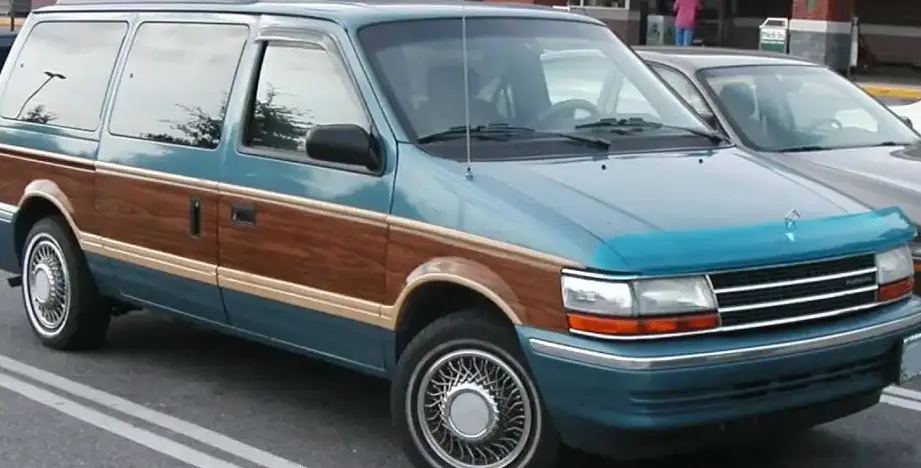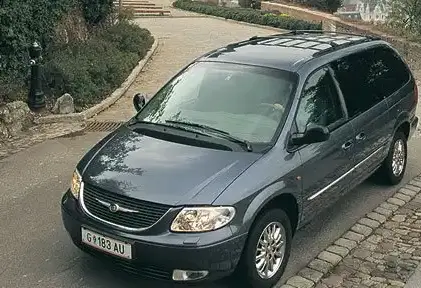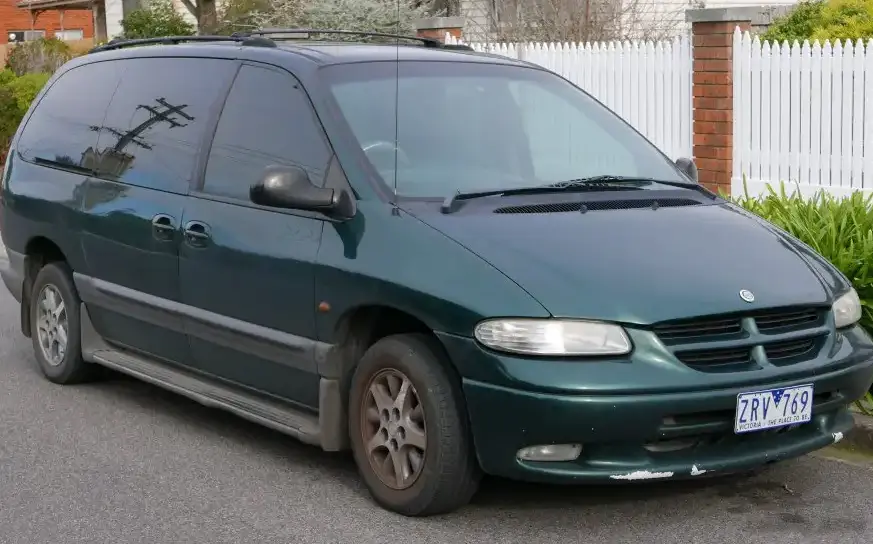
The Chrysler Grand Voyager III, specifically the 3.3 V6 variant producing 158 horsepower, was a key model in Chrysler’s minivan lineup from 1995 to 2000. Representing the third generation of the Voyager (and closely related to the Dodge Caravan and Plymouth Voyager), this iteration aimed to refine the formula of spaciousness and practicality that had made the original minivans so popular. The 3.3L V6 with an automatic transmission occupied a middle ground in the Grand Voyager III range, offering a balance between affordability and performance, positioned below the more powerful 3.8L V6 options. It was primarily sold in the North American market, where the minivan segment was fiercely competitive.
Technical Specifications
| Brand | Chrysler |
| Model | Voyager |
| Generation | Grand Voyager III |
| Type (Engine) | 3.3 V6 (158 Hp) |
| Start of production | 1995 |
| End of production | 2000 |
| Powertrain Architecture | Internal Combustion engine |
| Body type | Minivan |
| Seats | 7 |
| Doors | 4 |
| Fuel consumption (urban) | 17.3 l/100 km (13.6 US mpg) |
| Fuel consumption (extra urban) | 9.5 l/100 km (24.8 US mpg) |
| Fuel Type | Petrol (Gasoline) |
| Maximum speed | 180 km/h (111.85 mph) |
| Weight-to-power ratio | 11.9 kg/Hp |
| Weight-to-torque ratio | 6.8 kg/Nm |
| Power | 158 Hp @ 4700 rpm |
| Power per litre | 47.9 Hp/l |
| Torque | 275 Nm @ 3250 rpm (202.83 lb.-ft. @ 3250 rpm) |
| Engine layout | Front, Transverse |
| Engine Model/Code | EGA |
| Engine displacement | 3301 cm3 (201.44 cu. in.) |
| Number of cylinders | 6 |
| Engine configuration | V-engine |
| Cylinder Bore | 93 mm (3.66 in.) |
| Piston Stroke | 81 mm (3.19 in.) |
| Compression ratio | 8.9:1 |
| Number of valves per cylinder | 2 |
| Fuel injection system | Multi-port manifold injection |
| Engine aspiration | Naturally aspirated engine |
| Engine oil capacity | 4.3 l (4.54 US qt | 3.78 UK qt) |
| Coolant | 9.5 l (10.04 US qt | 8.36 UK qt) |
| Kerb Weight | 1875 kg (4133.67 lbs.) |
| Max. weight | 2530 kg (5577.7 lbs.) |
| Max load | 655 kg (1444.03 lbs.) |
| Trunk (boot) space – minimum | 671 l (23.7 cu. ft.) |
| Trunk (boot) space – maximum | 4880 l (172.34 cu. ft.) |
| Fuel tank capacity | 76 l (20.08 US gal | 16.72 UK gal) |
| Length | 5070 mm (199.61 in.) |
| Width | 1950 mm (76.77 in.) |
| Height | 1740 mm (68.5 in.) |
| Wheelbase | 3030 mm (119.29 in.) |
| Front track | 1600 mm (62.99 in.) |
| Rear (Back) track | 1626 mm (64.02 in.) |
| Drivetrain Architecture | The Internal combustion engine (ICE) drives the front wheels of the vehicle. |
| Drive wheel | Front wheel drive |
| Number of gears and type of gearbox | 4 gears, automatic transmission |
| Front suspension | Wishbone |
| Rear suspension | Rigid axle suspension |
| Front brakes | Ventilated discs |
| Rear brakes | Drum |
| Assisting systems | ABS (Anti-lock braking system) |
| Steering type | Steering rack and pinion |
| Power steering | Hydraulic Steering |
| Tires size | 215/65 R15 |
Powertrain & Engine Architecture
The heart of this Grand Voyager variant was the 3.3-liter EGA V6 engine. This engine, a member of Chrysler’s LA engine family, was a 60-degree V-engine featuring a cast iron block and aluminum cylinder heads. It utilized a multi-port fuel injection system, delivering fuel directly to each intake port for improved efficiency and responsiveness. The engine produced 158 horsepower at 4700 rpm and 275 Nm (202.83 lb-ft) of torque at 3250 rpm. The engine’s valvetrain consisted of two valves per cylinder, operated by a single overhead camshaft. Paired with the 3.3L V6 was a four-speed automatic transmission, providing smooth and convenient shifting. This transmission was chosen for its ease of use and suitability for family-oriented driving, although it wasn’t known for particularly sporty performance.
Driving Characteristics
The 3.3L V6 automatic Grand Voyager offered adequate, but not exhilarating, performance. Acceleration was sufficient for everyday driving and highway merging, but it lacked the punch of the optional 3.8L V6. The four-speed automatic transmission, while smooth, had relatively wide gear ratios, which could sometimes result in the engine feeling strained during uphill climbs or when fully loaded. The focus was clearly on comfort and practicality rather than sporty handling. Steering was light and easy, making it maneuverable in parking situations, but it lacked feedback. The front-wheel-drive configuration provided predictable handling in most conditions.
Equipment & Trim Levels
The 3.3L V6 Grand Voyager typically came standard with features like air conditioning, power windows and locks, an AM/FM stereo, and cloth upholstery. Higher trim levels, such as the SE and LE, added features like alloy wheels, upgraded sound systems, leather upholstery, and power-adjustable seats. Optional extras included a rear entertainment system (a popular choice for minivans), a sunroof, and upgraded interior trim packages. The interior design was functional and family-friendly, with ample storage compartments and comfortable seating for up to seven passengers.
Chassis & Braking
The Grand Voyager III utilized a front-wheel-drive layout with an independent wishbone suspension in the front and a rigid axle suspension in the rear. This setup prioritized ride comfort over handling precision. The front brakes were ventilated discs, providing adequate stopping power, while the rear brakes were drums, a cost-saving measure common in this class of vehicle. Anti-lock braking system (ABS) was standard, enhancing safety by preventing wheel lockup during hard braking. Steering was rack-and-pinion with hydraulic power assist, offering light and easy steering feel.
Market Reception & Comparison
The 3.3L V6 Grand Voyager was generally well-received by critics as a practical and affordable family vehicle. However, it was often criticized for its lack of power compared to the 3.8L V6 models. Fuel economy was considered average for its class, with the 3.3L engine offering slightly better mileage than the larger V6. Reliability was generally good, although some owners reported issues with the automatic transmission over the long term. Compared to competitors like the Honda Odyssey and Toyota Sienna, the Grand Voyager offered a more spacious interior and a lower price point, but it lacked the refinement and driving dynamics of the Japanese minivans.
Legacy
The Chrysler Grand Voyager III 3.3L V6 remains a relatively common sight on used car lots today. The 3.3L EGA engine is known for its durability, although regular maintenance is crucial to prevent issues. The automatic transmission can be a potential weak point, so it’s important to inspect its condition before purchasing a used model. Overall, this variant represents a solid and dependable choice for those seeking an affordable and spacious minivan. Its legacy lies in providing a practical transportation solution for families during the late 1990s and early 2000s, and it continues to offer value in the used car market.