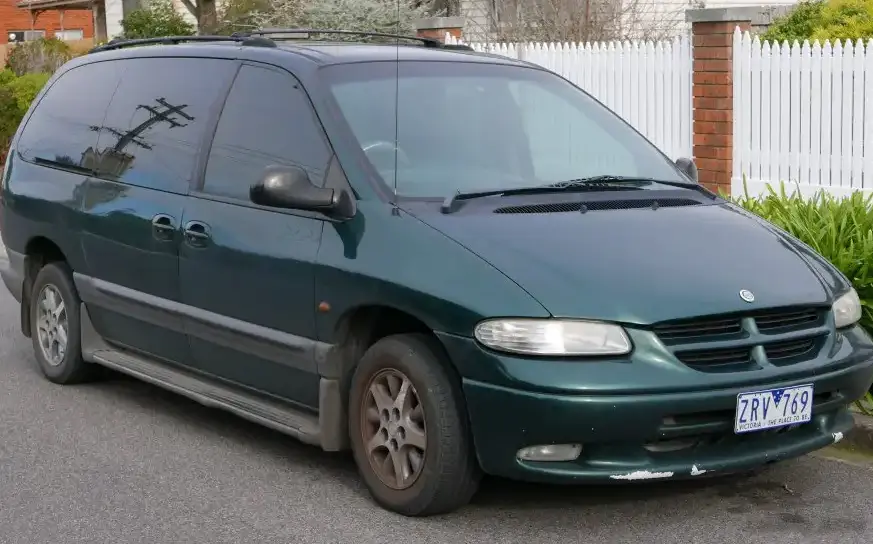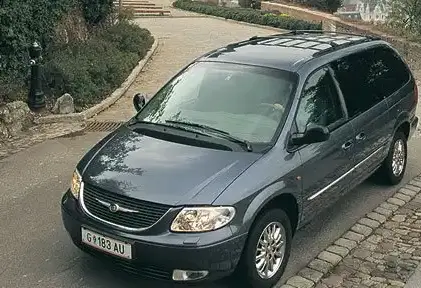
The Chrysler Grand Voyager IV 2.5 CRD, produced between 2001 and 2007, represented a significant offering in the European minivan market. Positioned as a diesel-powered alternative within the fourth generation (NS) Grand Voyager lineup, this variant aimed to provide a balance of space, practicality, and fuel efficiency for families. It was a key model for Chrysler in Europe, competing with vehicles like the Renault Espace and Volkswagen Sharan. The 2.5 CRD engine, while not the most powerful option available in the Grand Voyager range, offered a compelling combination of torque and economy, making it a popular choice for those prioritizing long-distance comfort and towing capability. This particular configuration utilized a five-speed manual transmission, a common pairing in European markets.
Technical Specifications
| Brand | Chrysler |
| Model | Voyager |
| Generation | Grand Voyager IV |
| Type (Engine) | 2.5 CRD (143 Hp) |
| Start of production | 2001 |
| End of production | 2007 |
| Powertrain Architecture | Internal Combustion engine |
| Body type | Minivan |
| Seats | 7 |
| Doors | 4 |
| Fuel consumption (urban) | 10.2 l/100 km (23.1 US mpg, 27.7 UK mpg, 9.8 km/l) |
| Fuel consumption (extra urban) | 6.5 l/100 km (36.2 US mpg, 43.5 UK mpg, 15.4 km/l) |
| Fuel consumption (combined) | 7.5 l/100 km (31.4 US mpg, 37.7 UK mpg, 13.3 km/l) |
| Fuel Type | Diesel |
| Acceleration 0 – 100 km/h | 11.9 sec |
| Acceleration 0 – 62 mph | 11.9 sec |
| Acceleration 0 – 60 mph | 11.3 sec |
| Maximum speed | 185 km/h (114.95 mph) |
| Weight-to-power ratio | 14 kg/Hp, 71.7 Hp/tonne |
| Weight-to-torque ratio | 6.2 kg/Nm, 160.4 Nm/tonne |
| Power | 143 Hp @ 4000 rpm |
| Power per litre | 57.2 Hp/l |
| Torque | 320 Nm @ 2000 rpm (236.02 lb.-ft. @ 2000 rpm) |
| Engine layout | Front, Transverse |
| Engine Model/Code | ENJ |
| Engine displacement | 2499 cm3 (152.5 cu. in.) |
| Number of cylinders | 4 |
| Engine configuration | Inline |
| Cylinder Bore | 92 mm (3.62 in.) |
| Piston Stroke | 94 mm (3.7 in.) |
| Compression ratio | 17.5:1 |
| Number of valves per cylinder | 4 |
| Fuel injection system | Diesel Commonrail |
| Engine aspiration | Turbocharger, Intercooler |
| Valvetrain | DOHC |
| Engine oil capacity | 6 l (6.34 US qt | 5.28 UK qt) |
| Coolant | 13.8 l (14.58 US qt | 12.14 UK qt) |
| Kerb Weight | 1995 kg (4398.22 lbs.) |
| Max. weight | 2600 kg (5732.02 lbs.) |
| Max load | 605 kg (1333.8 lbs.) |
| Trunk (boot) space – minimum | 920 l (32.49 cu. ft.) |
| Trunk (boot) space – maximum | 4130 l (145.85 cu. ft.) |
| Fuel tank capacity | 75 l (19.81 US gal | 16.5 UK gal) |
| Length | 5095 mm (200.59 in.) |
| Width | 1997 mm (78.62 in.) |
| Height | 1750 mm (68.9 in.) |
| Wheelbase | 3030 mm (119.29 in.) |
| Front track | 1600 mm (62.99 in.) |
| Rear (Back) track | 1625 mm (63.98 in.) |
| Drivetrain Architecture | The Internal combustion engine (ICE) drives the front wheels of the vehicle. |
| Drive wheel | Front wheel drive |
| Number of gears and type of gearbox | 5 gears, manual transmission |
| Front suspension | Wishbone |
| Rear suspension | Leaf spring |
| Front brakes | Ventilated discs |
| Rear brakes | Disc |
| Assisting systems | ABS (Anti-lock braking system) |
| Steering type | Steering rack and pinion |
| Power steering | Hydraulic Steering |
| Tires size | 215/65 R16 |
Powertrain & Engine Architecture
The heart of the Grand Voyager IV 2.5 CRD was the ENJ engine, a 2.5-liter inline-four cylinder diesel. This engine utilized a common rail direct injection system, a technology that was becoming increasingly prevalent in diesel engines during the early 2000s. Common rail injection allowed for more precise fuel delivery, resulting in improved combustion efficiency, reduced noise, and lower emissions. The engine was turbocharged and intercooled, boosting power output to 143 horsepower and 320 Nm (236 lb-ft) of torque. The double overhead camshaft (DOHC) valvetrain, with four valves per cylinder, further enhanced the engine’s breathing and contributed to its overall performance. The five-speed manual transmission was a standard feature, providing drivers with good control over the engine’s power band. The transmission was chosen for its durability and suitability for European driving conditions.
Driving Characteristics
The 2.5 CRD Grand Voyager, with its 143 hp and 320 Nm of torque, offered a respectable, if not exhilarating, driving experience. Acceleration from 0-60 mph took around 11.3 seconds, and top speed was limited to 185 km/h (115 mph). The engine’s torque peak at 2000 rpm meant that it provided ample pulling power for overtaking and carrying a full load of passengers and luggage. Compared to the more powerful gasoline engines available in the Grand Voyager range, the 2.5 CRD prioritized fuel economy and low-end grunt over outright speed. The manual transmission allowed for greater driver engagement and control, although it wasn’t as effortless as the automatic options available on other trims. The gear ratios were well-suited for highway cruising, making it a comfortable vehicle for long journeys.
Equipment & Trim Levels
The 2.5 CRD Grand Voyager typically came with a reasonable level of standard equipment. This included air conditioning, power windows, central locking, and an audio system. Interior upholstery was usually cloth, although leather options were available as upgrades. Trim levels varied depending on the market, but generally, the 2.5 CRD sat in the mid-range of the Grand Voyager lineup. Optional extras included alloy wheels, a sunroof, and upgraded audio systems. Safety features such as ABS were standard, reflecting Chrysler’s commitment to passenger protection.
Chassis & Braking
The Grand Voyager IV utilized a front-wheel-drive layout. The front suspension employed a wishbone design, providing a comfortable ride and good handling characteristics. The rear suspension featured a leaf spring setup, which was a cost-effective solution for handling the vehicle’s weight and providing adequate ride quality. Braking duties were handled by ventilated discs at the front and solid discs at the rear, with ABS providing enhanced stopping power and stability. The steering was rack and pinion, offering precise and responsive control.
Market Reception & Comparison
The Chrysler Grand Voyager IV 2.5 CRD was generally well-received in the European market. Critics praised its spacious interior, comfortable ride, and fuel-efficient diesel engine. However, some reviewers noted that the engine lacked the refinement of some of its competitors. Compared to the gasoline-powered Grand Voyagers, the 2.5 CRD offered significantly better fuel economy, making it a more economical choice for high-mileage drivers. Against rivals like the Renault Espace and Volkswagen Sharan, the Grand Voyager offered a distinctive American styling and a generous amount of space.
Legacy
The 2.5 CRD engine, while not without its quirks, proved to be relatively reliable in the Grand Voyager IV. Common issues included turbocharger wear and potential problems with the fuel injection system, but these were generally manageable with regular maintenance. Today, the Grand Voyager IV 2.5 CRD can be found on the used car market at affordable prices. It remains a practical and spacious vehicle for families, offering a good value proposition for those seeking a comfortable and economical minivan. Its enduring appeal lies in its combination of space, practicality, and the relatively straightforward mechanics of its diesel engine.