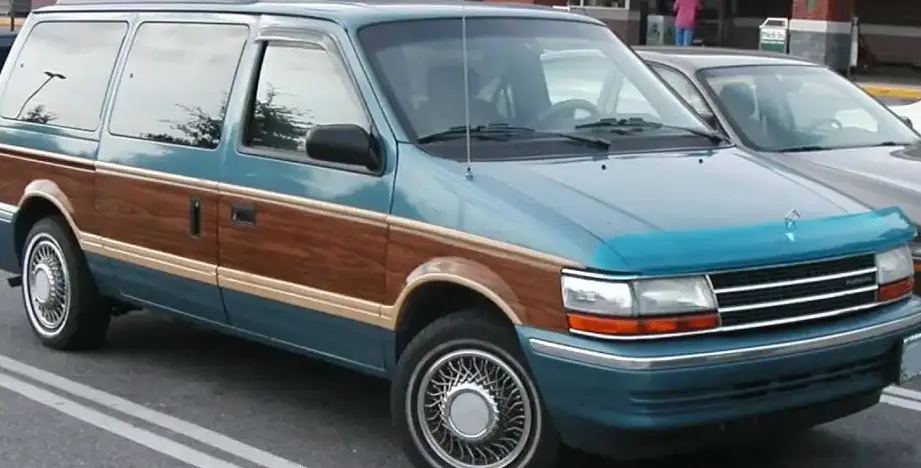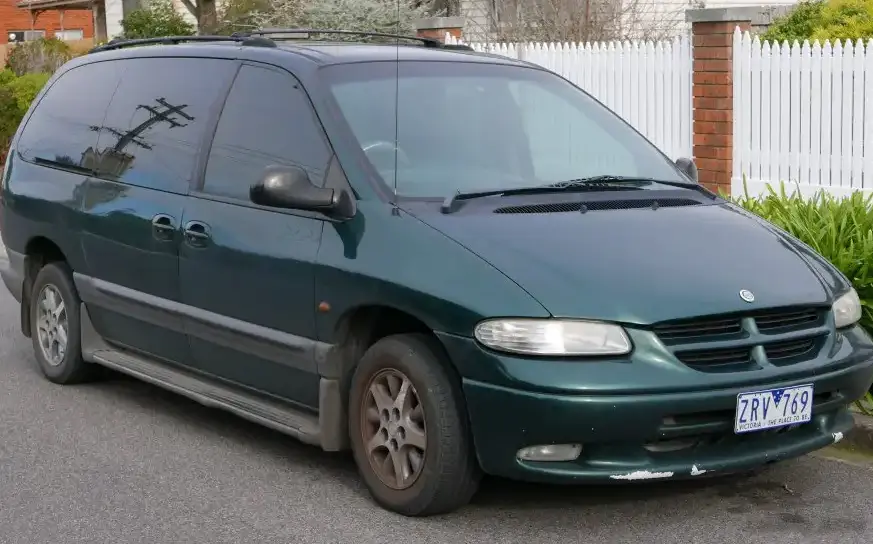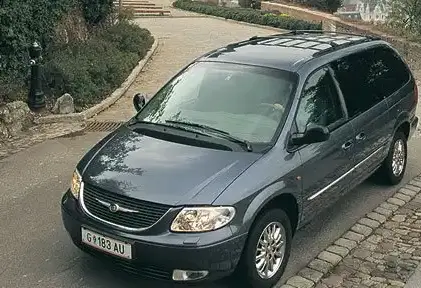
The Chrysler Grand Voyager IV 3.3i V6 AWD, produced from 2001 to 2007, represented a significant iteration of Chrysler’s popular minivan. Positioned as a mid-to-upper trim level within the fourth generation (NS) Grand Voyager lineup, this variant offered all-wheel drive capability paired with a 3.3-liter V6 engine, targeting families needing space, comfort, and enhanced traction. It was primarily sold in North America and select international markets, competing with other full-size minivans like the Dodge Caravan, Toyota Sienna, and Honda Odyssey. This model year saw a shift towards increased refinement and features compared to earlier Grand Voyagers, solidifying its position as a versatile family vehicle.
Technical Specifications
| Brand | Chrysler |
| Model | Voyager |
| Generation | Grand Voyager IV |
| Type (Engine) | 3.3 i V6 AWD (174 Hp) |
| Start of production | 2001 year |
| End of production | 2007 year |
| Powertrain Architecture | Internal Combustion engine |
| Body type | Minivan |
| Seats | 7 |
| Doors | 4 |
| Fuel consumption (economy) – urban | 17.3 l/100 km (13.6 US mpg, 16.3 UK mpg, 5.8 km/l) |
| Fuel consumption (economy) – extra urban | 9.9 l/100 km (23.8 US mpg, 28.5 UK mpg, 10.1 km/l) |
| Fuel consumption (economy) – combined | 12.7 l/100 km (18.5 US mpg, 22.2 UK mpg, 7.9 km/l) |
| Fuel Type | Petrol (Gasoline) |
| Acceleration 0 – 100 km/h | 12.4 sec |
| Acceleration 0 – 62 mph | 12.4 sec |
| Acceleration 0 – 60 mph | 11.8 sec |
| Maximum speed | 179 km/h (111.23 mph) |
| Weight-to-power ratio | 12.4 kg/Hp, 80.4 Hp/tonne |
| Weight-to-torque ratio | 7.8 kg/Nm, 128.4 Nm/tonne |
| Power | 174 Hp @ 5100 rpm |
| Power per litre | 52.7 Hp/l |
| Torque | 278 Nm @ 4000 rpm (205.04 lb.-ft. @ 4000 rpm) |
| Engine layout | Front, Transverse |
| Engine Model/Code | EGA |
| Engine displacement | 3301 cm3 (201.44 cu. in.) |
| Number of cylinders | 6 |
| Engine configuration | V-engine |
| Cylinder Bore | 93 mm (3.66 in.) |
| Piston Stroke | 81 mm (3.19 in.) |
| Compression ratio | 9.4:1 |
| Number of valves per cylinder | 2 |
| Fuel injection system | Multi-port manifold injection |
| Engine aspiration | Naturally aspirated engine |
| Valvetrain | OHC |
| Engine oil capacity | 4.7 l (4.97 US qt | 4.14 UK qt) |
| Coolant | 12.6 l (13.31 US qt | 11.09 UK qt) |
| Kerb Weight | 2165 kg (4773.01 lbs.) |
| Max. weight | 2670 kg (5886.34 lbs.) |
| Max load | 505 kg (1113.33 lbs.) |
| Trunk (boot) space – minimum | 920 l (32.49 cu. ft.) |
| Trunk (boot) space – maximum | 4130 l (145.85 cu. ft.) |
| Fuel tank capacity | 75 l (19.81 US gal | 16.5 UK gal) |
| Length | 5094 mm (200.55 in.) |
| Width | 1997 mm (78.62 in.) |
| Height | 1749 mm (68.86 in.) |
| Wheelbase | 3030 mm (119.29 in.) |
| Front track | 1600 mm (62.99 in.) |
| Rear (Back) track | 1626 mm (64.02 in.) |
| Drive wheel | All wheel drive (4×4) |
| Number of gears and type of gearbox | 4 gears, automatic transmission |
| Front suspension | Wishbone |
| Rear suspension | Leaf spring |
| Front brakes | Ventilated discs |
| Rear brakes | Disc |
| Assisting systems | ABS (Anti-lock braking system) |
| Steering type | Steering rack and pinion |
| Power steering | Hydraulic Steering |
| Tires size | 215/65 R16 |
Powertrain & Engine Architecture
The heart of the Grand Voyager IV 3.3i AWD was the EGA engine, a 3.3-liter (3301 cc) naturally aspirated V6. This engine utilized a 90-degree V-configuration, contributing to a smoother power delivery. It featured a cast iron block with aluminum cylinder heads, a configuration common for Chrysler V6 engines of the era. The engine employed multi-port fuel injection, delivering fuel directly to each intake port for improved efficiency and responsiveness. The valvetrain consisted of an overhead camshaft (OHC) design with two valves per cylinder. The 4-speed automatic transmission (typically the 42RE) was chosen for its balance of cost and usability, prioritizing smooth shifts over outright performance. This transmission was known for its durability but wasn’t particularly fuel-efficient by modern standards.
Driving Characteristics
The 174 horsepower and 278 lb-ft of torque provided by the 3.3L V6 and automatic transmission delivered adequate, but not exhilarating, performance. Acceleration from 0-60 mph took around 11.8 seconds, making it competitive with other minivans of the time. The automatic transmission, while smooth, had relatively wide gear ratios, which could sometimes feel sluggish during quick acceleration. The all-wheel-drive system provided enhanced traction in inclement weather, making it a safer option for drivers in regions with snow or rain. Compared to the higher-output 3.8L V6 versions of the Grand Voyager, the 3.3L felt less powerful, particularly when fully loaded with passengers and cargo. However, the 3.3L offered a noticeable improvement in fuel economy over the larger engine.
Equipment & Trim Levels
The 3.3i AWD trim typically included features such as air conditioning, power windows and locks, a CD player, and cloth upholstery. Optional extras included leather seats, a sunroof, upgraded audio systems, and rear-seat entertainment systems. The interior design was functional and family-oriented, with ample storage compartments and comfortable seating for seven passengers. The Stow ‘n Go seating system, which allowed the second and third-row seats to fold flat into the floor, was a key feature of the Grand Voyager, maximizing cargo space. The AWD models often came with unique exterior badging and alloy wheels.
Chassis & Braking
The Grand Voyager IV utilized a body-on-frame construction, providing a robust and durable platform. The front suspension featured an independent wishbone design, while the rear suspension employed a leaf spring setup. This combination offered a comfortable ride, but handling was not particularly sporty. The braking system consisted of ventilated discs at the front and solid discs at the rear. Anti-lock brakes (ABS) were standard, enhancing safety and control during emergency braking situations. The steering was rack-and-pinion with hydraulic power assist, providing reasonably precise steering feel.
Market Reception & Comparison
The Grand Voyager IV 3.3i AWD was generally well-received by critics and consumers. It was praised for its spacious interior, comfortable ride, and available all-wheel-drive system. However, some reviewers noted the engine’s lack of outright power and the transmission’s somewhat dated design. Compared to the 3.8L V6 models, the 3.3L offered better fuel economy (around 18.5 US mpg combined) but at the expense of performance. The 3.3L was also generally more reliable than the 3.8L, which was prone to certain engine issues. The AWD system added to the vehicle’s cost but provided a significant advantage in terms of traction and safety.
Legacy
The Chrysler Grand Voyager IV 3.3i AWD remains a popular choice in the used car market, particularly for families seeking a spacious and reliable minivan. The 3.3L V6 engine, while not the most powerful option, has proven to be relatively durable and long-lasting with proper maintenance. Common issues include minor oil leaks and occasional transmission problems, but these are generally not major concerns. The availability of all-wheel drive makes these models particularly desirable in regions with harsh winters. While newer minivans offer more advanced features and better fuel economy, the Grand Voyager IV 3.3i AWD continues to represent a good value for those seeking a practical and affordable family vehicle.