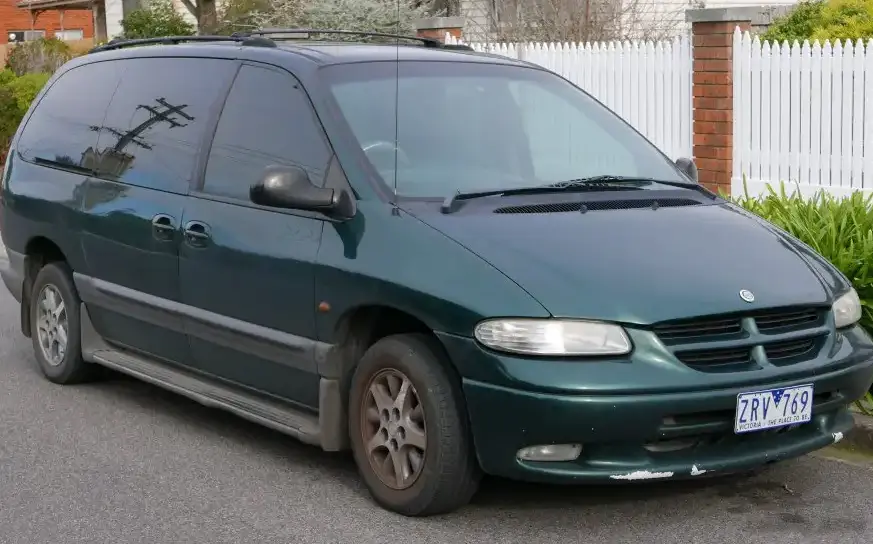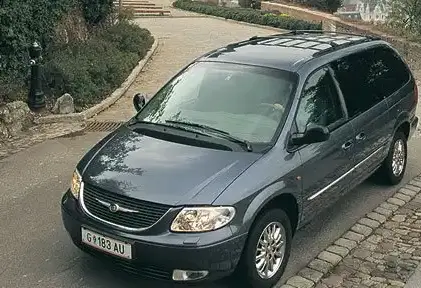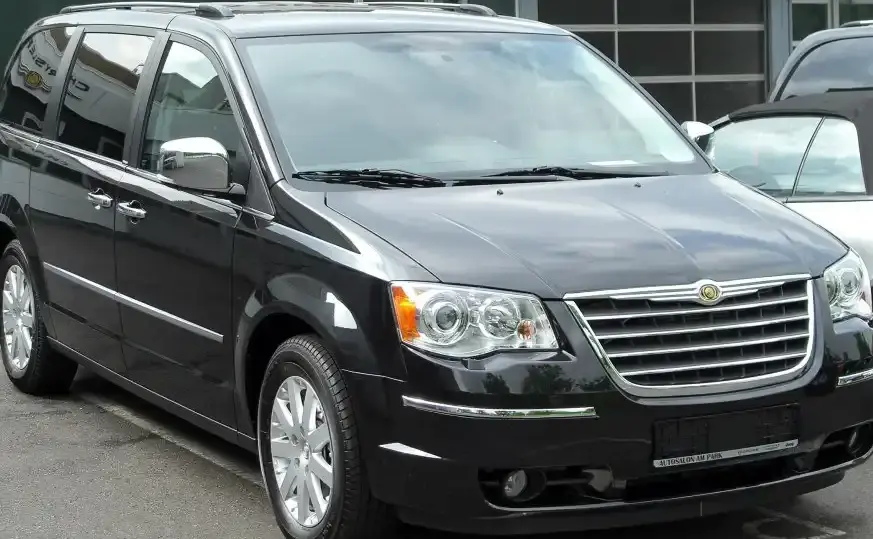
The Chrysler Grand Voyager V 3.8i V6, produced from 2008 to 2011, represents the fifth generation of Chrysler’s popular minivan. Positioned as a mid-range offering within the Grand Voyager lineup, this variant aimed to balance performance and fuel efficiency with the practicality expected of a family vehicle. It was primarily sold in European and international markets, as the full-size minivan segment was less prominent in the United States during this period. The Grand Voyager V, built on the Chrysler NS platform, offered seating for seven and a spacious interior, making it a competitor to vehicles like the Renault Espace and Volkswagen Sharan.
Technical Specifications
| Brand | Chrysler |
| Model | Voyager |
| Generation | Grand Voyager V |
| Type (Engine) | 3.8i V6 (193 Hp) Automatic |
| Start of production | 2008 |
| End of production | 2011 |
| Powertrain Architecture | Internal Combustion engine |
| Body type | Minivan |
| Seats | 7 |
| Doors | 5 |
| Fuel consumption (urban) | 18.3 l/100 km (12.9 US mpg) |
| Fuel consumption (extra urban) | 8.8 l/100 km (26.7 US mpg) |
| Fuel consumption (combined) | 12.3 l/100 km (19.1 US mpg) |
| CO2 emissions | 294 g/km |
| Fuel Type | Petrol (Gasoline) |
| Acceleration 0 – 100 km/h | 12.6 sec |
| Acceleration 0 – 62 mph | 12.6 sec |
| Acceleration 0 – 60 mph | 12 sec |
| Maximum speed | 193 km/h (119.92 mph) |
| Weight-to-power ratio | 10.8 kg/Hp |
| Weight-to-torque ratio | 6.8 kg/Nm |
| Power | 193 Hp @ 5200 rpm |
| Torque | 305 Nm @ 4000 rpm (224.96 lb.-ft. @ 4000 rpm) |
| Engine layout | Front, Transverse |
| Engine displacement | 3778 cm3 (230.55 cu. in.) |
| Number of cylinders | 6 |
| Engine configuration | V-engine |
| Fuel injection system | Multi-port manifold injection |
| Engine aspiration | Naturally aspirated engine |
| Engine oil capacity | 4.7 l (4.97 US qt | 4.14 UK qt) |
| Coolant capacity | 15.2 l (16.06 US qt | 13.37 UK qt) |
| Kerb Weight | 2085-2155 kg (4596.64 – 4750.96 lbs.) |
| Max. weight | 2700 kg (5952.48 lbs.) |
| Max load | 545-615 kg (1201.52 – 1355.84 lbs.) |
| Trunk (boot) space – minimum | 638 l (22.53 cu. ft.) |
| Trunk (boot) space – maximum | 3296 l (116.4 cu. ft.) |
| Fuel tank capacity | 75 l (19.81 US gal | 16.5 UK gal) |
| Permitted trailer load with brakes (12%) | 1600 kg (3527.4 lbs.) |
| Permitted trailer load without brakes | 450 kg (992.08 lbs.) |
| Length | 5143 mm (202.48 in.) |
| Width | 1954 mm (76.93 in.) |
| Height | 1750 mm (68.9 in.) |
| Wheelbase | 3078 mm (121.18 in.) |
| Front track | 1651 mm (65 in.) |
| Rear (Back) track | 1645 mm (64.76 in.) |
| Minimum turning circle | 12 m (39.37 ft.) |
| Drivetrain Architecture | Front wheel drive |
| Number of gears | 6 |
| Gearbox type | Automatic transmission |
| Tire size | 225/65 R17 |
| Wheel rims size | 17 |
Powertrain & Engine Architecture
The heart of the Grand Voyager V 3.8i is the Chrysler 3.8L EER V6 engine. This engine, internally designated as the EGH, is a 60-degree V6 utilizing a cast iron block and aluminum cylinder heads. It employs a multi-port fuel injection system, delivering fuel directly into the intake ports, and a single overhead camshaft (SOHC) valvetrain with two valves per cylinder. The 3.8L engine produced 193 horsepower at 5,200 rpm and 305 Nm (225 lb-ft) of torque at 4,000 rpm. This power was delivered to the front wheels through a six-speed automatic transmission, a significant upgrade from the four-speed automatics found in earlier Grand Voyager models. The six-speed transmission offered smoother shifts and improved fuel economy compared to its predecessors.
Driving Characteristics
The 3.8L V6 paired with the six-speed automatic provided adequate, though not exhilarating, performance for the Grand Voyager V. Acceleration from 0-60 mph took approximately 12 seconds, making it competitive with other minivans in its class. The automatic transmission was tuned for comfort and smooth operation, prioritizing ease of driving over sporty responsiveness. Gear ratios were optimized for highway cruising, providing relaxed performance at higher speeds. Compared to the more powerful 3.6L Pentastar V6 offered in later models, the 3.8L felt less refined and required more throttle input for brisk acceleration. However, the 3.8L’s simpler design and proven reliability made it a popular choice for drivers prioritizing dependability over outright performance.
Equipment & Trim Levels
The 3.8i V6 Automatic trim typically included features such as air conditioning, power windows and locks, a CD/radio system, and basic cloth upholstery. Higher trim levels, often denoted by “LX” or “Limited” designations, added features like alloy wheels, upgraded audio systems, leather upholstery, and power-adjustable seats. Optional extras included a DVD entertainment system, navigation system, and sunroof. Safety features such as anti-lock brakes (ABS) were standard. The interior design was functional and family-oriented, with ample storage compartments and comfortable seating for seven passengers.
Chassis & Braking
The Grand Voyager V utilized a front-wheel-drive layout with an independent MacPherson strut suspension in the front and a twist-beam rear suspension. This setup provided a comfortable ride quality, although handling was not particularly sporty. Braking duties were handled by ventilated disc brakes in the front and drum brakes in the rear. ABS was standard, enhancing braking performance and stability. The suspension was tuned to prioritize ride comfort over handling precision, making it well-suited for long highway journeys and everyday driving. Stabilizer bars were included to reduce body roll during cornering.
Market Reception & Comparison
The Chrysler Grand Voyager V 3.8i V6 Automatic received generally positive reviews, particularly for its spacious interior, comfortable ride, and practical features. Critics noted that the 3.8L engine, while adequate, lacked the refinement and power of some competitors. Fuel economy was also a point of concern, with the combined fuel consumption of 12.3 l/100 km (19.1 US mpg) being relatively high for its class. Compared to the diesel-powered versions of the Voyager, the 3.8L petrol engine offered less fuel efficiency but a smoother and quieter driving experience. The 3.8L variant was often seen as a good value proposition, offering a balance of features and affordability.
Legacy
The Chrysler 3.8L V6 engine has a long and established history, known for its durability and relatively simple maintenance requirements. While not the most technologically advanced engine, it proved to be a reliable powerplant in the Grand Voyager V. Today, used examples of this minivan are relatively affordable and can be found in good condition with reasonable mileage. Common maintenance issues include oil leaks and occasional sensor failures, but overall, the powertrain is considered to be fairly robust. The Grand Voyager V 3.8i remains a popular choice for families seeking a spacious and practical vehicle at a budget-friendly price point.