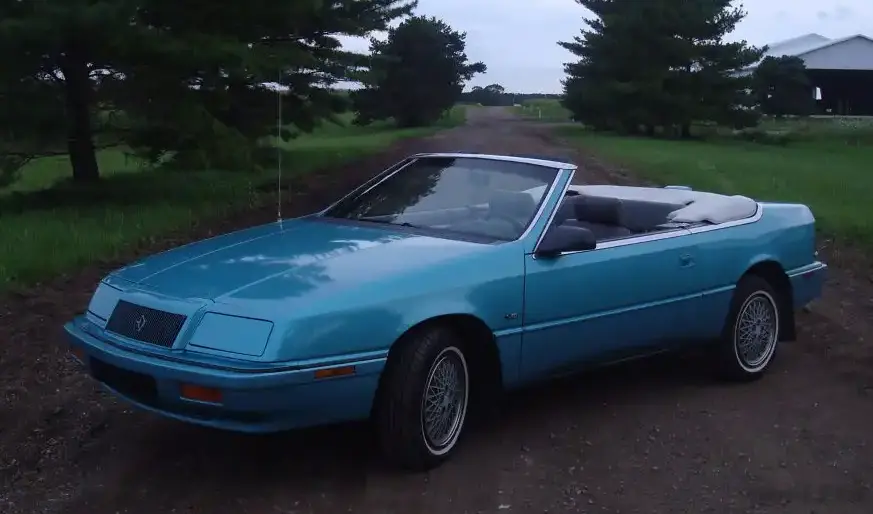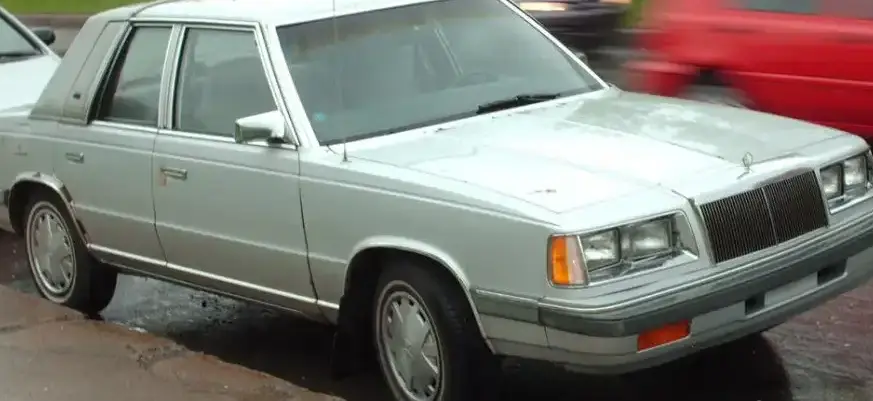
The Chrysler Le Baron 2.5i, produced from 1986 to 1994, represented a significant offering in the American mid-size sedan market. Falling within the second generation of the Le Baron (often referred to as the ‘AA’ body), the 2.5i variant was positioned as an entry-level to mid-range trim, offering a balance of affordability and comfort. It was a key component of Chrysler’s strategy to provide a diverse lineup of vehicles appealing to a broad customer base. The Le Baron, in general, aimed to provide a more luxurious experience than some of its domestic competitors, while remaining accessible in price. This particular 2.5-liter engine and three-speed automatic transmission combination was a popular choice for buyers prioritizing ease of use over outright performance.
Technical Specifications
| Brand | Chrysler |
| Model | Le Baron |
| Generation | Le Baron |
| Type (Engine) | 2.5 i (101 Hp) |
| Start of production | 1986 |
| End of production | 1994 |
| Powertrain Architecture | Internal Combustion engine |
| Body type | Sedan |
| Seats | 5 |
| Doors | 4 |
| Fuel consumption (urban) | 14 l/100 km (16.8 US mpg) |
| Fuel consumption (extra urban) | 9 l/100 km (26.1 US mpg) |
| Fuel Type | Petrol (Gasoline) |
| Maximum speed | 165 km/h (102.53 mph) |
| Weight-to-power ratio | 13.4 kg/Hp |
| Weight-to-torque ratio | 7.4 kg/Nm |
| Power | 101 Hp @ 4800 rpm |
| Power per litre | 40.4 Hp/l |
| Torque | 183 Nm @ 2800 rpm (134.97 lb.-ft. @ 2800 rpm) |
| Engine layout | Front, Transverse |
| Engine displacement | 2501 cm3 (152.62 cu. in.) |
| Number of cylinders | 4 |
| Engine configuration | Inline |
| Cylinder Bore | 87.5 mm (3.44 in.) |
| Piston Stroke | 104 mm (4.09 in.) |
| Compression ratio | 9:1 |
| Number of valves per cylinder | 2 |
| Fuel injection system | Single-point injection |
| Engine aspiration | Naturally aspirated |
| Valvetrain | OHC |
| Kerb Weight | 1350 kg (2976.24 lbs.) |
| Trunk (boot) space (minimum) | 410 l (14.48 cu. ft.) |
| Fuel tank capacity | 61 l (16.11 US gal | 13.42 UK gal) |
| Length | 4640 mm (182.68 in.) |
| Width | 1730 mm (68.11 in.) |
| Height | 1365 mm (53.74 in.) |
| Wheelbase | 2630 mm (103.54 in.) |
| Front track | 1465 mm (57.68 in.) |
| Rear track | 1455 mm (57.28 in.) |
| Drivetrain Architecture | ICE, Front Wheel Drive |
| Drive wheel | Front wheel drive |
| Number of gears and type of gearbox | 3 gears, automatic transmission |
| Front suspension | Coil spring |
| Rear suspension | Coil spring |
| Front brakes | Ventilated discs |
| Rear brakes | Disc |
| Assisting systems | ABS (Anti-lock braking system) |
| Steering type | Steering rack and pinion |
| Power steering | Hydraulic |
| Tires size | 205/60 R15 |
Powertrain & Engine Architecture
The heart of the Le Baron 2.5i was the Chrysler 2.5-liter inline-four cylinder engine. Internally designated as the engine code, this engine featured a single overhead camshaft (OHC) design and a relatively modest 9:1 compression ratio. Fuel delivery was handled by a single-point fuel injection system, a common technology for the era, which offered improved efficiency and emissions compared to carbureted systems. While not a high-performance engine, it was known for its durability and relative simplicity. The engine produced 101 horsepower at 4800 rpm and 183 Nm (134.97 lb-ft) of torque at 2800 rpm. This power was then routed through a three-speed automatic transmission, a Torqueflite A727 variant, known for its robustness but also its somewhat dated design. The transmission’s gear ratios were optimized for comfortable cruising rather than spirited acceleration.
Driving Characteristics
The driving experience in the Le Baron 2.5i was characterized by smooth, predictable operation. The three-speed automatic transmission provided adequate, though not particularly quick, acceleration. The 101 hp engine was sufficient for everyday driving, but passing maneuvers required careful planning. Compared to the more powerful Le Baron variants, such as those equipped with the 3.0-liter V6, the 2.5i felt noticeably slower. The automatic transmission, while convenient, did contribute to a slight reduction in fuel economy compared to the available five-speed manual transmission. The focus was on providing a comfortable and relaxed driving experience, making it well-suited for commuting and long highway trips.
Equipment & Trim Levels
The 2.5i trim level typically included features such as air conditioning, power steering, and an AM/FM stereo. Interior upholstery was generally cloth, with options for upgraded materials available. Dashboard configurations were relatively straightforward, prioritizing functionality over elaborate design. Common optional extras included power windows and locks, cruise control, and a sunroof. The Le Baron offered a decent level of standard equipment for its price point, making it an attractive option for budget-conscious buyers. Higher trim levels, like the Le Baron GTC, offered more luxurious appointments, such as leather upholstery and upgraded sound systems.
Chassis & Braking
The Le Baron 2.5i utilized a relatively conventional chassis design, featuring coil spring suspension at all four corners. The front suspension employed independent coil springs, while the rear suspension utilized a semi-independent twist beam setup. Braking duties were handled by ventilated discs at the front and solid discs at the rear. An anti-lock braking system (ABS) was often included as standard equipment, enhancing safety. The suspension was tuned for comfort, providing a relatively soft ride quality. The 205/60R15 tires offered a good balance of grip and ride comfort.
Market Reception & Comparison
The Le Baron 2.5i received mixed reviews from automotive critics. While praised for its comfortable ride and relatively affordable price, it was often criticized for its lack of performance and somewhat dated interior design. Compared to other mid-size sedans of the era, such as the Ford Taurus and Honda Accord, the Le Baron 2.5i offered a more luxurious feel but lacked the refinement and fuel efficiency of some of its Japanese competitors. The 3.0-liter V6-equipped Le Baron offered significantly better performance, but at a higher price point. Fuel economy was average for the time, with the 2.5i achieving around 16.8 US mpg in the city and 26.1 US mpg on the highway.
Legacy
The Chrysler Le Baron 2.5i, while not a standout performer, remains a relatively reliable and affordable classic car. The 2.5-liter engine and Torqueflite automatic transmission are known for their durability, and parts availability is generally good. Today, the Le Baron 2.5i can be found in the used car market at very reasonable prices, making it an attractive option for those seeking a comfortable and classic American sedan. However, potential buyers should be aware of potential issues such as rust and age-related wear and tear. The Le Baron 2.5i represents a snapshot of American automotive design and engineering from the late 1980s and early 1990s, offering a glimpse into a bygone era of comfortable, if not particularly exciting, motoring.