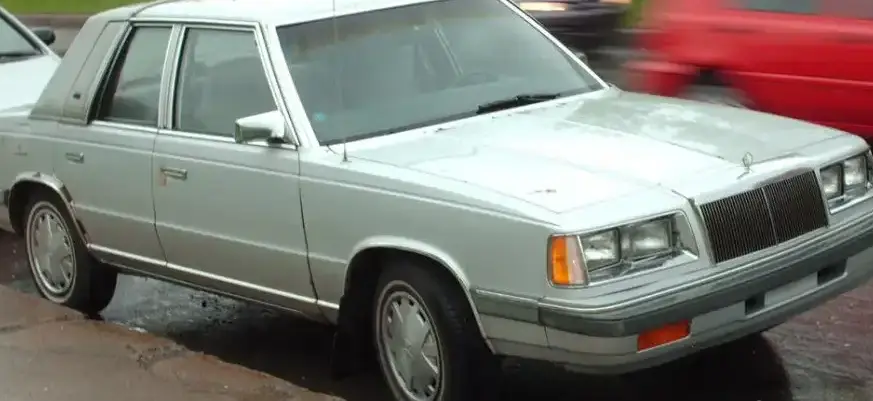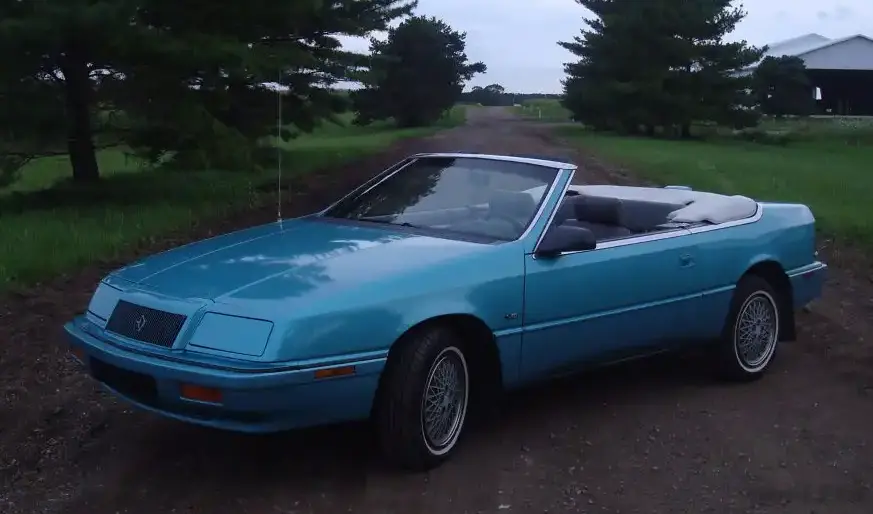
The Chrysler LeBaron Cabrio 3.0 i V6, produced between 1989 and 1995, represented a significant offering in the American convertible market. Positioned as a relatively affordable luxury option, it was part of the second generation (1987-1995) of the LeBaron line, which itself was based on the K-car platform. The Cabriolet, specifically, aimed to capture the spirit of classic open-top motoring while offering modern convenience. This particular variant, equipped with the 3.0-liter V6 engine and a four-speed automatic transmission, occupied a middle ground in the LeBaron Cabrio lineup, offering a balance between performance and ease of use. It sat below the higher-performance turbocharged variants and above the base four-cylinder models.
Technical Specifications
| Brand | Chrysler |
| Model | LE Baron |
| Generation | LE Baron Cabrio |
| Type (Engine) | 3.0 i V6 (136 Hp) Automatic |
| Start of production | 1989 year |
| End of production | 1995 year |
| Powertrain Architecture | Internal Combustion engine |
| Body type | Cabriolet |
| Seats | 4 |
| Doors | 2 |
| Fuel consumption (combined) | 9.8 l/100 km |
| Fuel consumption (US mpg) | 24 US mpg |
| Fuel consumption (UK mpg) | 28.8 UK mpg |
| Fuel consumption (km/l) | 10.2 km/l |
| Fuel Type | Petrol (Gasoline) |
| Acceleration 0 – 100 km/h | 11.2 sec |
| Acceleration 0 – 62 mph | 11.2 sec |
| Acceleration 0 – 60 mph | 10.6 sec |
| Maximum speed | 182 km/h (113.09 mph) |
| Weight-to-power ratio | 11.5 kg/Hp |
| Weight-to-torque ratio | 6.7 kg/Nm |
| Power | 136 Hp @ 5200 rpm |
| Power per litre | 45.8 Hp/l |
| Torque | 233 Nm @ 2400 rpm (171.85 lb.-ft. @ 2400 rpm) |
| Engine layout | Front, Transverse |
| Engine Model/Code | 6G72 |
| Engine displacement | 2972 cm3 (181.36 cu. in.) |
| Number of cylinders | 6 |
| Engine configuration | V-engine |
| Cylinder Bore | 91.1 mm (3.59 in.) |
| Piston Stroke | 76 mm (2.99 in.) |
| Compression ratio | 8.9:1 |
| Number of valves per cylinder | 2 |
| Fuel injection system | Multi-port manifold injection |
| Engine aspiration | Naturally aspirated engine |
| Valvetrain | OHC |
| Engine oil capacity | 4.5 l (4.76 US qt | 3.96 UK qt) |
| Coolant capacity | 9.1 l (9.62 US qt | 8.01 UK qt) |
| Kerb Weight | 1565 kg (3450.23 lbs.) |
| Max. weight | 1855 kg (4089.57 lbs.) |
| Max load | 290 kg (639.34 lbs.) |
| Trunk (boot) space – minimum | 292 l (10.31 cu. ft.) |
| Fuel tank capacity | 53 l (14 US gal | 11.66 UK gal) |
| Length | 4696 mm (184.88 in.) |
| Width | 1758 mm (69.21 in.) |
| Height | 1372 mm (54.02 in.) |
| Wheelbase | 2554 mm (100.55 in.) |
| Front track | 1462 mm (57.56 in.) |
| Rear (Back) track | 1464 mm (57.64 in.) |
| Drivetrain Architecture | The Internal combustion engine (ICE) drives the front wheels of the vehicle. |
| Drive wheel | Front wheel drive |
| Number of gears and type of gearbox | 4 gears, automatic transmission |
| Front suspension | Wishbone |
| Rear suspension | Coil spring |
| Front brakes | Ventilated discs |
| Rear brakes | Ventilated discs |
| Assisting systems | ABS (Anti-lock braking system) |
| Steering type | Steering rack and pinion |
| Power steering | Hydraulic Steering |
| Tires size | 205/60 R15 |
| Wheel rims size | 15 |
Introduction
The Chrysler LeBaron Cabrio, particularly the 3.0 i V6 Automatic variant, was a product of Chrysler’s attempt to revitalize its image in the late 1980s and early 1990s. Built on the K-car platform, which underpinned many Chrysler, Dodge, and Plymouth models, the LeBaron aimed to offer a more upscale experience than its siblings. The Cabriolet version, introduced in 1987, was a direct response to the growing popularity of affordable convertibles, competing with models like the Ford Mustang and Mazda Miata, though targeting a different, more comfort-oriented buyer. Production spanned from 1989 to 1995, with this 3.0L V6/Automatic combination being a popular choice for those seeking a blend of performance and convenience.
Powertrain & Engine Architecture
At the heart of the LeBaron Cabrio 3.0 i was the 6G72 3.0-liter V6 engine. This engine, a 60-degree V-configuration, featured a cast iron block and aluminum cylinder heads. It utilized a multi-port fuel injection system, delivering fuel directly to each cylinder for improved efficiency and power delivery. The engine employed a single overhead camshaft (OHC) design, operating two valves per cylinder. The 3.0L V6 produced 136 horsepower at 5200 rpm and 172 lb-ft of torque at 2400 rpm. Paired with this engine was a four-speed automatic transmission, providing smooth and effortless shifting. This transmission was a Chrysler-built A727 variant, known for its durability, though not particularly known for its fuel efficiency or sporty responsiveness. The automatic transmission was a key selling point for buyers prioritizing comfort and ease of driving over outright performance.
Driving Characteristics
The LeBaron Cabrio 3.0 i Automatic offered a comfortable, rather than sporty, driving experience. Acceleration from 0-60 mph took around 10.6 seconds, which was adequate for the time but not particularly quick. The automatic transmission, while smooth, had relatively wide gear ratios, resulting in noticeable shifts and a slight delay in response. Compared to the manual transmission versions or the turbocharged models, the 3.0L automatic felt less engaging and offered less immediate power. However, it excelled in providing a relaxed cruising experience, making it well-suited for highway driving. The front-wheel-drive configuration provided decent traction in most conditions, but lacked the balanced handling of a rear-wheel-drive vehicle.
Equipment & Trim Levels
The LeBaron Cabrio 3.0 i Automatic typically came standard with features like power windows, power locks, air conditioning, and a basic sound system. Upholstery was usually cloth, though leather was available as an option. The dashboard featured a straightforward layout with analog gauges. Optional extras included a premium sound system, cruise control, and a power-operated convertible top. Higher trim levels added features like leather seats, upgraded interior trim, and alloy wheels. The overall interior design aimed for a luxurious feel, though the materials used were not always of the highest quality.
Chassis & Braking
The LeBaron Cabrio utilized a front-wheel-drive chassis with an independent front suspension featuring wishbone components and a coil spring rear suspension. Braking duties were handled by ventilated disc brakes on all four wheels, supplemented by an anti-lock braking system (ABS) which was becoming increasingly common during this period. The suspension was tuned for comfort, providing a relatively soft ride. However, this also resulted in noticeable body roll during cornering. The steering was a rack-and-pinion system with hydraulic power assistance, offering light and easy steering feel.
Market Reception & Comparison
The LeBaron Cabrio 3.0 i Automatic received mixed reviews from automotive critics. While praised for its comfortable ride and relatively affordable price, it was often criticized for its lack of performance and somewhat dated interior design. Compared to the turbocharged LeBaron models, the 3.0L V6 automatic offered significantly less power and acceleration. However, it was more reliable and less prone to mechanical issues. Fuel economy was average for the time, around 24 mpg combined. The 3.0L engine proved to be reasonably durable, but the automatic transmission could be susceptible to wear and tear with high mileage.
Legacy
Today, the Chrysler LeBaron Cabrio 3.0 i Automatic is considered a classic of the late 1980s and early 1990s. While not a high-performance vehicle, it represents a significant moment in Chrysler’s history and a popular choice for those seeking an affordable and stylish convertible. The 3.0L V6 engine and automatic transmission combination, while not the most exciting powertrain, proved to be relatively reliable. Well-maintained examples are becoming increasingly collectible, appealing to enthusiasts who appreciate the car’s retro styling and comfortable driving experience. Parts availability can be a challenge, but many components are still available through aftermarket suppliers. The LeBaron Cabrio remains a testament to a time when convertibles were becoming accessible to a wider range of buyers.