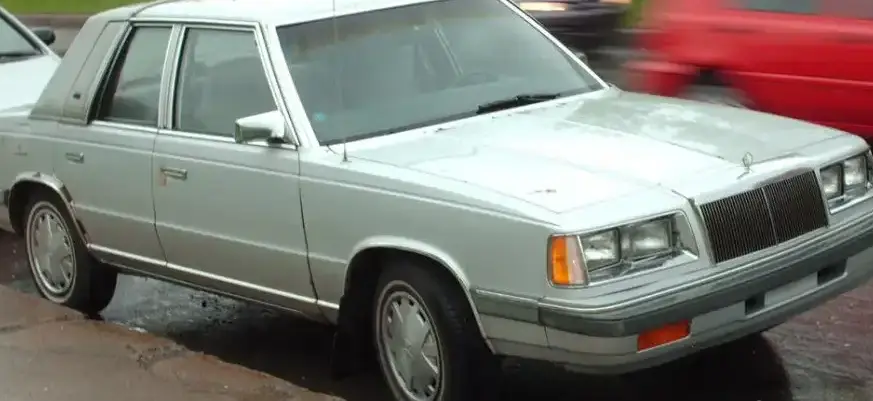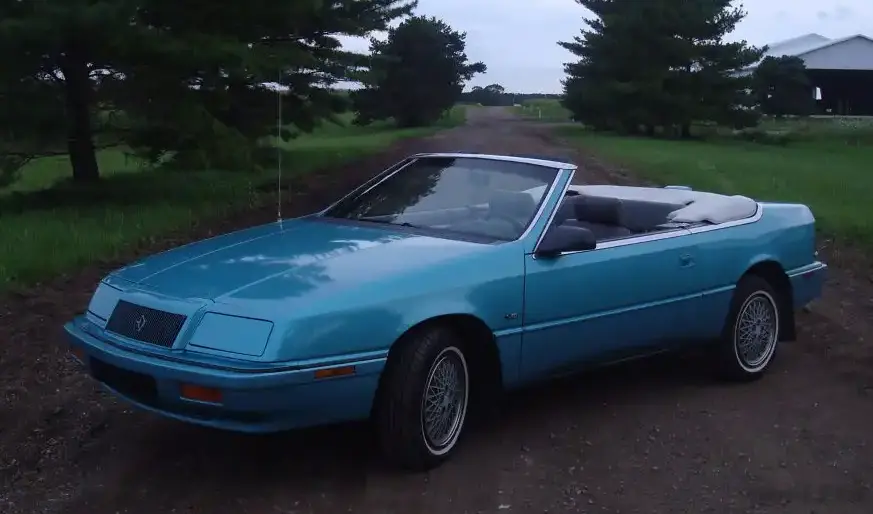
The Chrysler LeBaron Cabrio 3.0i V6, produced between 1990 and 1996, represented a significant offering in the American convertible market. Positioned as a relatively affordable luxury option, it was part of the second generation (1987-1995) of the LeBaron, which saw the introduction of a dedicated convertible model. This variant, equipped with the 3.0-liter V6 engine and a five-speed manual transmission, aimed to provide a balance of performance and open-air enjoyment. It occupied a mid-range position within the LeBaron Cabrio lineup, offering more power than the base 2.5-liter four-cylinder models but falling short of the performance offered by potential turbocharged options that were never fully realized for the US market.
Technical Specifications
| Brand | Chrysler |
| Model | LE Baron |
| Generation | LE Baron Cabrio |
| Type (Engine) | 3.0 i V6 (143 Hp) |
| Start of production | 1990 year |
| End of production | 1996 year |
| Powertrain Architecture | Internal Combustion engine |
| Body type | Cabriolet |
| Seats | 4 |
| Doors | 2 |
| Fuel consumption (urban) | 14 l/100 km (16.8 US mpg, 20.2 UK mpg, 7.1 km/l) |
| Fuel consumption (extra urban) | 6.9 l/100 km (34.1 US mpg, 40.9 UK mpg, 14.5 km/l) |
| Fuel consumption (combined) | 8.9 l/100 km (26.4 US mpg, 31.7 UK mpg, 11.2 km/l) |
| Fuel Type | Petrol (Gasoline) |
| Acceleration 0 – 100 km/h | 11.1 sec |
| Acceleration 0 – 62 mph | 11.1 sec |
| Acceleration 0 – 60 mph | 10.5 sec |
| Maximum speed | 182 km/h (113.09 mph) |
| Weight-to-power ratio | 10.1 kg/Hp, 98.8 Hp/tonne |
| Weight-to-torque ratio | 6.2 kg/Nm, 160.3 Nm/tonne |
| Power | 143 Hp @ 5000 rpm |
| Power per litre | 48.1 Hp/l |
| Torque | 232 Nm @ 2800 rpm (171.11 lb.-ft. @ 2800 rpm) |
| Engine layout | Front, Transverse |
| Engine Model/Code | 6G72 |
| Engine displacement | 2972 cm3 (181.36 cu. in.) |
| Number of cylinders | 6 |
| Engine configuration | V-engine |
| Cylinder Bore | 91.1 mm (3.59 in.) |
| Piston Stroke | 76 mm (2.99 in.) |
| Compression ratio | 8.9:1 |
| Number of valves per cylinder | 2 |
| Fuel injection system | Multi-port manifold injection |
| Engine aspiration | Naturally aspirated engine |
| Valvetrain | OHC |
| Engine oil capacity | 4.5 l (4.76 US qt | 3.96 UK qt) |
| Coolant | 9.1 l (9.62 US qt | 8.01 UK qt) |
| Kerb Weight | 1447 kg (3190.09 lbs.) |
| Max. weight | 1840 kg (4056.51 lbs.) |
| Max load | 393 kg (866.42 lbs.) |
| Trunk (boot) space – minimum | 292 l (10.31 cu. ft.) |
| Fuel tank capacity | 53 l (14 US gal | 11.66 UK gal) |
| Length | 4694 mm (184.8 in.) |
| Width | 1757 mm (69.17 in.) |
| Height | 1331 mm (52.4 in.) |
| Wheelbase | 2554 mm (100.55 in.) |
| Front track | 1464 mm (57.64 in.) |
| Rear (Back) track | 1464 mm (57.64 in.) |
| Drivetrain Architecture | The Internal combustion engine (ICE) drives the front wheels of the vehicle. |
| Drive wheel | Front wheel drive |
| Number of gears and type of gearbox | 5 gears, manual transmission |
| Front suspension | Double wishbone |
| Rear suspension | Coil spring |
| Front brakes | Ventilated discs |
| Rear brakes | Disc |
| Assisting systems | ABS (Anti-lock braking system) |
| Steering type | Steering rack and pinion |
| Power steering | Hydraulic Steering |
| Tires size | 205/60 R15 |
Powertrain & Engine Architecture
The heart of this LeBaron Cabrio is the 6G72 3.0-liter V6 engine. This engine, a member of Chrysler’s robust V6 family, featured a 60-degree V-angle and a cast iron block with aluminum cylinder heads. It utilized a multi-port fuel injection system, delivering fuel directly to each intake port for improved efficiency and power delivery. The engine employed a single overhead camshaft (OHC) design, operating two valves per cylinder. The 5-speed manual transmission provided a more engaging driving experience compared to the available automatic option, offering better control and potentially improved fuel economy. The transmission was a standard front-wheel-drive configuration, typical for Chrysler vehicles of this era.
Driving Characteristics
The 143 horsepower and 171 lb-ft of torque offered by the 3.0L V6 and 5-speed manual combination provided adequate, though not exhilarating, performance. Acceleration to 60 mph took around 10.5 seconds, making it competitive with other similarly priced convertibles of the time. The manual transmission allowed drivers to make the most of the engine’s powerband, providing more responsive acceleration and control. Gear ratios were tuned for a balance of everyday drivability and highway cruising. Compared to the base 2.5-liter four-cylinder LeBaron Cabrio, the 3.0L V6 offered a noticeable improvement in both acceleration and overall refinement. However, it didn’t possess the outright performance of potential turbocharged variants that were considered but never materialized for the US market.
Equipment & Trim Levels
The LeBaron Cabrio 3.0i V6 typically came standard with features such as power windows, power locks, air conditioning, and a premium sound system. The interior featured cloth upholstery, though leather was available as an option. Dashboard design was relatively straightforward, prioritizing functionality over elaborate styling. Optional extras included a power-operated convertible top, upgraded sound systems, and alloy wheels. The trim level often dictated the availability of these features, with higher trims offering more standard equipment and luxurious appointments.
Chassis & Braking
The LeBaron Cabrio utilized a front-wheel-drive chassis with a double wishbone suspension in the front and a coil spring suspension in the rear. This setup provided a comfortable ride, though handling was not particularly sporty. The car was equipped with ventilated disc brakes in the front and solid disc brakes in the rear. An anti-lock braking system (ABS) was standard, enhancing safety and control during emergency braking situations. The suspension was tuned for comfort, prioritizing a smooth ride over aggressive handling.
Market Reception & Comparison
The LeBaron Cabrio was generally well-received by critics as an affordable and stylish convertible. The 3.0L V6 engine was praised for its smooth operation and adequate power. However, some reviewers noted that the car’s handling was not as sharp as some of its European competitors. Compared to the 2.5-liter four-cylinder version, the 3.0L V6 offered a significant improvement in performance and refinement, justifying the higher price tag. Fuel economy was reasonable for a vehicle of its size and type, averaging around 26 mpg in combined driving. Reliability was generally good, though some owners reported issues with the convertible top mechanism and electrical components.
Legacy
The Chrysler LeBaron Cabrio, particularly the 3.0L V6 variant, has become a popular choice among classic car enthusiasts. The powertrain, while not exceptionally powerful by modern standards, has proven to be relatively durable and reliable. Parts availability is generally good, making maintenance and repairs relatively straightforward. Today, well-maintained examples of the LeBaron Cabrio are sought after for their classic styling, open-air driving experience, and affordability. The car represents a significant chapter in Chrysler’s history, offering a glimpse into the American convertible market of the 1990s.