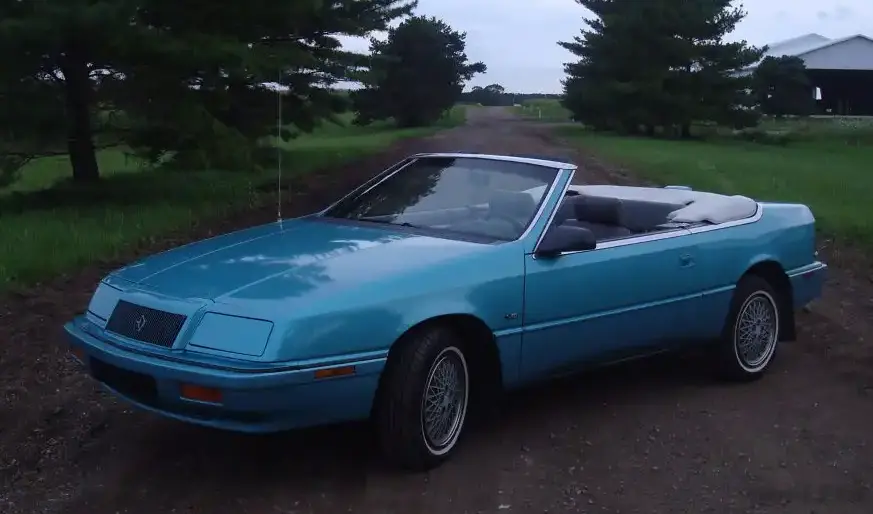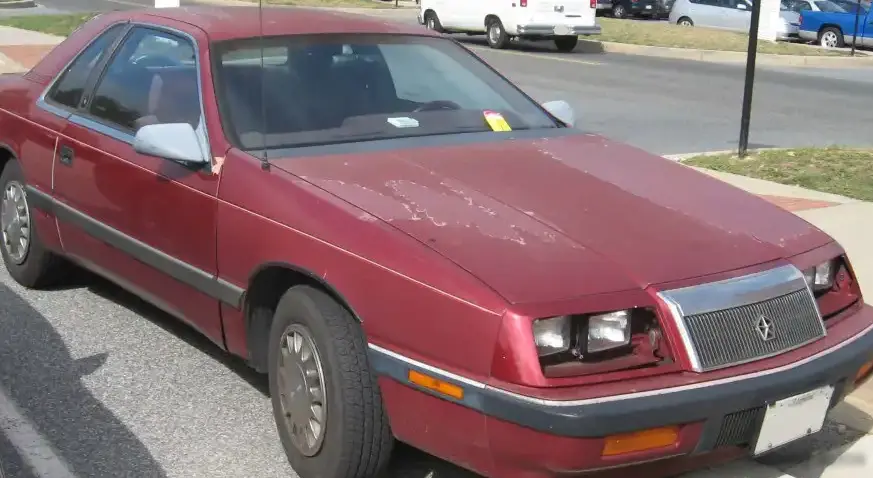
The Chrysler LeBaron Coupe 2.5i, produced from 1986 to 1995, represented a significant offering in the American mid-size coupe market. Positioned as a stylish and relatively affordable personal luxury car, the 2.5i variant occupied the entry-level position within the LeBaron Coupe lineup, slotting below the more powerful V6 models. Built on the Chrysler H-body platform, the LeBaron Coupe aimed to provide a blend of comfort, convenience, and moderate performance for the average American driver. This generation of LeBaron, the second, saw a shift towards more aerodynamic styling and a greater emphasis on interior features compared to its predecessor.
Technical Specifications
| Brand | Chrysler |
| Model | LeBaron |
| Generation | LeBaron Coupe |
| Type (Engine) | 2.5 i (101 Hp) |
| Start of production | 1986 year |
| End of production | 1995 year |
| Powertrain Architecture | Internal Combustion engine |
| Body type | Coupe |
| Seats | 5 |
| Doors | 2 |
| Fuel consumption (urban) | 13 l/100 km (18.1 US mpg) |
| Fuel consumption (extra urban) | 8 l/100 km (29.4 US mpg) |
| Fuel Type | Petrol (Gasoline) |
| Maximum speed | 165 km/h (102.53 mph) |
| Weight-to-power ratio | 12.8 kg/Hp |
| Weight-to-torque ratio | 7.1 kg/Nm |
| Power | 101 Hp @ 4800 rpm |
| Power per litre | 40.4 Hp/l |
| Torque | 183 Nm @ 2800 rpm (134.97 lb.-ft. @ 2800 rpm) |
| Engine layout | Front, Transverse |
| Engine displacement | 2501 cm3 (152.62 cu. in.) |
| Number of cylinders | 4 |
| Engine configuration | Inline |
| Cylinder Bore | 87.5 mm (3.44 in.) |
| Piston Stroke | 104 mm (4.09 in.) |
| Compression ratio | 9:1 |
| Number of valves per cylinder | 2 |
| Fuel injection system | Single-point injection |
| Engine aspiration | Naturally aspirated engine |
| Valvetrain | OHC |
| Kerb Weight | 1295 kg (2854.99 lbs.) |
| Trunk (boot) space – minimum | 395 l (13.95 cu. ft.) |
| Fuel tank capacity | 53 l (14 US gal | 11.66 UK gal) |
| Length | 4695 mm (184.84 in.) |
| Width | 1740 mm (68.5 in.) |
| Height | 1760 mm (69.29 in.) |
| Wheelbase | 2550 mm (100.39 in.) |
| Front track | 1460 mm (57.48 in.) |
| Rear (Back) track | 1460 mm (57.48 in.) |
| Drivetrain Architecture | The Internal combustion engine (ICE) drives the front wheels of the vehicle. |
| Drive wheel | Front wheel drive |
| Number of gears and type of gearbox | 3 gears, automatic transmission |
| Front suspension | Coil spring |
| Rear suspension | Coil spring |
| Front brakes | Ventilated discs |
| Rear brakes | Disc |
| Assisting systems | ABS (Anti-lock braking system) |
| Steering type | Steering rack and pinion |
| Power steering | Hydraulic Steering |
| Tires size | 195/70 R14 |
Powertrain & Engine Architecture
The heart of the LeBaron Coupe 2.5i was the Chrysler 2.5-liter inline-four cylinder engine. This engine, internally designated as the 525 engine family, utilized a single overhead camshaft (OHC) design with two valves per cylinder. Fuel delivery was managed by a single-point fuel injection system, a relatively common technology for the time, but less sophisticated than multi-port injection found in some competitors. The 9:1 compression ratio was a compromise between performance and the fuel quality available in the American market. The engine produced 101 horsepower at 4800 rpm and 183 Nm (135 lb-ft) of torque at 2800 rpm. This power was then routed through a three-speed automatic transmission, a Torqueflite A727 variant, to the front wheels. The transmission was chosen for its smoothness and reliability, catering to the comfort-oriented nature of the LeBaron. The A727 was a well-established design, known for its durability and relatively simple construction, making it a cost-effective choice for Chrysler.
Driving Characteristics
The 2.5i LeBaron Coupe offered adequate, but not exhilarating, performance. Acceleration was modest, with a 0-60 mph time estimated around 11-12 seconds. The three-speed automatic transmission, while smooth, lacked the responsiveness of a manual gearbox or a more modern automatic with additional gears. The gear ratios were optimized for fuel economy and cruising comfort rather than spirited driving. In real-world conditions, the 2.5i felt most comfortable on the highway, where its relaxed cruising ability and comfortable suspension could be fully appreciated. Compared to the V6-powered LeBaron models, the 2.5i offered significantly less power and acceleration, but it did provide a noticeable improvement in fuel economy. The automatic transmission’s shift points were calibrated for smooth transitions, prioritizing a comfortable driving experience over aggressive acceleration. The relatively low horsepower meant that the engine often felt strained when attempting quick overtaking maneuvers or climbing steep hills.
Equipment & Trim Levels
The LeBaron Coupe 2.5i typically came standard with features such as air conditioning, power steering, power brakes, a basic AM/FM stereo, and cloth upholstery. The interior design was characterized by a somewhat conservative aesthetic, prioritizing functionality over outright luxury. Optional extras included upgraded sound systems, power windows and locks, cruise control, and a sunroof. Higher trim levels, often denoted by specific packages, could add features like leather upholstery, alloy wheels, and more sophisticated interior trim. The base model aimed for affordability, while optional packages allowed buyers to customize their LeBaron to a degree. A popular option was the “Luxury Package” which included features like upgraded interior trim and a better stereo system. The 2.5i trim was often chosen by buyers who wanted a stylish coupe without the higher price tag of the V6 models.
Chassis & Braking
The LeBaron Coupe utilized a front-engine, front-wheel-drive layout. Suspension consisted of coil springs and independent front suspension, with a twist-beam rear axle. The braking system featured ventilated discs on the front wheels and solid discs on the rear, providing adequate stopping power for the vehicle’s weight and performance. Anti-lock brakes (ABS) were available as an option, enhancing safety. Steering was handled by a hydraulic power steering system, offering light and easy maneuverability. The chassis was tuned for a comfortable ride, prioritizing smoothness over sharp handling. The twist-beam rear suspension, while cost-effective, contributed to a less refined ride compared to fully independent rear suspension systems found in some competitors. The front disc brakes provided sufficient stopping power for normal driving conditions, but could exhibit fade under heavy use.
Market Reception & Comparison
The LeBaron Coupe 2.5i was generally well-received as an affordable and stylish coupe. Critics praised its comfortable ride and spacious interior, but noted its lack of outright performance compared to some competitors. Fuel economy was considered respectable for the time. Compared to other coupes in its class, such as the Ford Thunderbird and Chevrolet Cavalier, the LeBaron offered a unique blend of American styling and European-influenced engineering. The 2.5i variant was often seen as a sensible choice for buyers prioritizing fuel efficiency and affordability over performance. The V6 models were favored by those seeking more power and a more engaging driving experience. Consumer reports often highlighted the LeBaron’s comfortable ride and spacious interior as key selling points, but also noted the engine’s lack of refinement compared to some Japanese competitors.
Legacy
The Chrysler LeBaron Coupe 2.5i, while not a performance icon, remains a fondly remembered vehicle for many. The 2.5-liter engine and A727 automatic transmission proved to be relatively reliable, and parts availability remains reasonable today. While not highly sought after by collectors, well-maintained examples of the 2.5i LeBaron Coupe can still be found on the used car market, offering a nostalgic glimpse into 1980s and 1990s American automotive design. Its enduring appeal lies in its affordability, comfort, and relatively simple mechanical design, making it a viable option for those seeking a classic coupe experience without the complexities of more modern vehicles. The 2.5i LeBaron Coupe represents a specific era of American automotive design – a time when comfort and style were often prioritized over outright performance, and affordability was a key consideration for many buyers. Today, these cars are often seen as a relatively inexpensive entry point into the world of classic American coupes.