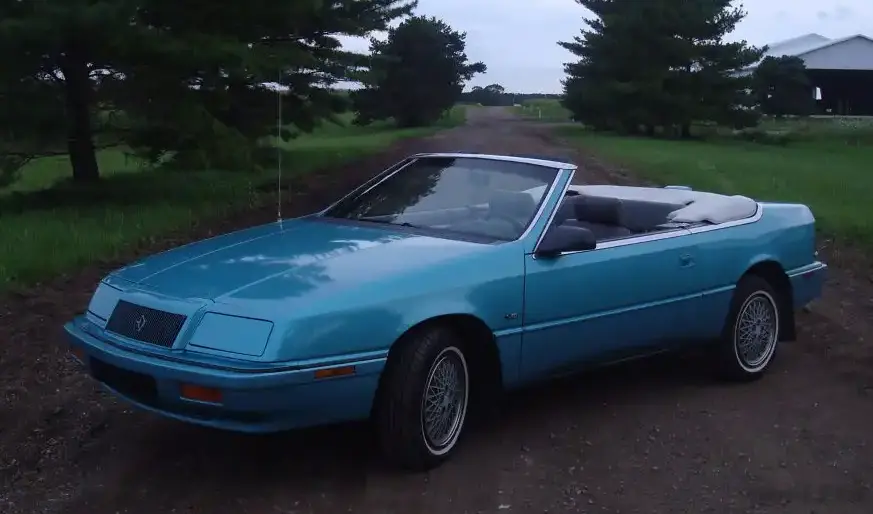
The Chrysler LeBaron Coupe 2.5i Turbo, produced from 1989 to 1995, represented a performance-oriented variant within the second generation of the LeBaron (often referred to as the J-body). Positioned as a step up from the naturally aspirated models, the 2.5i Turbo aimed to deliver a more engaging driving experience while maintaining the LeBaron’s reputation for comfortable cruising. This coupe utilized the Chrysler’s front-wheel-drive platform and was marketed towards buyers seeking a sporty, yet affordable, personal luxury car. It occupied a middle ground in the LeBaron lineup, offering more power than the base models but falling short of the more luxurious features found in the higher-end LeBaron convertibles.
Technical Specifications
| Brand | Chrysler |
| Model | LeBaron |
| Generation | LeBaron Coupe |
| Type (Engine) | 2.5 i Turbo (155 Hp) 4 Seat |
| Start of production | 1989 |
| End of production | 1995 |
| Powertrain Architecture | Internal Combustion engine |
| Body type | Coupe |
| Seats | 4 |
| Doors | 2 |
| Fuel consumption (urban) | 13.6 l/100 km (17.3 US mpg) |
| Fuel consumption (extra urban) | 7.8 l/100 km (30.2 US mpg) |
| Fuel consumption (combined) | 10 l/100 km (23.5 US mpg) |
| Fuel Type | Petrol (Gasoline) |
| Acceleration 0 – 100 km/h | 8.7 sec |
| Acceleration 0 – 62 mph | 8.7 sec |
| Acceleration 0 – 60 mph | 8.3 sec |
| Maximum speed | 198 km/h (123.03 mph) |
| Weight-to-power ratio | 8.9 kg/Hp |
| Weight-to-torque ratio | 4.8 kg/Nm |
| Power | 155 Hp @ 4800 rpm |
| Power per litre | 62 Hp/l |
| Torque | 284 Nm @ 2400 rpm (209.47 lb.-ft. @ 2400 rpm) |
| Engine layout | Front, Transverse |
| Engine displacement | 2501 cm3 (152.62 cu. in.) |
| Number of cylinders | 4 |
| Engine configuration | Inline |
| Cylinder Bore | 87.5 mm (3.44 in.) |
| Piston Stroke | 104 mm (4.09 in.) |
| Compression ratio | 7.8:1 |
| Number of valves per cylinder | 2 |
| Fuel injection system | Multi-port manifold injection |
| Engine aspiration | Turbocharger |
| Valvetrain | OHC |
| Engine oil capacity | 4.4 l (4.65 US qt | 3.87 UK qt) |
| Coolant capacity | 8.5 l (8.98 US qt | 7.48 UK qt) |
| Kerb Weight | 1375 kg (3031.36 lbs.) |
| Max. weight | 1840 kg (4056.51 lbs.) |
| Max load | 465 kg (1025.15 lbs.) |
| Trunk (boot) space – minimum | 292 l (10.31 cu. ft.) |
| Fuel tank capacity | 53 l (14 US gal | 11.66 UK gal) |
| Length | 4694 mm (184.8 in.) |
| Width | 1758 mm (69.21 in.) |
| Height | 1372 mm (54.02 in.) |
| Wheelbase | 2554 mm (100.55 in.) |
| Front track | 1462 mm (57.56 in.) |
| Rear (Back) track | 1464 mm (57.64 in.) |
| Drivetrain Architecture | Front wheel drive |
| Number of gears and type of gearbox | 5 gears, manual transmission |
| Front suspension | Wishbone |
| Rear suspension | Coil spring |
| Front brakes | Ventilated discs |
| Rear brakes | Disc |
| Assisting systems | ABS (Anti-lock braking system) |
| Steering type | Steering rack and pinion |
| Power steering | Hydraulic Steering |
| Tires size | 195/70 R14 |
Powertrain & Engine Architecture
The heart of the LeBaron Coupe 2.5i Turbo was the Chrysler 2.5-liter inline-four cylinder engine, designated with engine codes such as 525. This engine featured a turbocharger and multi-port fuel injection, significantly boosting its output compared to the naturally aspirated 2.5-liter engine found in other LeBaron models. The engine utilized a single overhead camshaft (OHC) valvetrain with two valves per cylinder. The turbocharger, a Garrett T25, provided a noticeable increase in horsepower and torque, allowing for quicker acceleration. The 5-speed manual transmission was the standard offering, providing drivers with greater control over the engine’s power. The engine’s 7.8:1 compression ratio was a compromise between performance and reliability, typical for turbocharged engines of the era.
Driving Characteristics
The 2.5i Turbo LeBaron Coupe offered a distinctly more spirited driving experience than its naturally aspirated counterparts. The turbocharger provided a surge of power in the mid-range, making overtaking maneuvers easier and more confident. While not a true sports car, the turbo engine and manual transmission combination allowed for brisk acceleration, achieving 0-60 mph in approximately 8.3 seconds. The front-wheel-drive layout provided decent handling, although torque steer could be noticeable under hard acceleration. The 5-speed manual transmission offered precise shifts, enhancing driver engagement. Compared to the automatic transmission options available on other LeBaron models, the manual version provided a more direct connection to the engine and improved fuel efficiency.
Equipment & Trim Levels
The LeBaron Coupe 2.5i Turbo typically came equipped with a reasonable level of standard features. These included power windows, power locks, air conditioning, and an AM/FM stereo. Upholstery was generally cloth, although leather options were available. The dashboard featured a straightforward layout with easy-to-read gauges. Optional extras included a sunroof, upgraded sound system, and cruise control. The interior trim was generally functional and comfortable, reflecting the LeBaron’s positioning as a personal luxury coupe. The Turbo model often received subtle exterior styling cues, such as a rear spoiler, to differentiate it from the base models.
Chassis & Braking
The LeBaron Coupe utilized a front-wheel-drive chassis with an independent front suspension featuring wishbone components and a coil spring rear suspension. The front brakes were ventilated discs, providing adequate stopping power, while the rear brakes were solid discs. ABS (Anti-lock Braking System) was available as an option, enhancing safety. The suspension was tuned for a balance between comfort and handling, providing a relatively smooth ride over most road surfaces. The steering was rack-and-pinion with hydraulic power assist, offering responsive and precise steering feel. Tire size was typically 195/70 R14.
Market Reception & Comparison
The LeBaron Coupe 2.5i Turbo received mixed reviews from automotive critics. While praised for its improved performance compared to the base models, some reviewers found the interior materials to be somewhat lacking in quality. Fuel economy was reasonable for a turbocharged vehicle of its time, averaging around 23.5 mpg in combined driving. Compared to other coupes in its price range, such as the Ford Probe or Mazda MX-6, the LeBaron offered a more comfortable ride but less sporty handling. The 2.5i Turbo was generally considered a more reliable option than some of the European sports coupes of the era, but it did require regular maintenance to ensure the turbocharger remained in good working order.
Legacy
The Chrysler LeBaron Coupe 2.5i Turbo, while not a groundbreaking vehicle, holds a place in automotive history as a relatively affordable and accessible turbocharged coupe. The 2.5-liter turbo engine proved to be reasonably durable, although regular oil changes and maintenance were crucial for longevity. Today, well-maintained examples are becoming increasingly sought after by collectors and enthusiasts. The LeBaron Coupe 2.5i Turbo represents a unique chapter in Chrysler’s history, showcasing the company’s willingness to experiment with forced induction technology in a mainstream vehicle. Finding parts can be challenging, but a dedicated community of LeBaron owners exists to provide support and resources.