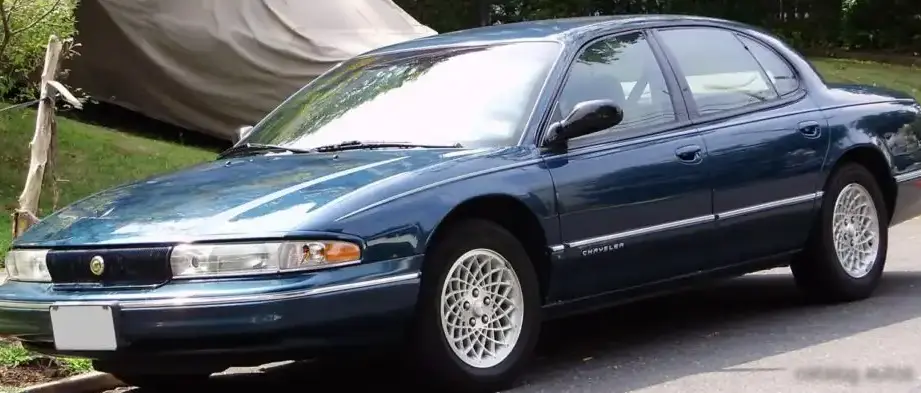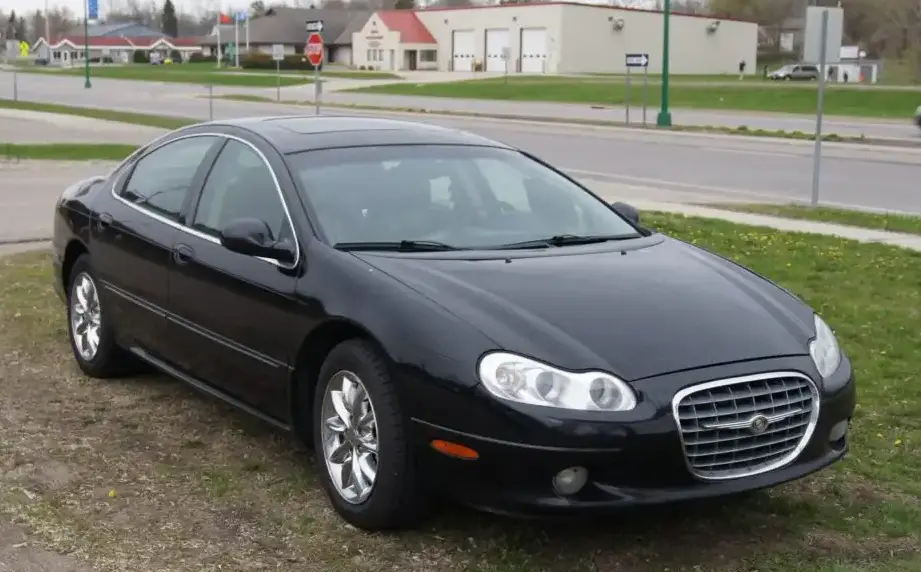
The Chrysler LHS II 3.5 i V6 24V, produced between 1999 and 2001, represented the second generation of Chrysler’s LHS (Luxury Home Sedan). Positioned as a near-luxury offering within the Chrysler lineup, the LHS II aimed to provide comfortable, spacious transportation with a focus on American-style ride quality. It shared its platform with the Dodge Intrepid and Concorde, but differentiated itself through unique styling cues and a more upscale interior. This particular variant, equipped with the 3.5-liter V6 engine and a four-speed automatic transmission, was a mainstay of the LHS II range, offering a balance of performance and convenience for the target demographic of family-oriented buyers seeking a comfortable and reliable full-size sedan.
Technical Specifications
| Brand | Chrysler |
| Model | LHS |
| Generation | LHS II |
| Type (Engine) | 3.5 i V6 24V (218 Hp) Automatic |
| Start of production | 1999 year |
| End of production | 2001 year |
| Powertrain Architecture | Internal Combustion engine |
| Body type | Sedan |
| Seats | 5 |
| Doors | 4 |
| Fuel consumption (combined) | 11.3 l/100 km |
| Fuel consumption (US mpg) | 20.8 US mpg |
| Fuel consumption (UK mpg) | 25 UK mpg |
| Fuel consumption (km/l) | 8.8 km/l |
| Fuel Type | Petrol (Gasoline) |
| Weight-to-power ratio | 7.4 kg/Hp |
| Power | 218 Hp @ 5800 rpm |
| Power per litre | 62 Hp/l |
| Torque | 300 Nm @ 2800 rpm |
| Torque (lb.-ft.) | 221.27 lb.-ft. @ 2800 rpm |
| Engine layout | Front, Longitudinal |
| Engine Model/Code | EGG |
| Engine displacement | 3518 cm3 |
| Engine displacement (cu. in.) | 214.68 cu. in. |
| Number of cylinders | 6 |
| Engine configuration | V-engine |
| Cylinder Bore | 96 mm |
| Cylinder Bore (in.) | 3.78 in. |
| Piston Stroke | 81 mm |
| Piston Stroke (in.) | 3.19 in. |
| Compression ratio | 10.4:1 |
| Number of valves per cylinder | 4 |
| Fuel injection system | Multi-port manifold injection |
| Engine aspiration | Naturally aspirated engine |
| Engine oil capacity | 4.7 l |
| Engine oil capacity (US qt) | 4.97 US qt |
| Engine oil capacity (UK qt) | 4.14 UK qt |
| Coolant | 8.9 l |
| Coolant (US qt) | 9.4 US qt |
| Coolant (UK qt) | 7.83 UK qt |
| Kerb Weight | 1610 kg |
| Kerb Weight (lbs.) | 3549.44 lbs. |
| Trunk (boot) space – minimum | 530 l |
| Trunk (boot) space (cu. ft.) | 18.72 cu. ft. |
| Fuel tank capacity | 68 l |
| Fuel tank capacity (US gal) | 17.96 US gal |
| Fuel tank capacity (UK gal) | 14.96 UK gal |
| Length | 5268 mm |
| Length (in.) | 207.4 in. |
| Width | 1890 mm |
| Width (in.) | 74.41 in. |
| Height | 1416 mm |
| Height (in.) | 55.75 in. |
| Wheelbase | 2870 mm |
| Wheelbase (in.) | 112.99 in. |
| Front track | 1574 mm |
| Front track (in.) | 61.97 in. |
| Rear (Back) track | 1574 mm |
| Rear (Back) track (in.) | 61.97 in. |
| Drivetrain Architecture | The Internal combustion engine (ICE) drives the front wheels of the vehicle. |
| Drive wheel | Front wheel drive |
| Number of gears and type of gearbox | 4 gears, automatic transmission |
| Front suspension | Wishbone |
| Rear suspension | Coil spring |
| Front brakes | Disc |
| Rear brakes | Disc |
| Assisting systems | ABS (Anti-lock braking system) |
| Steering type | Steering rack and pinion |
| Power steering | Hydraulic Steering |
| Tires size | 225/60 R16 |
Powertrain & Engine Architecture
The heart of the LHS II 3.5 i was the EGG engine, a 3.5-liter (3518 cc) 60-degree V6. This engine featured a cast iron block with aluminum cylinder heads, and utilized a dual overhead camshaft (DOHC) design with four valves per cylinder. The multi-port fuel injection system delivered fuel directly to each cylinder, optimizing combustion efficiency. The engine produced 218 horsepower at 5800 rpm and 300 Nm (221 lb-ft) of torque at 2800 rpm. Paired with this engine was a Chrysler 42RE four-speed automatic transmission. This transmission was known for its smooth shifting characteristics, but wasn’t particularly advanced compared to some contemporary automatic gearboxes. It featured electronic control for optimized shift points based on throttle position and vehicle speed.
Driving Characteristics
The 3.5-liter V6 and four-speed automatic combination in the LHS II provided adequate, but not exhilarating, performance. Acceleration from 0 to 60 mph was typically in the 7.5-8.5 second range. The automatic transmission was tuned for comfort, resulting in relatively relaxed gear changes and a focus on smooth cruising. While the transmission offered a “Drive” and “L” (Low) setting, it lacked a manual shift mode. Compared to the higher-output versions available on the Dodge Intrepid R/T, the LHS II felt noticeably less responsive. However, it offered a more refined driving experience than the base 2.7-liter V6 models. The emphasis was on providing a comfortable and quiet ride, making it well-suited for long highway journeys.
Equipment & Trim Levels
The LHS II came standard with a generous array of features, reflecting its positioning as a near-luxury vehicle. Standard equipment included air conditioning, power windows and locks, a premium sound system, cruise control, and alloy wheels. The interior featured comfortable cloth upholstery, although leather was available as an option. Optional extras included a sunroof, upgraded sound system with a CD changer, and automatic temperature control. The dashboard layout was clean and functional, with easy-to-read gauges and intuitive controls. The LHS II’s interior prioritized space and comfort, offering ample legroom for both front and rear passengers.
Chassis & Braking
The LHS II utilized an independent front suspension with wishbone configuration and a coil-spring rear suspension. This setup provided a comfortable ride, absorbing bumps and irregularities in the road surface effectively. The LHS II was equipped with disc brakes on all four wheels, providing adequate stopping power. An Anti-lock Braking System (ABS) was standard, enhancing safety and control during emergency braking situations. Steering was handled by a hydraulic power rack-and-pinion system, offering responsive and precise steering feel. The tire size was 225/60 R16, providing a good balance of ride comfort and handling.
Market Reception & Comparison
The Chrysler LHS II was generally well-received by automotive critics, who praised its spacious interior, comfortable ride, and generous standard features. However, some reviewers noted that its performance was not as exciting as some of its competitors. Compared to the Dodge Intrepid, the LHS II offered a more refined interior and a more upscale image. Fuel economy was typical for a full-size sedan of its era, averaging around 20.8 US mpg in combined driving. Reliability was generally good, although some owners reported minor issues with the automatic transmission and electrical components. The LHS II offered a compelling value proposition for buyers seeking a comfortable and well-equipped full-size sedan at a reasonable price.
Legacy
The Chrysler LHS II, particularly the 3.5-liter V6 automatic variant, has developed a reputation as a reliable and comfortable used car. The 42RE transmission, while not the most technologically advanced, proved to be relatively durable with proper maintenance. The 3.5-liter V6 engine is also known for its longevity. Today, the LHS II represents an affordable entry point into the world of American full-size sedans, offering a spacious interior, comfortable ride, and a touch of understated luxury. While not a performance icon, it remains a practical and dependable choice for those seeking a comfortable and reliable vehicle.