
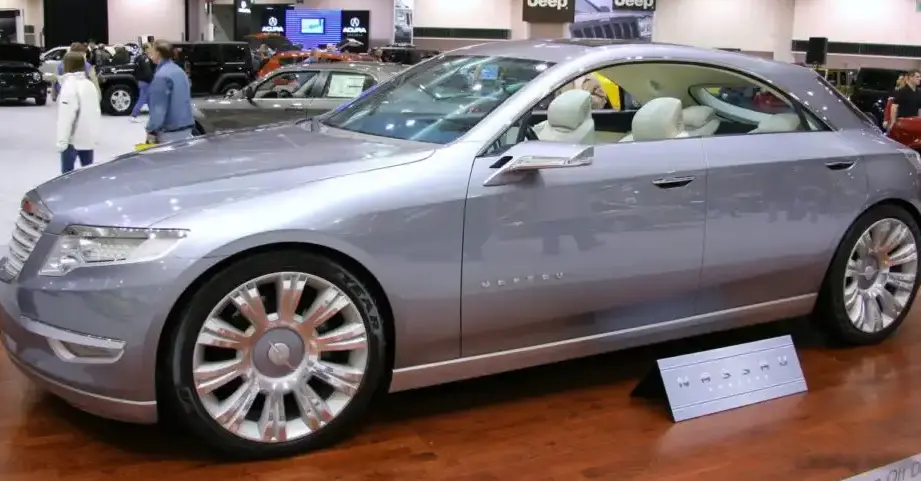
The Chrysler Nassau Concept, specifically the 6.1-liter (425 hp) variant with an automatic transmission, was a striking design exercise unveiled by Chrysler in 2007. It served as a showcase for the brand’s potential direction, blending luxury, performance, and a distinctive fastback silhouette. Production was limited to a single concept vehicle; it never reached series production. The Nassau Concept was intended to gauge public reaction to a potential flagship sedan positioned above the Chrysler 300, aiming to recapture some of the brand’s former glory in the luxury segment. It was a significant vehicle for Chrysler, representing a bold attempt to redefine its image and appeal to a more discerning clientele.
Technical Specifications
| Brand | Chrysler |
| Model | Nassau |
| Generation | Nassau Concept |
| Type (Engine) | 6.1 (425 Hp) Automatic |
| Start of production | 2007 |
| End of production | 2007 |
| Powertrain Architecture | Internal Combustion engine |
| Body type | Hatchback |
| Seats | 4 |
| Doors | 5 |
| Fuel Type | Petrol (Gasoline) |
| Acceleration 0 – 60 mph | 5 sec |
| Maximum speed | 266 km/h (165.28 mph) |
| Weight-to-power ratio | 4.8 kg/Hp, 208.2 Hp/tonne |
| Weight-to-torque ratio | 3.6 kg/Nm, 278.8 Nm/tonne |
| Power | 425 Hp @ 6200 rpm |
| Power per litre | 70.1 Hp/l |
| Torque | 569 Nm @ 4800 rpm (419.67 lb.-ft. @ 4800 rpm) |
| Engine layout | Front, Longitudinal |
| Engine displacement | 6059 cm3 (369.74 cu. in.) |
| Number of cylinders | 8 |
| Engine configuration | V-engine |
| Cylinder Bore | 103 mm (4.06 in.) |
| Piston Stroke | 90.9 mm (3.58 in.) |
| Compression ratio | 10.3:1 |
| Number of valves per cylinder | 2 |
| Fuel injection system | Multi-port manifold injection |
| Engine aspiration | Naturally aspirated engine |
| Valvetrain | DOHC |
| Kerb Weight | 2041 kg (4499.63 lbs.) |
| Length | 4981 mm (196.1 in.) |
| Width | 1885 mm (74.21 in.) |
| Height | 1496 mm (58.9 in.) |
| Wheelbase | 3050 mm (120.08 in.) |
| Front track | 1621 mm (63.82 in.) |
| Rear track | 1664 mm (65.51 in.) |
| Front overhang | 940 mm (37.01 in.) |
| Rear overhang | 991 mm (39.02 in.) |
| Minimum turning circle | 11.8 m (38.71 ft.) |
| Drivetrain Architecture | The Internal combustion engine (ICE) drives the rear wheels of the vehicle. |
| Drive wheel | Rear wheel drive |
| Number of gears and type of gearbox | 5 gears, automatic transmission |
| Front suspension | Double wishbone |
| Rear suspension | Independent multi-link suspension |
| Tires size | 245/40 R22 |
| Wheel rims size | 8.5 J x 22 |
Powertrain & Engine Architecture
The heart of the Nassau Concept was Chrysler’s 6.1-liter (6059 cc) naturally aspirated V8 engine, internally designated as the engine code. This engine was a significant upgrade over the standard 300’s engines, delivering 425 horsepower at 6200 rpm and 419.67 lb-ft of torque at 4800 rpm. The engine featured a cast iron block, aluminum cylinder heads, and a dual overhead camshaft (DOHC) valvetrain with two valves per cylinder. Fuel delivery was handled by a multi-port fuel injection system. The engine’s longitudinal mounting and rear-wheel-drive configuration were a departure from the front-wheel-drive layout of many contemporary Chrysler vehicles. The five-speed automatic transmission was chosen for its balance of responsiveness and smoothness, complementing the engine’s power delivery. While not a particularly advanced transmission by 2007 standards, it was well-suited to the Nassau’s grand touring aspirations.
Driving Characteristics
Given its concept car status, extensive road testing was not conducted. However, the combination of the 425 hp V8 and the five-speed automatic promised brisk acceleration – Chrysler claimed a 0-60 mph time of 5 seconds – and a top speed of 165.28 mph. The rear-wheel-drive layout would have provided a more engaging driving experience than Chrysler’s typical front-wheel-drive offerings. The automatic transmission, while offering convenience, likely dulled some of the engine’s responsiveness compared to a manual transmission. The gear ratios were likely tuned for a balance of acceleration and highway cruising, prioritizing comfortable long-distance travel over outright track performance. The weight-to-power ratio of 4.8 kg/hp indicated a vehicle that, while substantial in size, possessed ample power to overcome its mass.
Equipment & Trim Levels
As a concept vehicle, the Nassau was equipped with a high level of luxury and technology. The interior featured premium leather upholstery, wood trim, and a sophisticated infotainment system. Standard features included power-adjustable seats, a premium sound system, and automatic climate control. The exterior boasted large 22-inch wheels, chrome accents, and a distinctive fastback roofline. While the concept car was fully equipped, a production version would likely have offered a range of trim levels and optional extras, allowing customers to customize their vehicles to their preferences. These could have included features like a navigation system, a sunroof, and advanced safety technologies.
Chassis & Braking
The Nassau Concept utilized a robust chassis designed to handle the power of the 6.1-liter V8. The front suspension employed a double wishbone design, while the rear suspension featured an independent multi-link setup. This configuration aimed to provide a comfortable ride and precise handling. The braking system consisted of ventilated disc brakes at all four corners, providing ample stopping power. The large 245/40 R22 tires contributed to both grip and stability. The chassis was engineered to minimize body roll and maximize cornering ability, delivering a confident and engaging driving experience.
Market Reception & Comparison
The Chrysler Nassau Concept received generally positive reviews from automotive journalists. Critics praised its bold styling, luxurious interior, and powerful engine. However, some questioned the practicality of a large, rear-wheel-drive hatchback in a market increasingly dominated by smaller, more fuel-efficient vehicles. Compared to the Chrysler 300, the Nassau Concept offered a more refined and upscale experience, with a greater emphasis on performance and handling. It also differentiated itself from competitors like the BMW 5 Series and Mercedes-Benz E-Class with its unique styling and American heritage. The concept’s fuel economy was not a primary focus, given its performance-oriented nature.
Legacy
The Chrysler Nassau Concept ultimately did not make it to production, but it left a lasting impression on the automotive world. It demonstrated Chrysler’s design capabilities and its ambition to compete in the luxury segment. The concept’s styling cues influenced subsequent Chrysler models, and its powerful V8 engine became a hallmark of the brand’s performance offerings. While the Nassau Concept itself remains a unique and collectible vehicle, its legacy lives on in the design and engineering of Chrysler’s later products. Today, the single concept vehicle is a prized possession, representing a moment of bold ambition for the Chrysler brand.
