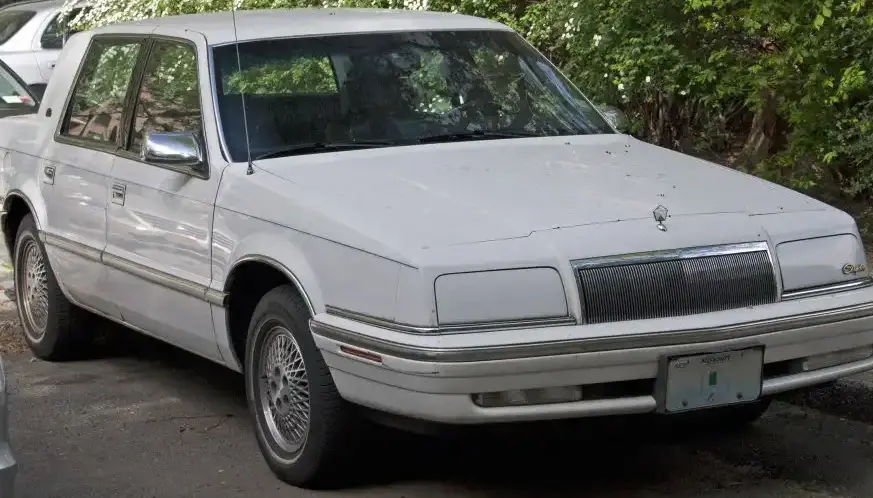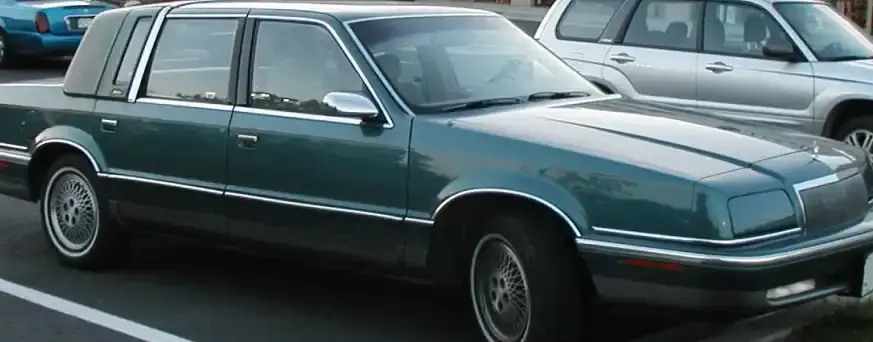
The Chrysler New Yorker Fifth Avenue, equipped with the 3.3-liter V6 engine producing 150 horsepower, represented a significant offering in the full-size American sedan market from 1989 to 1993. This variant occupied a middle ground within the New Yorker Fifth Avenue lineup, positioned as a more accessible alternative to potentially more expensive or performance-oriented options. It was built on the Y-body platform, a front-wheel drive chassis shared with other Chrysler Corporation vehicles of the era. The Fifth Avenue name evoked a sense of luxury and sophistication, aiming to recapture the prestige associated with earlier New Yorker models.
Technical Specifications
| Brand | Chrysler |
| Model | New Yorker |
| Generation | New Yorker Fifth Avenue |
| Type (Engine) | 3.3 V6 (150 Hp) |
| Start of production | 1989 |
| End of production | 1993 |
| Powertrain Architecture | Internal Combustion engine |
| Body type | Sedan |
| Seats | 5 |
| Doors | 4 |
| Fuel consumption (urban) | 16 l/100 km (14.7 US mpg, 17.7 UK mpg, 6.3 km/l) |
| Fuel consumption (extra urban) | 10 l/100 km (23.5 US mpg, 28.2 UK mpg, 10 km/l) |
| Fuel Type | Petrol (Gasoline) |
| Maximum speed | 190 km/h (118.06 mph) |
| Weight-to-power ratio | 10.4 kg/Hp (96.5 Hp/tonne) |
| Weight-to-torque ratio | 6.3 kg/Nm (159.5 Nm/tonne) |
| Power | 150 Hp @ 4800 rpm |
| Power per litre | 45.4 Hp/l |
| Torque | 248 Nm @ 3600 rpm (182.92 lb.-ft. @ 3600 rpm) |
| Engine layout | Front, Transverse |
| Engine displacement | 3301 cm3 (201.44 cu. in.) |
| Number of cylinders | 6 |
| Engine configuration | V-engine |
| Cylinder Bore | 93 mm (3.66 in.) |
| Piston Stroke | 81 mm (3.19 in.) |
| Compression ratio | 8.9:1 |
| Number of valves per cylinder | 2 |
| Fuel injection system | Multi-port manifold injection |
| Engine aspiration | Naturally aspirated engine |
| Valvetrain | OHC |
| Engine oil capacity | 4.3 l (4.54 US qt | 3.78 UK qt) |
| Coolant | 9 l (9.51 US qt | 7.92 UK qt) |
| Kerb Weight | 1555 kg (3428.19 lbs.) |
| Trunk (boot) space (minimum) | 465 l (16.42 cu. ft.) |
| Fuel tank capacity | 61 l (16.11 US gal | 13.42 UK gal) |
| Length | 5155 mm (202.95 in.) |
| Width | 1750 mm (68.9 in.) |
| Height | 1400 mm (55.12 in.) |
| Wheelbase | 2785 mm (109.65 in.) |
| Front track | 1465 mm (57.68 in.) |
| Rear track | 1465 mm (57.68 in.) |
| Drivetrain Architecture | Front wheel drive |
| Number of gears and type of gearbox | 4 gears, automatic transmission |
| Front suspension | Coil spring |
| Rear suspension | Coil spring |
| Front brakes | Ventilated discs |
| Rear brakes | Disc |
| Assisting systems | ABS (Anti-lock braking system) |
| Steering type | Steering rack and pinion |
| Power steering | Hydraulic Steering |
| Tires size | 195/75 R14 |
Powertrain & Engine Architecture
The heart of this New Yorker Fifth Avenue variant was the Chrysler 3.3L V6 engine. This engine was a 60-degree V6, utilizing a single overhead camshaft (OHC) design for each cylinder bank. The engine featured multi-port fuel injection, a significant improvement over earlier carbureted systems, contributing to better fuel efficiency and smoother operation. The 3.3L V6 was known for its relatively smooth power delivery, though it wasn’t a particularly high-revving engine. Paired with this engine was a four-speed automatic transmission, a Torqueflite A727 variant, which was a staple of Chrysler vehicles for many years. This transmission was chosen for its durability and relatively smooth shifting characteristics, prioritizing comfort over outright performance. The automatic transmission’s gear ratios were tuned for relaxed cruising and adequate acceleration, rather than sporty driving. The A727 was a robust design, known for its ability to handle the torque produced by the V6 without issue, though it wasn’t the most technologically advanced automatic available at the time.
Driving Characteristics
The 150 horsepower and 182 lb-ft of torque provided by the 3.3L V6 and automatic transmission combination resulted in a driving experience geared towards comfort and ease of use. Acceleration was adequate for typical driving situations, but not particularly brisk. Zero to sixty mph times were typically in the 9-10 second range. The automatic transmission, while smooth, did contribute to a slight loss of power compared to a manual transmission equipped model, had one been offered. The gear ratios were spaced to prioritize fuel economy and relaxed highway cruising. The front-wheel drive configuration provided reasonable handling in most conditions, but the New Yorker Fifth Avenue was not intended to be a sporty vehicle. The emphasis was on a comfortable ride and a quiet cabin. The suspension was tuned to absorb bumps and imperfections in the road, providing a plush ride for passengers. Steering was light and easy, making it simple to maneuver in city traffic.
Equipment & Trim Levels
The New Yorker Fifth Avenue 3.3L Automatic typically came standard with features expected of a full-size American sedan in the early 1990s. These included power windows, power locks, air conditioning, and an AM/FM stereo. Upholstery was typically cloth, though leather was available as an option. The dashboard featured a traditional analog gauge cluster, and the interior was generally designed for comfort and spaciousness. Optional extras could include a premium sound system, a sunroof, and upgraded interior trim. The Fifth Avenue trim level generally signified a higher level of standard equipment compared to base-model Chrysler sedans. Features like cruise control and a tilt steering wheel were commonly included. The interior was designed to evoke a sense of luxury, with soft-touch materials and a generally well-appointed cabin.
Chassis & Braking
The New Yorker Fifth Avenue utilized a relatively conventional chassis design for the era. Front suspension consisted of independent coil springs, while the rear suspension employed a twist-beam axle with coil springs. This setup prioritized ride comfort over handling precision. Braking duties were handled by ventilated discs at the front and solid discs at the rear. An anti-lock braking system (ABS) was included as standard equipment, enhancing safety. The steering system was a rack-and-pinion setup with hydraulic power assist, providing relatively light and easy steering. The chassis was designed for durability and longevity, with a focus on providing a comfortable and reliable driving experience. The use of coil springs at all four corners contributed to a smooth and controlled ride.
Market Reception & Comparison
The Chrysler New Yorker Fifth Avenue 3.3L Automatic was generally well-received by consumers looking for a comfortable and spacious full-size sedan. Critics noted its smooth ride and quiet cabin, but also pointed out its lack of sporty handling and relatively modest acceleration. Compared to other trims in the New Yorker Fifth Avenue lineup, the 3.3L V6 Automatic offered a balance of affordability and features. It was a more accessible option than potentially higher-performance or luxury-oriented trims. Fuel economy was typical for a full-size American sedan of the era, around 14-23 mpg depending on driving conditions. Reliability was generally considered average, with some reports of minor issues with the automatic transmission and fuel injection system. It competed with other large American sedans like the Ford Crown Victoria and Chevrolet Caprice, offering a similar level of comfort and space at a competitive price point.
Legacy
The Chrysler New Yorker Fifth Avenue, particularly the 3.3L V6 Automatic variant, remains a popular choice among collectors and enthusiasts of classic American cars. The 3.3L V6 engine, while not known for exceptional performance, proved to be reasonably durable and relatively easy to maintain. Parts availability is generally good, though some components may be becoming increasingly difficult to find. Today, these vehicles are often appreciated for their comfortable ride, spacious interiors, and nostalgic appeal. The New Yorker Fifth Avenue represents a final chapter in the long history of the New Yorker nameplate, and the 3.3L V6 Automatic variant offers a representative example of the American full-size sedan of the early 1990s. It stands as a reminder of a time when American cars prioritized comfort and spaciousness over outright performance and fuel efficiency.