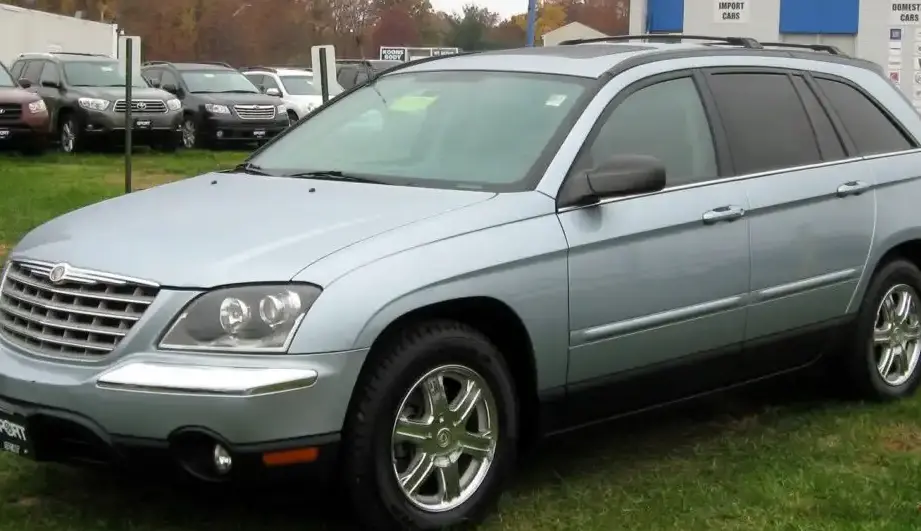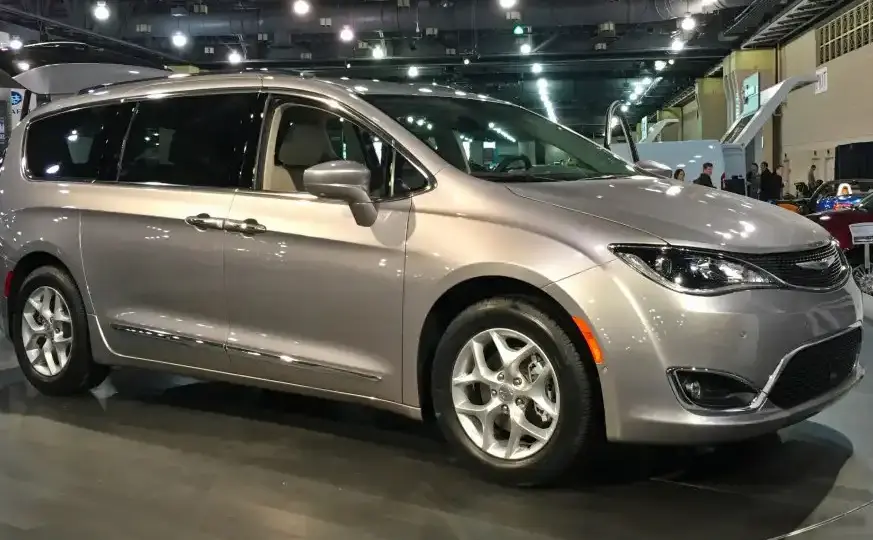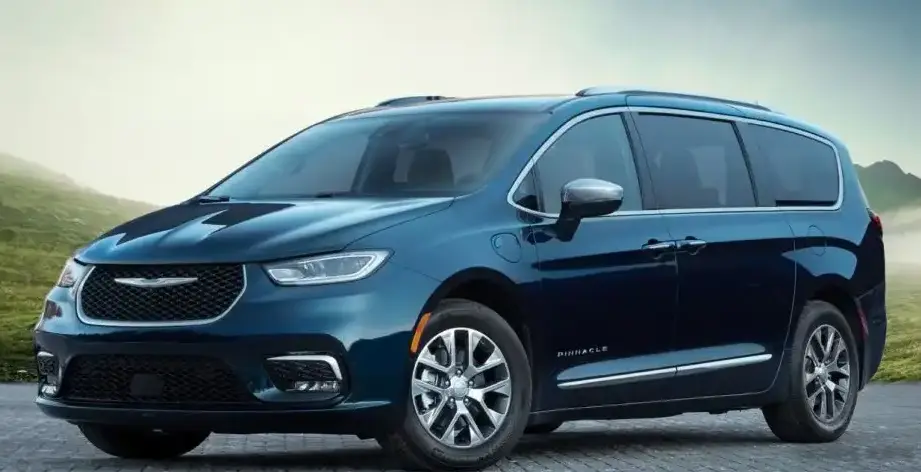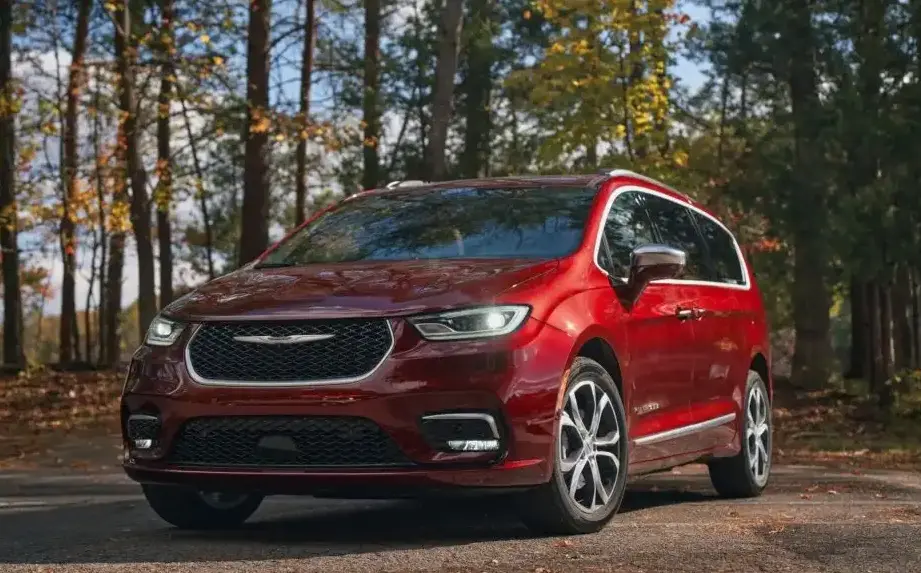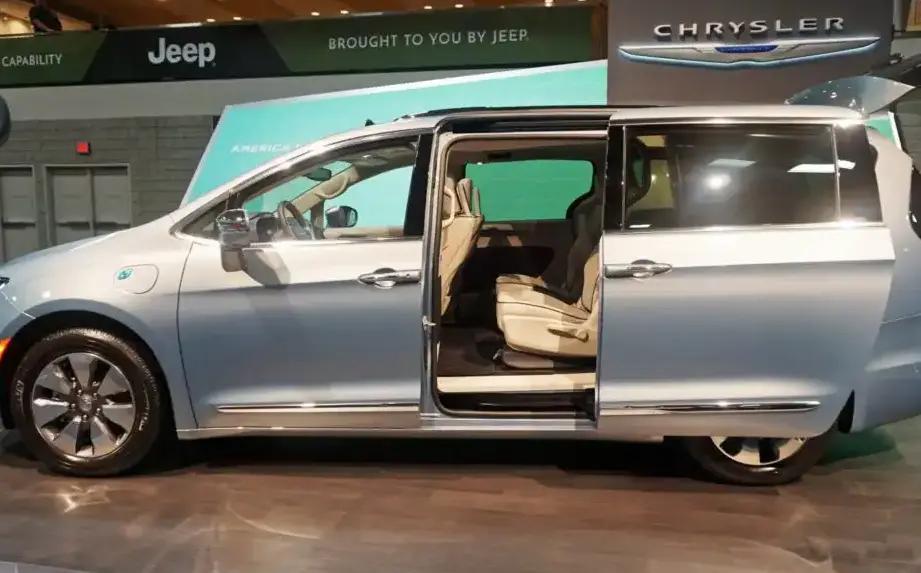
The Chrysler Pacifica 3.6 V6 Plug-in Hybrid, produced from 2016 to 2021, represented a significant step for Chrysler into the burgeoning plug-in hybrid minivan segment. Positioned as a premium offering within the Pacifica lineup, it aimed to provide the practicality of a minivan with the fuel efficiency and reduced emissions of a hybrid powertrain. This variant distinguished itself from the standard gasoline-powered Pacifica and the Pacifica Hybrid models with smaller battery packs, offering a compelling blend of electric range and overall driving distance. It was a key component of Chrysler’s strategy to appeal to environmentally conscious families seeking a versatile vehicle.
Technical Specifications
| Brand | Chrysler |
| Model | Pacifica (minivan) |
| Generation | Pacifica |
| Type (Engine) | 3.6 V6 (264 Hp) Plug-in Hybrid CVT |
| Start of production | 2016 year |
| End of production | 2021 year |
| Powertrain Architecture | PHEV (Plug-in Hybrid Electric Vehicle) |
| Body type | Minivan |
| Seats | 7 |
| Doors | 5 |
| Fuel consumption (economy) – combined | 2.8 l/100 km |
| Fuel consumption (economy) – combined | 84 US mpg |
| Fuel consumption (economy) – combined | 100.9 UK mpg |
| Fuel consumption (economy) – combined | 35.7 km/l |
| Fuel Type | Petrol / electricity |
| Weight-to-power ratio | 8.6 kg/Hp |
| Weight-to-power ratio | 116.7 Hp/tonne |
| Gross battery capacity | 16 kWh |
| Battery technology | Lithium-ion (Li-Ion) |
| Battery location | Below the floor, under the rear seats |
| All-electric range | 51 km |
| All-electric range | 31.69 mi |
| Electric motor power (1) | 86 Hp |
| Electric motor location (1) | Integrated into the transmission |
| Electric motor power (2) | 116 Hp |
| Electric motor location (2) | Integrated into the transmission |
| System power | 264 Hp |
| Engine layout | Front, Transverse |
| Engine Model/Code | Pentastar |
| Engine displacement | 3605 cm3 |
| Engine displacement | 219.99 cu. in. |
| Number of cylinders | 6 |
| Engine configuration | V-engine |
| Cylinder Bore | 96 mm |
| Cylinder Bore | 3.78 in. |
| Piston Stroke | 83 mm |
| Piston Stroke | 3.27 in. |
| Compression ratio | 12.5:1 |
| Number of valves per cylinder | 4 |
| Fuel injection system | Multi-port manifold injection |
| Engine oil capacity | 4.7 l |
| Engine oil capacity | 4.97 US qt |
| Engine oil capacity | 4.14 UK qt |
| Coolant | 13.7 l |
| Coolant | 14.48 US qt |
| Coolant | 12.05 UK qt |
| Kerb Weight | 2262 kg |
| Kerb Weight | 4986.86 lbs. |
| Max. weight | 2858 kg |
| Max. weight | 6300.81 lbs. |
| Max load | 596 kg |
| Max load | 1313.96 lbs. |
| Trunk (boot) space – minimum | 915 l |
| Trunk (boot) space – minimum | 32.31 cu. ft. |
| Trunk (boot) space – maximum | 3979 l |
| Trunk (boot) space – maximum | 140.52 cu. ft. |
| Fuel tank capacity | 64.3 l |
| Fuel tank capacity | 16.99 US gal |
| Fuel tank capacity | 14.14 UK gal |
| Length | 5176 mm |
| Length | 203.78 in. |
| Width | 2022 mm |
| Width | 79.61 in. |
| Width including mirrors | 2297 mm |
| Width including mirrors | 90.43 in. |
| Height | 1777 mm |
| Height | 69.96 in. |
| Wheelbase | 3089 mm |
| Wheelbase | 121.61 in. |
| Front track | 1734 mm |
| Front track | 68.27 in. |
| Rear (Back) track | 1735 mm |
| Rear (Back) track | 68.31 in. |
| Front overhang | 960 mm |
| Front overhang | 37.8 in. |
| Rear overhang | 1127 mm |
| Rear overhang | 44.37 in. |
| Ride height (ground clearance) | 130 mm |
| Ride height (ground clearance) | 5.12 in. |
| Drag coefficient (Cd) | 0.30 |
| Minimum turning circle (turning diameter) | 12.1 m |
| Minimum turning circle (turning diameter) | 39.7 ft. |
| Approach angle | 13.5° |
| Departure angle | 18.6° |
| Ramp-over (brakeover) angle | 12.5° |
| Drivetrain Architecture | The Internal combustion engine (ICE) drives the front wheels of the vehicle. Two electric motors drive the front wheels. There is an ability for running in full electric or mixed mode. |
| Drive wheel | Front wheel drive |
| Number of gears and type of gearbox | 1 gears, automatic transmission CVT |
| Front suspension | Independent, type McPherson with coil spring and anti-roll bar |
| Rear suspension | Independent coil spring |
| Front brakes | Ventilated discs, 330×28 mm |
| Rear brakes | Disc, 330×12 mm |
| Assisting systems | ABS (Anti-lock braking system) |
| Steering type | Steering rack and pinion |
| Power steering | Electric Steering |
| Tires size | 235/65 R17; 235/60 R18; 245/50 R20 |
| Wheel rims size | 7J x 17; 7.5J x 18; 7.5J x 20 |
INTRODUCTION
The Chrysler Pacifica Plug-in Hybrid, launched for the 2017 model year as part of the redesigned Pacifica generation, was a pivotal vehicle for Chrysler. Replacing both the Chrysler Town & Country and Dodge Grand Caravan, the Pacifica aimed to modernize Chrysler’s minivan offerings. The 3.6-liter V6 Plug-in Hybrid variant, utilizing a sophisticated powertrain, offered a compelling alternative to traditional gasoline minivans. Built on the Chrysler’s flexible platform, it provided seating for up to seven passengers and a spacious interior. Production continued through 2021, with incremental updates to the hybrid system and features.
Powertrain & Engine Architecture
At the heart of the Pacifica Plug-in Hybrid lies Chrysler’s well-regarded 3.6-liter Pentastar V6 engine. This engine, designated as the engine code, produces 264 horsepower when combined with the electric motors. The engine utilizes multi-port fuel injection and a variable valve timing system to optimize efficiency and performance. The engine is paired with a continuously variable transmission (CVT) which is specifically tuned for hybrid applications. The electric powertrain consists of two electric motors, integrated into the transmission, powered by a 16 kWh lithium-ion battery pack located under the floor. This configuration allows for all-electric driving for up to 33 miles, depending on driving conditions. The hybrid system seamlessly switches between electric, gasoline, and combined power modes, maximizing fuel efficiency.
Driving Characteristics
The Pacifica Plug-in Hybrid delivers a smooth and refined driving experience. In all-electric mode, the vehicle offers near-silent operation and instant torque, providing brisk acceleration for city driving. When the gasoline engine engages, the transition is virtually seamless. The CVT, while not offering the sporty feel of a traditional automatic transmission, contributes to fuel efficiency and smooth power delivery. Compared to the standard gasoline-powered Pacifica, the Plug-in Hybrid offers noticeably improved fuel economy, especially for drivers who frequently travel short distances and can utilize the electric range. The added weight of the battery pack does slightly impact handling, but the Pacifica remains a comfortable and capable family vehicle. The electric motors provide an additional boost, resulting in quicker acceleration than the standard 3.6L V6.
Equipment & Trim Levels
The Pacifica Plug-in Hybrid was typically offered in well-equipped trim levels, often including features like leather upholstery, heated front seats, a touchscreen infotainment system with Apple CarPlay and Android Auto compatibility, and a suite of advanced safety features. Standard equipment generally included keyless entry, a rearview camera, and automatic climate control. Optional extras included a rear-seat entertainment system, premium audio system, and advanced driver-assistance features such as adaptive cruise control and lane departure warning. The interior design focused on practicality and comfort, with ample storage space and user-friendly controls.
Chassis & Braking
The Pacifica Plug-in Hybrid utilizes an independent suspension system, with a McPherson strut setup at the front and a multi-link setup at the rear. This configuration provides a comfortable ride and decent handling characteristics. The braking system consists of ventilated discs at the front and solid discs at the rear, equipped with an anti-lock braking system (ABS). The regenerative braking system captures energy during deceleration, helping to recharge the battery and further improve fuel efficiency. Steering is provided by an electric power steering system, offering light and precise control.
Market Reception & Comparison
The Chrysler Pacifica Plug-in Hybrid was generally well-received by critics and consumers alike. It was praised for its fuel efficiency, spacious interior, and comfortable ride. Compared to other minivans, the Pacifica Plug-in Hybrid stood out for its plug-in hybrid powertrain, offering a significant advantage in terms of fuel economy and reduced emissions. However, some critics noted the higher price compared to the standard gasoline-powered Pacifica. Compared to the standard Pacifica, the Plug-in Hybrid offered a more premium experience, appealing to environmentally conscious buyers willing to pay a premium for the added benefits. The hybrid system’s complexity also raised concerns about potential maintenance costs.
Legacy
The Chrysler Pacifica Plug-in Hybrid has established itself as a leading plug-in hybrid minivan, demonstrating the viability of electrified family vehicles. While early models experienced some software glitches, Chrysler addressed these issues through software updates. The powertrain has proven to be relatively reliable, with the hybrid components holding up well over time. On the used car market, the Pacifica Plug-in Hybrid remains a popular choice, particularly for buyers seeking a fuel-efficient and spacious family vehicle. Its combination of practicality, technology, and environmental friendliness ensures its continued relevance in the automotive landscape.