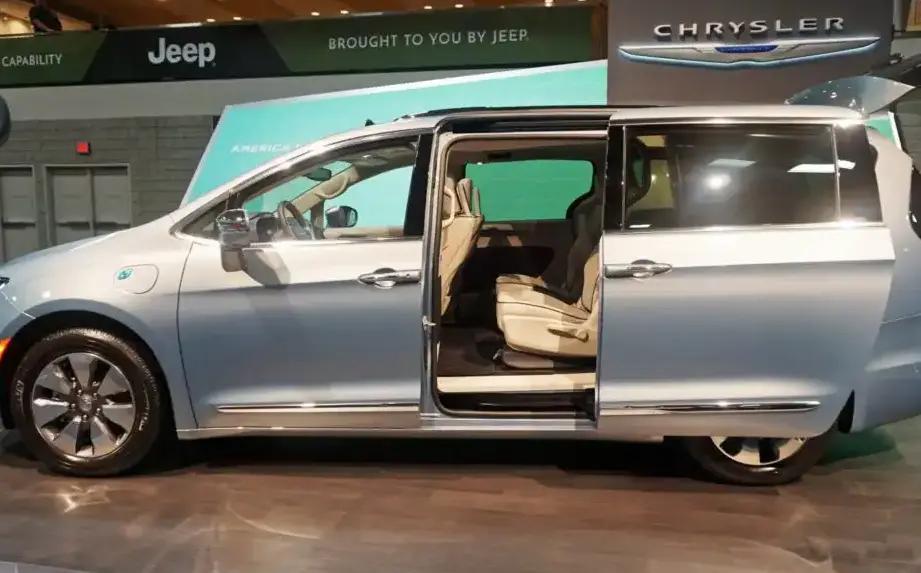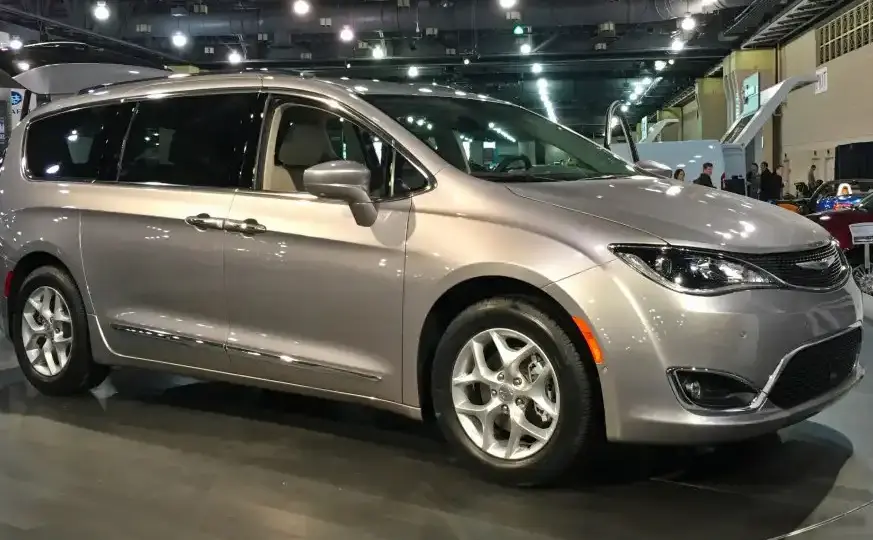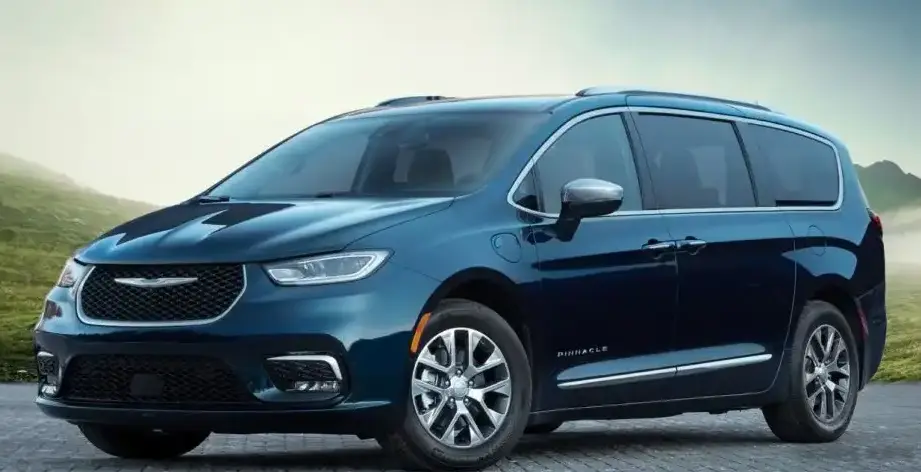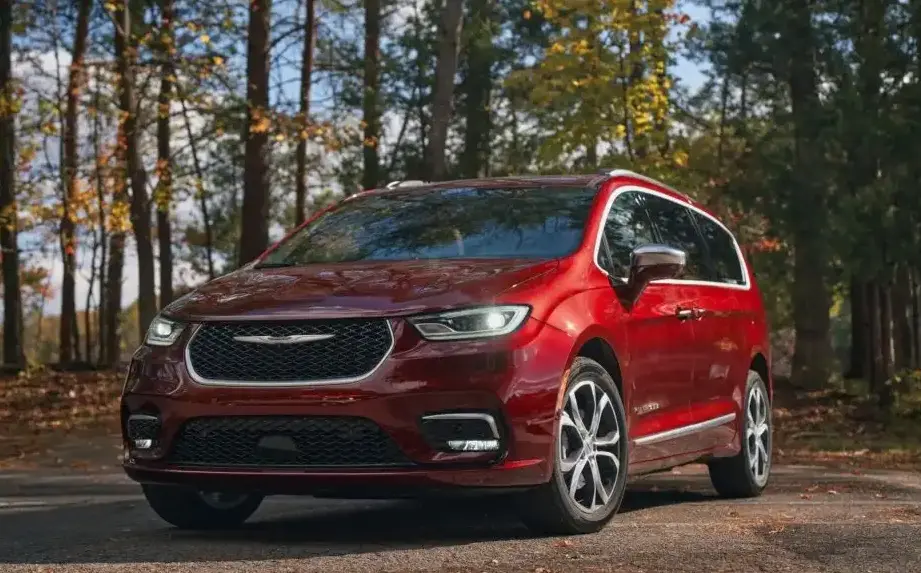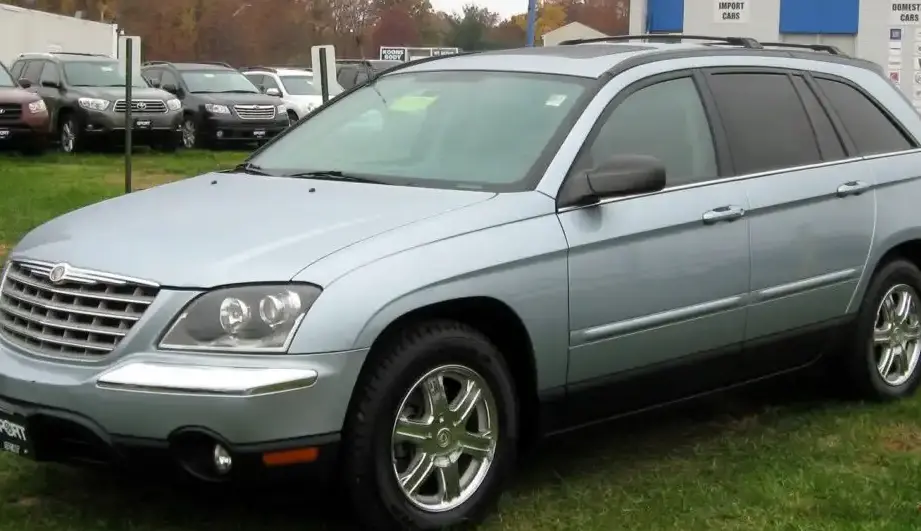
The Chrysler Pacifica, specifically the 4.0 V6 variant paired with an automatic transmission, was produced from 2004 to 2008. This model represented Chrysler’s entry into the burgeoning crossover segment, aiming to blend the practicality of a minivan with the styling of an SUV. Positioned as a mid-range offering within the Pacifica lineup, it served as a step up from the base 3.8L V6 models, offering increased performance and a more premium driving experience. The Pacifica was built on the Chrysler RS platform, shared with other Chrysler and Dodge vehicles of the era.
Technical Specifications
| Brand | Chrysler |
| Model | Pacifica (crossover) |
| Generation | Pacifica |
| Type (Engine) | 4.0 V6 (256 Hp) Automatic |
| Start of production | 2004 |
| End of production | 2008 |
| Powertrain Architecture | Internal Combustion engine |
| Body type | Crossover |
| Seats | 7 |
| Doors | 5 |
| Fuel consumption (urban) | 15.7 l/100 km (15 US mpg, 18 UK mpg, 6.4 km/l) |
| Fuel consumption (extra urban) | 10.2 l/100 km (23.1 US mpg, 27.7 UK mpg, 9.8 km/l) |
| Fuel consumption (combined) | 13.8 l/100 km (17 US mpg, 20.5 UK mpg, 7.2 km/l) |
| Fuel Type | Petrol (Gasoline) |
| Maximum speed | 190 km/h (118.06 mph) |
| Weight-to-power ratio | 8.1 kg/Hp, 124 Hp/tonne |
| Weight-to-torque ratio | 5.8 kg/Nm, 172 Nm/tonne |
| Power | 256 Hp @ 6000 rpm |
| Power per litre | 64.8 Hp/l |
| Torque | 355 Nm @ 4100 rpm (261.83 lb.-ft. @ 4100 rpm) |
| Maximum engine speed | 6200 rpm |
| Engine layout | Front, Transverse |
| Engine Model/Code | EGQ |
| Engine displacement | 3952 cm3 (241.17 cu. in.) |
| Number of cylinders | 6 |
| Engine configuration | V-engine |
| Cylinder Bore | 96 mm (3.78 in.) |
| Piston Stroke | 91 mm (3.58 in.) |
| Compression ratio | 10.2:1 |
| Number of valves per cylinder | 4 |
| Fuel injection system | Multi-port manifold injection |
| Engine aspiration | Naturally aspirated engine |
| Valvetrain | SOHC |
| Engine oil capacity | 5.2 l (5.49 US qt | 4.58 UK qt) |
| Coolant capacity | 10.1 l (10.67 US qt | 8.89 UK qt) |
| Kerb Weight | 2064 kg (4550.34 lbs.) |
| Trunk (boot) space – minimum | 370 l (13.07 cu. ft.) |
| Trunk (boot) space – maximum | 2250 l (79.46 cu. ft.) |
| Fuel tank capacity | 87 l (22.98 US gal | 19.14 UK gal) |
| Length | 5052 mm (198.9 in.) |
| Width | 2013 mm (79.25 in.) |
| Height | 1735 mm (68.31 in.) |
| Wheelbase | 2954 mm (116.3 in.) |
| Front track | 1676 mm (65.98 in.) |
| Rear track | 1676 mm (65.98 in.) |
| Ride height (ground clearance) | 149 mm (5.87 in.) |
| Drag coefficient (Cd) | 0.35 |
| Minimum turning circle | 12.1 m (39.7 ft.) |
| Drivetrain Architecture | The Internal combustion engine (ICE) drives the front wheels of the vehicle. |
| Drive wheel | Front wheel drive |
| Number of gears and type of gearbox | 6 gears, automatic transmission |
| Front suspension | Spring Strut |
| Rear suspension | Spring Strut |
| Front brakes | Ventilated discs |
| Rear brakes | Disc |
| Assisting systems | ABS (Anti-lock braking system) |
| Steering type | Steering rack and pinion |
| Tires size | 235/55 R19 |
| Wheel rims size | 19 |
Powertrain & Engine Architecture
The heart of the Pacifica 4.0 V6 is the EGQ engine, a 3.952-liter (241.17 cubic inch) naturally aspirated V6. This engine utilizes a single overhead camshaft (SOHC) valvetrain with four valves per cylinder. Fuel delivery is managed by a multi-port fuel injection system, providing a balance between efficiency and performance. The 60-degree V-angle contributes to a relatively smooth engine operation. The engine produces 256 horsepower at 6000 rpm and 355 Nm (261.83 lb-ft) of torque at 4100 rpm. Paired with this engine is a 6-speed automatic transmission, providing smooth shifts and adequate gear ratios for both city and highway driving. This transmission was a significant upgrade over the 4-speed automatics found in some earlier Chrysler models.
Driving Characteristics
The 4.0L V6 Pacifica offered a noticeable improvement in acceleration and overall responsiveness compared to the base 3.8L engine. While not a sports car, the 256 hp engine provided sufficient power for comfortable highway cruising and passing maneuvers. The 6-speed automatic transmission helped to keep the engine in its optimal power band. However, the Pacifica’s considerable weight (2064 kg / 4550.34 lbs) meant that it wasn’t particularly nimble. The automatic transmission, while smooth, wasn’t as engaging as a manual gearbox, and some drivers noted a slight delay in downshifts. Fuel economy, as expected for a vehicle of this size and engine, was moderate, averaging around 17 US mpg combined.
Equipment & Trim Levels
The 4.0L V6 Pacifica typically came standard with features such as air conditioning, power windows and locks, a CD player, and alloy wheels. Higher trim levels added features like leather upholstery, a premium sound system, a sunroof, and heated seats. Optional extras included a navigation system, rear-seat entertainment system, and upgraded wheels. Interior materials were generally of good quality, offering a comfortable and refined cabin environment. The 7-passenger seating configuration was standard, with a second-row bench seat or captain’s chairs available.
Chassis & Braking
The Pacifica utilized a front-wheel-drive layout with an independent spring strut suspension at both the front and rear. This suspension setup provided a comfortable ride, but wasn’t particularly sporty. The front brakes were ventilated discs, while the rear brakes were solid discs. Anti-lock braking system (ABS) was standard. The steering was rack and pinion, providing adequate feel and responsiveness. The 19-inch wheels and 235/55 R19 tires contributed to a stable and predictable handling experience.
Market Reception & Comparison
The Chrysler Pacifica 4.0 V6 was generally well-received by critics, who praised its spacious interior, comfortable ride, and improved performance over the base models. However, some reviewers noted its relatively high price and moderate fuel economy. Compared to the 3.8L V6 Pacifica, the 4.0L offered a significant performance boost, but at a higher cost. It also offered a more refined driving experience. Compared to other crossovers of the time, such as the Honda Pilot or Toyota Highlander, the Pacifica offered a more distinctive styling and a more luxurious interior, but lacked the same level of brand reputation for reliability.
Legacy
The Chrysler Pacifica, while not a massive sales success, represented an important step for Chrysler in the crossover market. The 4.0L V6 engine proved to be relatively reliable, although regular maintenance is crucial. Today, used Pacifica 4.0 V6 models are relatively affordable and can be a good value for buyers looking for a spacious and comfortable family vehicle. However, potential buyers should be aware of the potential for age-related issues, such as worn suspension components and potential transmission problems. The EGQ engine, while generally durable, can be prone to oil leaks as it ages. Overall, the Pacifica 4.0 V6 remains a viable option for those seeking a comfortable and capable crossover at a reasonable price point.