
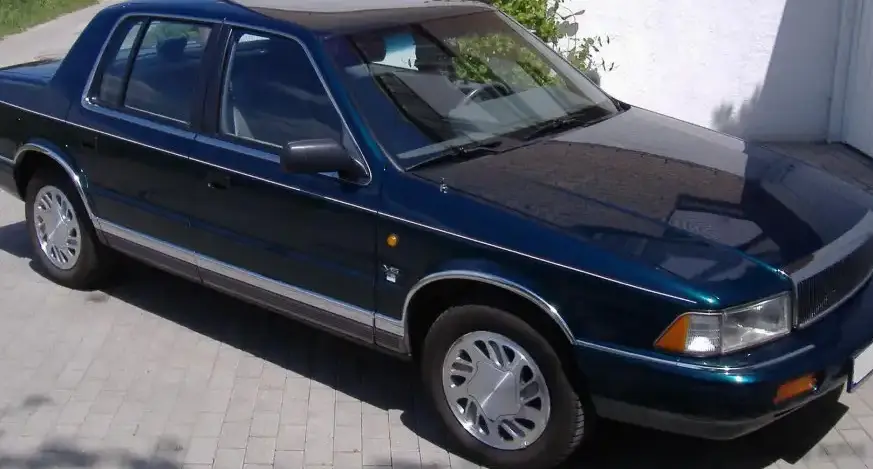
The Chrysler Saratoga 2.5i (97 hp) was a mid-size sedan produced by Chrysler from 1989 to 1995. Positioned as a more affordable and practical offering within the Chrysler lineup, it served as a replacement for the earlier LeBaron sedan. The 2.5i variant, powered by a 2.5-liter inline-four engine paired with a five-speed manual transmission, represented the entry-level trim, focusing on value and fuel efficiency. It was part of the broader Chrysler Saratoga generation, which aimed to provide comfortable and reliable transportation for families.
Technical Specifications
| Brand | Chrysler |
| Model | Saratoga |
| Generation | Saratoga |
| Type (Engine) | 2.5 i (97 Hp) |
| Start of production | 1989 |
| End of production | 1995 |
| Powertrain Architecture | Internal Combustion engine |
| Body type | Sedan |
| Seats | 5 |
| Doors | 4 |
| Fuel consumption (urban) | 14.4 l/100 km (16.3 US mpg, 19.6 UK mpg, 6.9 km/l) |
| Fuel consumption (extra urban) | 6.2 l/100 km (37.9 US mpg, 45.6 UK mpg, 16.1 km/l) |
| Fuel Type | Petrol (Gasoline) |
| Acceleration 0 – 100 km/h | 13.5 sec |
| Acceleration 0 – 62 mph | 13.5 sec |
| Acceleration 0 – 60 mph | 12.8 sec |
| Maximum speed | 167 km/h (103.77 mph) |
| Weight-to-power ratio | 13.2 kg/Hp (75.5 Hp/tonne) |
| Weight-to-torque ratio | 7.2 kg/Nm (139.3 Nm/tonne) |
| Power | 97 Hp @ 4400 rpm |
| Power per litre | 38.8 Hp/l |
| Torque | 179 Nm @ 2800 rpm (132.02 lb.-ft. @ 2800 rpm) |
| Engine layout | Front, Transverse |
| Engine displacement | 2501 cm3 (152.62 cu. in.) |
| Number of cylinders | 4 |
| Engine configuration | Inline |
| Cylinder Bore | 87.5 mm (3.44 in.) |
| Piston Stroke | 104 mm (4.09 in.) |
| Compression ratio | 8.86:1 |
| Fuel injection system | Multi-port manifold injection |
| Engine aspiration | Naturally aspirated engine |
| Valvetrain | OHC |
| Kerb Weight | 1285 kg (2832.94 lbs.) |
| Max. weight | 1850 kg (4078.55 lbs.) |
| Max load | 565 kg (1245.61 lbs.) |
| Trunk (boot) space – minimum | 408 l (14.41 cu. ft.) |
| Fuel tank capacity | 61 l (16.11 US gal | 13.42 UK gal) |
| Permitted trailer load with brakes (12%) | 1200 kg (2645.55 lbs.) |
| Length | 4602 mm (181.18 in.) |
| Width | 1731 mm (68.15 in.) |
| Height | 1410 mm (55.51 in.) |
| Wheelbase | 2624 mm (103.31 in.) |
| Front track | 1463 mm (57.6 in.) |
| Rear (Back) track | 1453 mm (57.2 in.) |
| Minimum turning circle | 13.10 m (42.98 ft.) |
| Drivetrain Architecture | The Internal combustion engine (ICE) drives the front wheels of the vehicle. |
| Drive wheel | Front wheel drive |
| Number of gears and type of gearbox | 5 gears, manual transmission |
| Front suspension | Independent, type McPherson with coil spring and anti-roll bar |
| Front brakes | Ventilated discs |
| Rear brakes | Disc |
| Tires size | 205/60 R15 |
| Wheel rims size | 15 |
Powertrain & Engine Architecture
The heart of the Saratoga 2.5i was the Chrysler 2.5-liter inline-four cylinder engine. This engine, often referred to by its internal code, was a relatively simple and robust design. It featured a single overhead camshaft (OHC) operating two valves per cylinder. Fuel delivery was handled by a multi-port fuel injection system, which improved efficiency and reduced emissions compared to earlier carbureted designs. The engine produced 97 horsepower at 4400 rpm and 179 Nm (132 lb-ft) of torque at 2800 rpm. The five-speed manual transmission was a standard offering, providing drivers with a degree of control over the engine’s power band. The transmission’s gear ratios were geared towards fuel economy and everyday drivability rather than outright performance.
Driving Characteristics
The 2.5i Saratoga, with its 97 horsepower and five-speed manual, offered adequate, but not exhilarating, performance. Acceleration from 0 to 60 mph took around 12.8 seconds, and top speed was limited to approximately 104 mph. The engine felt somewhat strained at higher speeds, and passing maneuvers required careful planning. Compared to the more powerful V6 options available in the Saratoga lineup, the 2.5i prioritized fuel efficiency and a smoother, more relaxed driving experience. The manual transmission allowed drivers to keep the engine in its optimal power range, but the overall driving experience was geared towards practicality rather than sporty handling.
Equipment & Trim Levels
The 2.5i Saratoga typically came with a fairly basic level of standard equipment. This included features like cloth upholstery, a basic AM/FM radio, manual windows and locks, and a tilt steering wheel. Air conditioning was often an optional extra. Interior trim was generally functional and durable, focusing on providing a comfortable space for passengers. Optional extras could include upgraded sound systems, power windows and locks, and a sunroof. The 2.5i trim was designed to be the most accessible entry point into the Saratoga model range.
Chassis & Braking
The Saratoga 2.5i utilized a front-wheel-drive layout with an independent McPherson strut suspension in the front and a semi-independent suspension in the rear. Front brakes were ventilated discs, providing adequate stopping power, while rear brakes were solid discs. The suspension was tuned for comfort, providing a relatively smooth ride over most road surfaces. The car rode on 15-inch wheels with 205/60 R15 tires. Stabilizer bars were included to reduce body roll during cornering, but the overall handling was geared towards stability and ease of driving rather than sporty performance.
Market Reception & Comparison
The Chrysler Saratoga 2.5i was generally well-received as a practical and affordable mid-size sedan. Critics praised its comfortable ride and spacious interior, but noted its lack of outright performance. Compared to the V6-powered Saratoga models, the 2.5i offered significantly better fuel economy, making it an attractive option for budget-conscious buyers. However, the V6 models provided a more refined and powerful driving experience. The 2.5i competed with other entry-level mid-size sedans of the era, such as the Ford Tempo and Chevrolet Corsica, offering a similar blend of practicality and affordability.
Legacy
The Chrysler Saratoga 2.5i, while not a particularly groundbreaking vehicle, remains a relatively reliable and affordable option in the used car market. The 2.5-liter engine is known for its durability, and parts availability is generally good. However, like any vehicle of this age, regular maintenance is crucial to ensure long-term reliability. Common issues can include wear and tear on suspension components and potential for oil leaks. The 2.5i Saratoga represents a snapshot of American automotive design in the early 1990s, offering a blend of practicality, affordability, and comfort.
