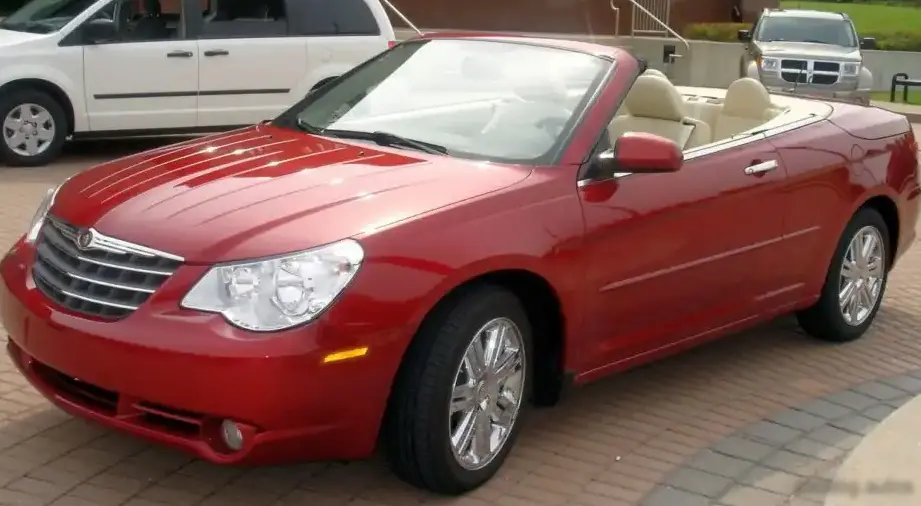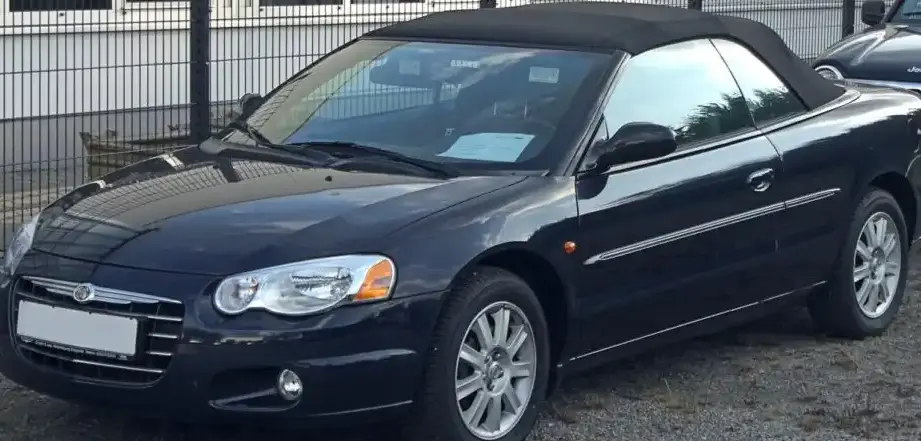
The Chrysler Sebring Convertible (JR) 2.4i 16V, produced from 2005 to 2007, represented a mid-cycle offering within the second generation (JR) Sebring convertible lineup. Positioned as a mainstream, affordable open-air vehicle, it aimed to provide a stylish and comfortable driving experience for the American market. This variant, powered by a 2.4-liter inline-four engine paired with a four-speed automatic transmission, served as a popular choice for buyers prioritizing ease of use and convenience over outright performance. It sat in the middle of the trim range, offering more features than the base models but falling short of the more powerful and luxurious options available.
Technical Specifications
| Brand | Chrysler |
| Model | Sebring |
| Generation | Sebring Convertible (JR) |
| Type (Engine) | 2.4 i 16V (152 Hp) |
| Start of production | 2005 |
| End of production | 2007 |
| Powertrain Architecture | Internal Combustion engine |
| Body type | Cabriolet |
| Seats | 4 |
| Doors | 2 |
| Fuel consumption (urban) | 10.7 l/100 km (22 US mpg) |
| Fuel consumption (extra urban) | 7.8 l/100 km (30.2 US mpg) |
| Fuel Type | Petrol (Gasoline) |
| Acceleration 0 – 100 km/h | 11.5 sec |
| Acceleration 0 – 62 mph | 11.5 sec |
| Acceleration 0 – 60 mph | 10.9 sec |
| Maximum speed | 200 km/h (124.27 mph) |
| Weight-to-power ratio | 10.1 kg/Hp |
| Weight-to-torque ratio | 6.8 kg/Nm |
| Power | 152 Hp @ 5200 rpm |
| Power per litre | 62.6 Hp/l |
| Torque | 226 Nm @ 4000 rpm (166.69 lb.-ft. @ 4000 rpm) |
| Engine layout | Front, Transverse |
| Engine displacement | 2429 cm3 (148.23 cu. in.) |
| Number of cylinders | 4 |
| Engine configuration | Inline |
| Cylinder Bore | 87.5 mm (3.44 in.) |
| Piston Stroke | 101 mm (3.98 in.) |
| Compression ratio | 9.4:1 |
| Number of valves per cylinder | 4 |
| Fuel injection system | Multi-port manifold injection |
| Engine aspiration | Naturally aspirated engine |
| Valvetrain | DOHC |
| Engine oil capacity | 4.7 l (4.97 US qt | 4.14 UK qt) |
| Coolant | 7.5 l (7.93 US qt | 6.6 UK qt) |
| Kerb Weight | 1540 kg (3395.12 lbs.) |
| Max. weight | 1920 kg (4232.88 lbs.) |
| Max load | 380 kg (837.76 lbs.) |
| Trunk (boot) space – minimum | 320 l (11.3 cu. ft.) |
| Fuel tank capacity | 65 l (17.17 US gal | 14.3 UK gal) |
| Length | 4920 mm (193.7 in.) |
| Width | 1760 mm (69.29 in.) |
| Height | 1400 mm (55.12 in.) |
| Wheelbase | 2690 mm (105.91 in.) |
| Front track | 1530 mm (60.24 in.) |
| Rear (Back) track | 1530 mm (60.24 in.) |
| Drivetrain Architecture | Front wheel drive |
| Number of gears and type of gearbox | 4 gears, automatic transmission |
| Front suspension | Spring Strut |
| Rear suspension | Coil spring |
| Front brakes | Ventilated discs |
| Rear brakes | Disc |
| Assisting systems | ABS (Anti-lock braking system) |
| Steering type | Steering rack and pinion |
| Tires size | 205/60 R15 |
Powertrain & Engine Architecture
The heart of the Sebring Convertible 2.4i is the Chrysler’s 2.4-liter inline-four cylinder engine, internally designated as the EDZ engine family. This engine utilizes a double overhead camshaft (DOHC) valvetrain with four valves per cylinder, contributing to its relatively efficient breathing. Fuel delivery is managed by a multi-point fuel injection system, providing precise fuel metering for optimal combustion. The engine produces 152 horsepower at 5200 rpm and 166.69 lb-ft of torque at 4000 rpm. This power is then sent to the front wheels through a four-speed automatic transmission. While not a particularly advanced transmission by modern standards, it offered smooth and predictable shifts, prioritizing comfort over sporty responsiveness. The four-speed automatic was chosen for its affordability and ease of use, aligning with the target demographic of the Sebring Convertible.
Driving Characteristics
The 2.4-liter engine and four-speed automatic combination delivered adequate, but not exhilarating, performance. Acceleration from 0 to 60 mph took approximately 10.9 seconds, making it competitive with other mainstream convertibles of the era. The automatic transmission’s gear ratios were tuned for fuel efficiency and comfortable cruising rather than aggressive acceleration. Compared to the optional 2.7-liter V6, the 2.4-liter felt noticeably less powerful, especially when fully loaded or tackling inclines. However, the 2.4L offered a smoother and more refined driving experience, with less engine noise and vibration. The automatic transmission, while lacking the engagement of a manual, simplified driving in urban environments.
Equipment & Trim Levels
The 2.4i trim typically included standard features such as air conditioning, power windows and locks, a CD player, and cloth upholstery. Optional extras included leather upholstery, a premium sound system, and alloy wheels. Safety features like anti-lock brakes (ABS) were standard. The interior design was generally functional and comfortable, though materials were of average quality. The convertible top was a power-operated soft top, offering convenient open-air driving. The Sebring Convertible aimed to provide a good value proposition, offering a reasonable level of equipment for its price point.
Chassis & Braking
The Sebring Convertible utilized a front-wheel-drive layout with a MacPherson strut front suspension and a coil spring rear suspension. This setup provided a comfortable ride, but handling was not particularly sporty. The front brakes were ventilated discs, while the rear brakes were solid discs. ABS was standard, enhancing braking performance and stability. The chassis was designed to provide adequate rigidity for a convertible, minimizing body flex. However, it wasn’t as stiff as some more expensive convertibles, resulting in some noticeable body roll during cornering.
Market Reception & Comparison
The Sebring Convertible 2.4i was generally well-received as an affordable and stylish convertible. Critics praised its comfortable ride and ease of use, but noted its lack of performance compared to V6-powered rivals. Fuel economy was considered reasonable for its class, averaging around 22 mpg in the city and 30 mpg on the highway. Compared to the 2.7L V6 version, the 2.4L offered better fuel economy and lower maintenance costs, but at the expense of performance. The 2.4L appealed to buyers who prioritized comfort and affordability over sporty driving dynamics.
Legacy
The Chrysler Sebring Convertible 2.4i, while not a groundbreaking vehicle, remains a popular choice in the used car market due to its affordability and open-air appeal. The 2.4-liter engine and four-speed automatic transmission are generally considered reliable, though regular maintenance is essential. Common issues include oil leaks and sensor failures. Parts availability is generally good, making repairs relatively straightforward. Today, these convertibles offer an accessible entry point into the world of open-top motoring, providing a nostalgic driving experience for those seeking a classic American convertible.