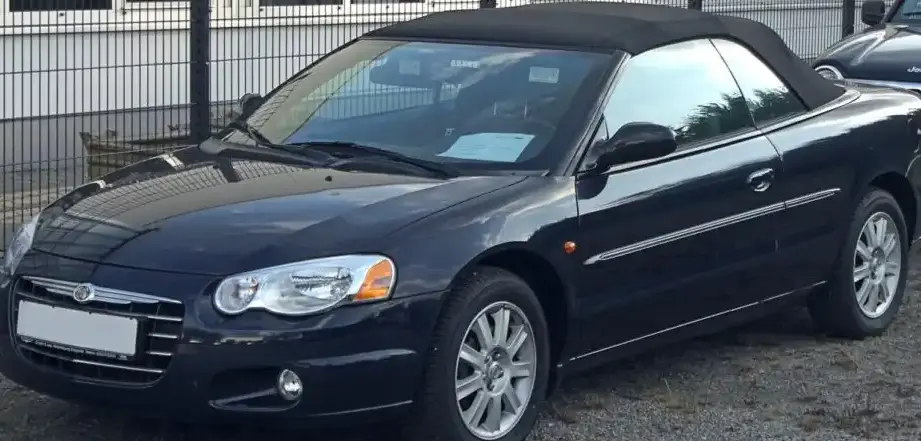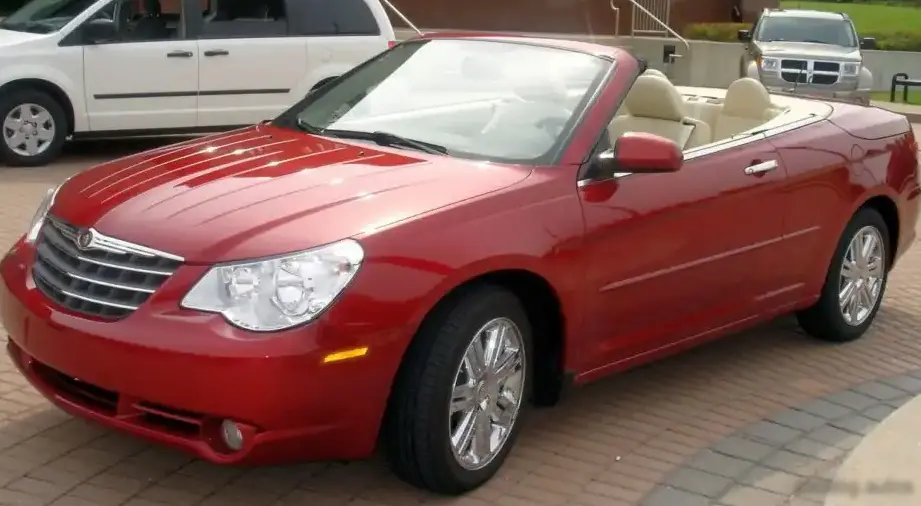
The Chrysler Sebring Convertible (JS) 2.0i Automatic, produced between 2007 and 2010, represented a mid-range offering within the JS generation of the Sebring convertible lineup. Positioned above the base 2.4L engine and below potential higher-performance options (depending on market), this variant aimed to balance affordability with a respectable level of power and comfort for the American open-road driving experience. The JS generation Sebring convertible was Chrysler’s attempt to revitalize the brand’s presence in the competitive mid-size convertible segment, offering a stylish alternative to established European and Japanese competitors.
Technical Specifications
| Brand | Chrysler |
| Model | Sebring |
| Generation | Sebring Convertible (JS) |
| Type (Engine) | 2.0 i (156 Hp) Automatic |
| Start of production | 2007 |
| End of production | 2010 |
| Powertrain Architecture | Internal Combustion engine |
| Body type | Cabriolet |
| Seats | 4 |
| Doors | 2 |
| Fuel Type | Petrol (Gasoline) |
| Emission standard | Euro 5 |
| Power | 156 Hp @ 6600 rpm |
| Power per litre | 78.2 Hp/l |
| Torque | 190 Nm @ 5500 rpm / 140.14 lb.-ft. @ 5500 rpm |
| Engine layout | Front, Transverse |
| Engine Model/Code | ECN |
| Engine displacement | 1996 cm3 / 121.8 cu. in. |
| Number of cylinders | 4 |
| Engine configuration | Inline |
| Cylinder Bore | 87.5 mm / 3.44 in. |
| Piston Stroke | 83 mm / 3.27 in. |
| Compression ratio | 9.8:1 |
| Number of valves per cylinder | 4 |
| Fuel injection system | Multi-port manifold injection |
| Engine aspiration | Naturally aspirated engine |
| Valvetrain | DOHC |
| Engine oil capacity | 4.3 l / 4.54 US qt | 3.78 UK qt |
| Coolant | 7.3 l / 7.71 US qt | 6.42 UK qt |
| Fuel tank capacity | 64 l / 16.91 US gal | 14.08 UK gal |
| Length | 4850 mm / 190.94 in. |
| Width | 1843 mm / 72.56 in. |
| Height | 1497 mm / 58.94 in. |
| Wheelbase | 2765 mm / 108.86 in. |
| Drivetrain Architecture | The Internal combustion engine (ICE) drives the front wheels of the vehicle. |
| Drive wheel | Front wheel drive |
| Number of gears and type of gearbox | 4 gears, automatic transmission |
| Front suspension | Independent type McPherson |
| Rear suspension | Several levers and rods |
| Front brakes | Ventilated discs |
| Rear brakes | Disc |
| Assisting systems | ABS (Anti-lock braking system) |
| Steering type | Steering rack and pinion |
| Power steering | Hydraulic Steering |
Powertrain & Engine Architecture
The heart of the Sebring Convertible 2.0i Automatic is the ECN engine, a 1.996-liter (121.8 cubic inch) inline-four cylinder gasoline engine. This engine utilizes a naturally aspirated configuration, relying on atmospheric pressure for air intake rather than forced induction. It features a double overhead camshaft (DOHC) valvetrain, operating four valves per cylinder, which contributes to improved breathing and higher-RPM performance. Fuel delivery is managed by a multi-port fuel injection system, providing precise fuel metering for optimal combustion. The engine produces 156 horsepower at 6600 rpm and 190 Nm (140.14 lb-ft) of torque at 5500 rpm. This power is then transferred to the front wheels via a four-speed automatic transmission. While not the most modern transmission by today’s standards, it was a common choice for providing smooth and convenient operation in the target market.
Driving Characteristics
The 2.0i Automatic Sebring Convertible offered a comfortable, rather than sporty, driving experience. The four-speed automatic transmission, while smooth, lacked the responsiveness of a manual gearbox or a more modern automatic with additional gears. Acceleration was adequate for everyday driving, but not particularly brisk. The engine’s torque peak at 5500 rpm meant that drivers needed to maintain higher engine speeds to access optimal power, especially when merging onto highways or overtaking. Compared to a potential manual transmission version (if offered in the US market), the automatic resulted in a slight performance decrease due to drivetrain losses. Compared to a hypothetical higher-output engine option, such as a V6, the 2.0L offered a more fuel-efficient, but less exhilarating, driving experience.
Equipment & Trim Levels
The 2.0i Automatic trim typically included standard features such as air conditioning, power windows and locks, a basic audio system (often with CD player and MP3 compatibility), and cloth upholstery. Safety features included ABS brakes and front airbags. Optional extras could include leather upholstery, upgraded audio systems (potentially with a premium brand like Boston Acoustics), alloy wheels, and a power-operated convertible top. The specific availability of options varied depending on the package selected and the model year. The interior design was generally functional and aimed at providing a comfortable space for passengers, though it didn’t necessarily compete with more luxurious convertibles in terms of materials or overall refinement.
Chassis & Braking
The Sebring Convertible utilized a front-wheel-drive layout with an independent McPherson strut suspension in the front and a multi-link suspension in the rear. This suspension setup aimed to provide a balance between ride comfort and handling. The front brakes were ventilated discs, offering good stopping power, while the rear brakes were solid discs. The steering system was a hydraulic rack-and-pinion setup, providing reasonably precise steering feel. Stabilizer bars were included both front and rear to reduce body roll during cornering. The chassis was designed to provide adequate rigidity for a convertible, minimizing flex and maintaining structural integrity.
Market Reception & Comparison
The Chrysler Sebring Convertible 2.0i Automatic received mixed reviews from automotive critics. While the styling was generally well-received, the powertrain was often criticized for being underpowered and the automatic transmission for lacking responsiveness. Fuel economy was considered average for the class. Compared to competitors like the Mazda MX-5 Miata (focused on sporty handling) or the Ford Mustang Convertible (offering more powerful engine options), the Sebring Convertible aimed for a broader appeal, prioritizing comfort and affordability. Reliability reports were mixed, with some owners reporting issues with the automatic transmission and electrical components.
Legacy
The Chrysler Sebring Convertible (JS) 2.0i Automatic, while not a standout performer, remains a relatively affordable entry point into the convertible market for used car buyers. The ECN engine, while not known for exceptional longevity, is generally considered reasonably reliable with proper maintenance. Common issues include oil leaks and potential problems with the automatic transmission. Parts availability is generally good, but some components may be becoming increasingly difficult to source. Today, these vehicles are often sought after by enthusiasts looking for a stylish and relatively inexpensive open-top driving experience, though they are not typically considered collector’s items.