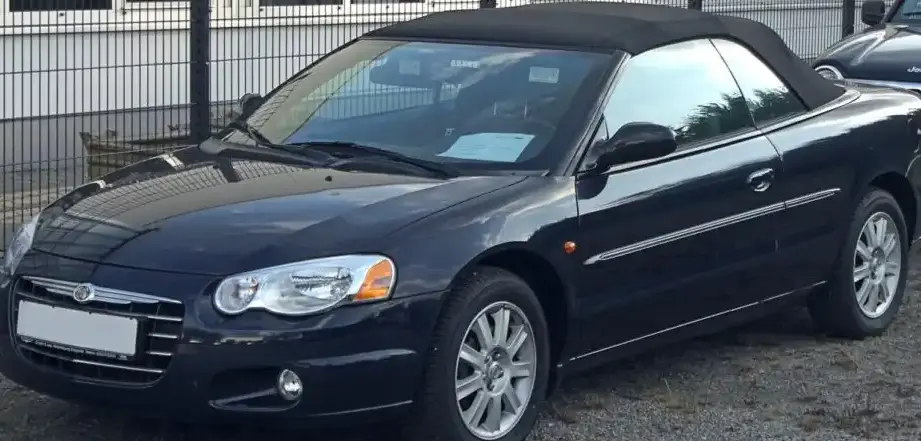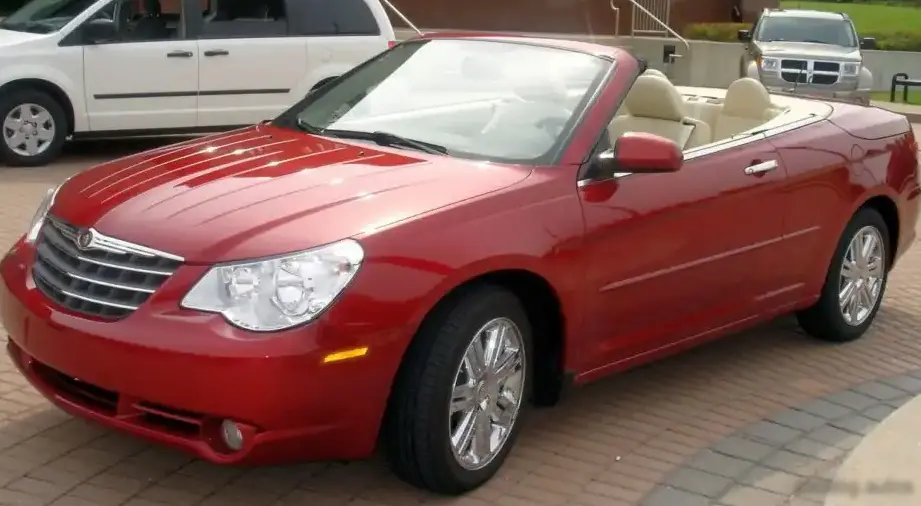
The Chrysler Sebring Convertible (JS) 3.5i V6, produced from 2007 to 2010, represented the top-tier engine option for the JS generation of the Sebring convertible. Positioned as the premium offering within the lineup, it aimed to provide a more spirited driving experience compared to the base 2.4L four-cylinder models. This variant was a key part of Chrysler’s attempt to revitalize the Sebring nameplate, offering open-air enjoyment with a focus on V6 power and a relatively comfortable ride. It competed with other mid-size convertibles like the Ford Mustang Convertible, Mazda MX-5 Miata, and the Chevrolet Cobalt SS Convertible.
Technical Specifications
| Brand | Chrysler |
| Model | Sebring |
| Generation | Sebring Convertible (JS) |
| Type (Engine) | 3.5i V6 (235 Hp) Automatic |
| Start of production | 2007 |
| End of production | 2010 |
| Powertrain Architecture | Internal Combustion engine |
| Body type | Cabriolet |
| Seats | 4 |
| Doors | 2 |
| Fuel consumption (urban) | 14.7 l/100 km (16 US mpg, 19.2 UK mpg) |
| Fuel consumption (extra urban) | 9 l/100 km (26.1 US mpg, 31.4 UK mpg) |
| Fuel Type | Petrol (Gasoline) |
| Emission standard | Euro 5 |
| Power | 235 Hp @ 6000 rpm |
| Torque | 339 Nm @ 4400 rpm (250.03 lb.-ft. @ 4400 rpm) |
| Engine layout | Front, Longitudinal |
| Engine Model/Code | EGG |
| Engine displacement | 3518 cm3 (214.68 cu. in.) |
| Number of cylinders | 6 |
| Engine configuration | V-engine |
| Cylinder Bore | 96 mm (3.78 in.) |
| Piston Stroke | 81 mm (3.19 in.) |
| Compression ratio | 10:1 |
| Number of valves per cylinder | 4 |
| Fuel injection system | Multi-port manifold injection |
| Engine aspiration | Naturally aspirated engine |
| Engine oil capacity | 5.2 l (5.49 US qt | 4.58 UK qt) |
| Coolant capacity | 11 l (11.62 US qt | 9.68 UK qt) |
| Fuel tank capacity | 64 l (16.91 US gal | 14.08 UK gal) |
| Length | 4850 mm (190.94 in.) |
| Width | 1843 mm (72.56 in.) |
| Height | 1497 mm (58.94 in.) |
| Wheelbase | 2765 mm (108.86 in.) |
| Drivetrain Architecture | Front wheel drive |
| Number of gears and type of gearbox | 4 gears, automatic transmission |
| Front suspension | Independent type McPherson |
| Rear suspension | Several levers and rods |
| Front brakes | Ventilated discs |
| Rear brakes | Disc |
| Steering type | Steering rack and pinion |
| Power steering | Hydraulic Steering |
Powertrain & Engine Architecture
The heart of the Sebring Convertible 3.5i was the EGG engine, a 3.5-liter (3518 cc) naturally aspirated V6. This engine was part of Chrysler’s family of V6 engines, known for its relatively smooth operation and decent power output. It featured a 60-degree V-angle, four valves per cylinder, and a multi-port fuel injection system. The engine produced 235 horsepower at 6000 rpm and 250 lb-ft of torque at 4400 rpm. The engine’s longitudinal mounting allowed for a more balanced weight distribution, though the front-wheel-drive configuration still presented inherent handling challenges. The automatic transmission was a four-speed unit, a common choice for American market vehicles at the time, prioritizing smooth shifts over outright performance. While not the most advanced transmission available, it was generally reliable and well-suited to the engine’s torque curve.
Driving Characteristics
The 3.5L V6 and four-speed automatic combination provided a noticeable step up in performance compared to the base 2.4L engine. Acceleration was adequate for highway merging and passing, though it wasn’t a particularly sporty experience. The automatic transmission, while smooth, lacked the responsiveness of a manual gearbox or a more modern automatic with more gears. The gear ratios were tuned for comfortable cruising rather than aggressive acceleration. The Sebring Convertible, even with the V6, wasn’t known for its sharp handling. The front-wheel-drive layout and relatively soft suspension tuning prioritized ride comfort over cornering prowess. Body roll was noticeable in turns, and the steering lacked significant feedback.
Equipment & Trim Levels
The 3.5i V6 trim typically included features such as leather upholstery, power-adjustable seats, automatic climate control, a premium sound system, and alloy wheels. Optional extras included a power-retractable hardtop (a significant upgrade over the standard soft top), navigation system, and upgraded audio options. The interior design was generally considered functional but not particularly luxurious, with a focus on ease of use rather than high-end materials. The convertible top mechanism was fully automatic and relatively reliable, though it did add some weight to the vehicle.
Chassis & Braking
The Sebring Convertible utilized an independent McPherson strut suspension in the front and a multi-link suspension in the rear. This setup aimed to provide a balance between ride comfort and handling. However, the suspension was tuned more towards comfort, resulting in a softer ride but less precise handling. The braking system consisted of ventilated discs in the front and solid discs in the rear. Anti-lock brakes (ABS) were standard. The braking performance was adequate for everyday driving, but the system wasn’t particularly powerful or fade-resistant under hard use. The steering was a hydraulic rack-and-pinion system, providing reasonable steering feel but lacking the precision of more modern electric power steering systems.
Market Reception & Comparison
Critics generally viewed the Sebring Convertible 3.5i as a competent but unremarkable offering in the mid-size convertible segment. The V6 engine was praised for its smooth operation and adequate power, but the four-speed automatic transmission was often criticized for its lack of responsiveness. The ride quality was generally considered comfortable, but the handling was criticized for being soft and unengaging. Compared to the base 2.4L models, the 3.5i offered a significant performance upgrade, but it came at a higher price. The fuel economy was also lower, with the V6 consuming considerably more gasoline than the four-cylinder engine. The Sebring Convertible faced stiff competition from rivals like the Mazda MX-5 Miata, which offered a more sporty driving experience, and the Ford Mustang Convertible, which provided more power and a more iconic image.
Legacy
The Chrysler Sebring Convertible 3.5i V6, while not a standout performer, remains a relatively affordable entry point into the world of convertible ownership. The 3.5L V6 engine, when properly maintained, is generally considered reliable, though it is susceptible to oil leaks and timing chain wear over time. The four-speed automatic transmission is also generally reliable, but it may exhibit some wear and tear with high mileage. In the used car market, these Sebring Convertibles are often sought after by buyers looking for a stylish and comfortable open-air experience at a reasonable price. However, potential buyers should be aware of the potential maintenance issues associated with older vehicles, such as worn suspension components and electrical problems. The Sebring Convertible, in its 3.5i V6 guise, represents a snapshot of early 21st-century American convertible design – prioritizing comfort and style over outright performance.