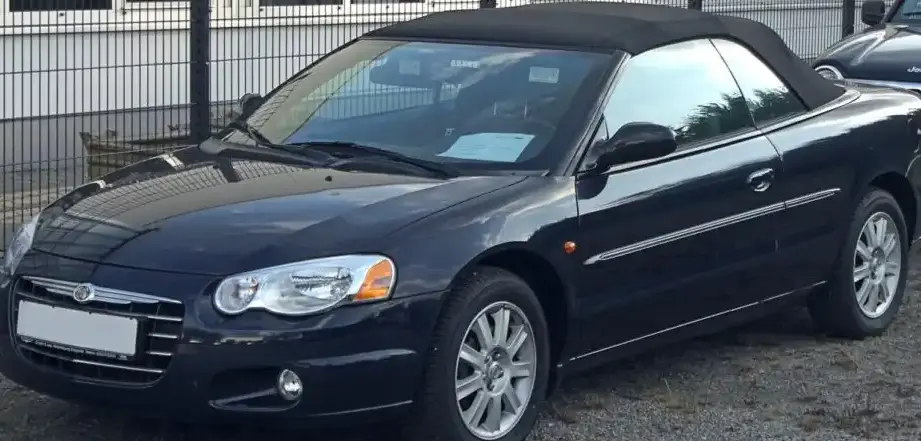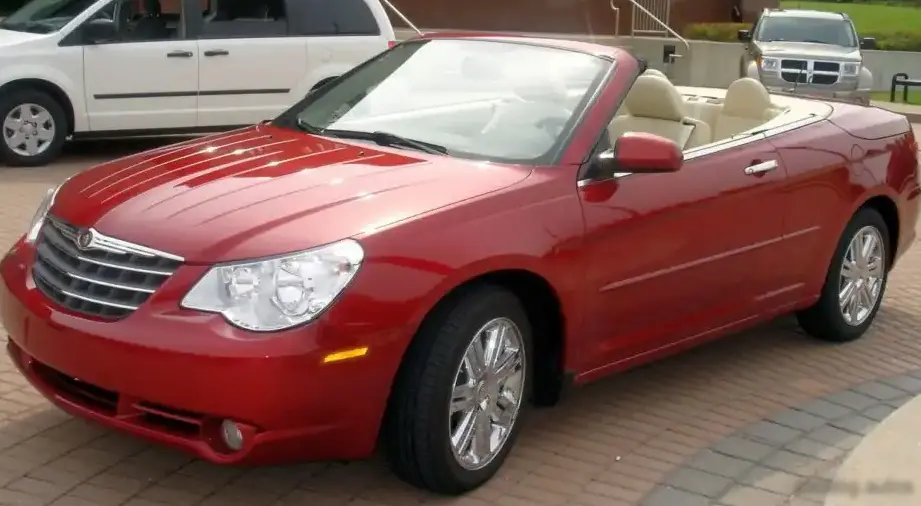
The Chrysler Sebring Convertible (JX) 2.4i 16V Automatic, produced between 1996 and 2000, represented a key offering in Chrysler’s attempt to capture a share of the increasingly popular mid-size convertible market. Positioned as a more affordable and accessible alternative to European competitors, the JX Sebring Convertible aimed to deliver open-air motoring with a focus on comfort and style. This particular variant, equipped with the 2.4-liter inline-four engine and a four-speed automatic transmission, served as a mainstream trim level within the Sebring Convertible lineup, offering a balance between performance and fuel efficiency. It was built on the JA platform, shared with the Dodge Avenger.
Technical Specifications
| Brand | Chrysler |
| Model | Sebring |
| Generation | Sebring Convertible (JX) |
| Type (Engine) | 2.4 i 16V (150 Hp) Automatic |
| Start of production | 1996 |
| End of production | 2000 |
| Powertrain Architecture | Internal Combustion engine |
| Body type | Cabriolet |
| Seats | 4 |
| Doors | 2 |
| Fuel consumption (urban) | 11.2 l/100 km (21 US mpg) |
| Fuel consumption (extra urban) | 8.1 l/100 km (29 US mpg) |
| Fuel Type | Petrol (Gasoline) |
| Acceleration 0 – 100 km/h | 11.2 sec |
| Acceleration 0 – 62 mph | 11.2 sec |
| Acceleration 0 – 60 mph | 10.6 sec |
| Maximum speed | 177 km/h (109.98 mph) |
| Weight-to-power ratio | 10.1 kg/Hp |
| Weight-to-torque ratio | 6.7 kg/Nm |
| Power | 150 Hp @ 5200 rpm |
| Torque | 226 Nm @ 4000 rpm (166.69 lb.-ft. @ 4000 rpm) |
| Engine layout | Front, Transverse |
| Engine Model/Code | EDZ |
| Engine displacement | 2429 cm3 (148.23 cu. in.) |
| Number of cylinders | 4 |
| Engine configuration | Inline |
| Cylinder Bore | 87.5 mm (3.44 in.) |
| Piston Stroke | 101 mm (3.98 in.) |
| Compression ratio | 9.4:1 |
| Number of valves per cylinder | 4 |
| Fuel injection system | Multi-port manifold injection |
| Engine aspiration | Naturally aspirated |
| Valvetrain | DOHC |
| Engine oil capacity | 4.25 l (4.49 US qt | 3.74 UK qt) |
| Coolant capacity | 8.6 l (9.09 US qt | 7.57 UK qt) |
| Kerb Weight | 1520-1567 kg (3351.03 – 3454.64 lbs.) |
| Trunk (boot) space | 320 l (11.3 cu. ft.) |
| Fuel tank capacity | 60 l (15.85 US gal | 13.2 UK gal) |
| Permitted trailer load with brakes (12%) | 907 kg (1999.59 lbs.) |
| Length | 4902 mm (192.99 in.) |
| Width | 1757 mm (69.17 in.) |
| Height | 1392 mm (54.8 in.) |
| Wheelbase | 2692 mm (105.98 in.) |
| Front track | 1529 mm (60.2 in.) |
| Rear track | 1529 mm (60.2 in.) |
| Drag coefficient (Cd) | 0.36 |
| Minimum turning circle | 12.2 m (40.03 ft.) |
| Drivetrain Architecture | Front wheel drive |
| Number of gears | 4 |
| Gearbox type | Automatic transmission |
| Front suspension | Double wishbone |
| Rear suspension | Double wishbone |
| Front brakes | Ventilated discs |
| Rear brakes | Ventilated discs |
| Assisting systems | ABS (Anti-lock braking system) |
| Steering type | Steering rack and pinion |
| Power steering | Hydraulic |
| Tires size | 205/65 R15; 215/55 R16 |
| Wheel rims size | 15; 16 |
Powertrain & Engine Architecture
The heart of this Sebring Convertible variant is the Chrysler EDZ 2.4-liter inline-four engine. This engine, part of Chrysler’s four-cylinder family, featured a dual overhead camshaft (DOHC) valvetrain with four valves per cylinder, contributing to its relatively good breathing characteristics for the time. The EDZ engine utilized a multi-port fuel injection system, delivering fuel directly into the intake ports, optimizing combustion efficiency. The 9.4:1 compression ratio was a compromise between performance and the ability to run on readily available fuel grades. Paired with this engine was a Chrysler-sourced four-speed automatic transmission. This transmission, while providing smooth shifts, wasn’t known for its particularly quick response or advanced features compared to some contemporary automatic gearboxes. It was a conventional hydraulic control unit, prioritizing reliability and ease of maintenance.
Driving Characteristics
The 150 horsepower and 166.69 lb-ft of torque produced by the 2.4-liter engine, when channeled through the four-speed automatic, resulted in adequate, but not exhilarating, performance. Acceleration from 0-60 mph took around 10.6 seconds, making it competitive with other similarly priced convertibles. The automatic transmission’s gear ratios were tuned for comfortable cruising rather than aggressive acceleration. Drivers could expect a relatively smooth ride, but overtaking maneuvers required careful planning. Compared to the optional V6 engine offered in other Sebring Convertible trims, this 2.4L automatic version felt noticeably less powerful. The V6 provided a more responsive driving experience, while the 2.4L prioritized fuel economy and a more relaxed driving style.
Equipment & Trim Levels
The 2.4i Automatic Sebring Convertible typically came standard with features like air conditioning, power windows and locks, a basic audio system, and cloth upholstery. The interior design was functional and aimed at providing a comfortable passenger experience. Optional extras included leather upholstery, upgraded audio systems, a power-operated convertible top, and alloy wheels. Trim levels varied slightly depending on the model year, but generally, this 2.4L automatic configuration represented a mid-range offering, bridging the gap between the base model and the more luxurious V6-powered versions.
Chassis & Braking
The Sebring Convertible utilized a front-wheel-drive layout with independent double wishbone suspension at both the front and rear. This suspension setup aimed to provide a balance between ride comfort and handling. Braking duties were handled by ventilated disc brakes on all four wheels, supplemented by an Anti-lock Braking System (ABS) for improved stopping power and control. The chassis was reinforced to compensate for the structural rigidity lost by removing the roof, but it still exhibited some degree of body flex, particularly on uneven road surfaces. Stabilizer bars were included at both ends to reduce body roll during cornering.
Market Reception & Comparison
The Chrysler Sebring Convertible, in its 2.4L automatic guise, received mixed reviews from automotive critics. While praised for its affordability and comfortable ride, it was often criticized for its lack of outright performance and somewhat bland styling. Fuel economy was considered reasonable for the time, averaging around 21 mpg in the city and 29 mpg on the highway. Compared to the V6 models, the 2.4L offered better fuel efficiency but at the cost of performance. Reliability was generally considered average, with some reports of minor issues with the automatic transmission and electrical components.
Legacy
Today, the Chrysler Sebring Convertible (JX) 2.4i Automatic is primarily found in the used car market as an affordable entry point into convertible ownership. The 2.4-liter engine and four-speed automatic transmission are generally considered reliable, although preventative maintenance is crucial given the vehicle’s age. Parts availability is decent, but some components may be becoming increasingly difficult to source. While not a performance icon, the Sebring Convertible offered a relatively accessible and enjoyable open-air driving experience for its time, and remains a nostalgic reminder of the late 1990s automotive landscape.