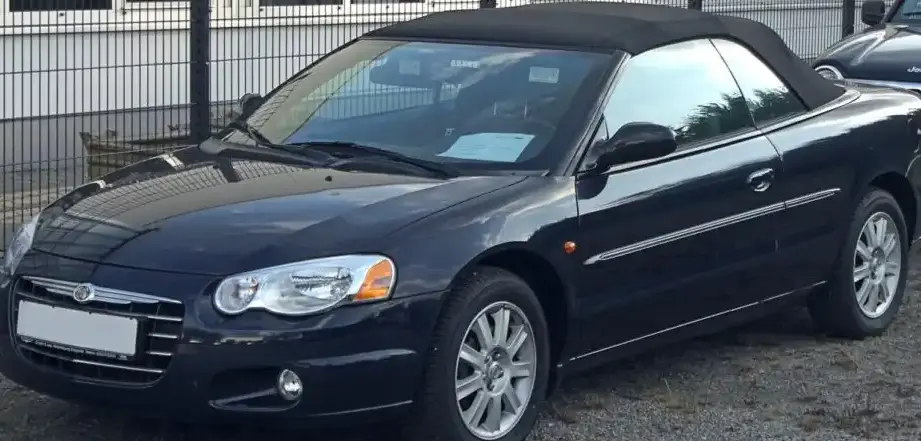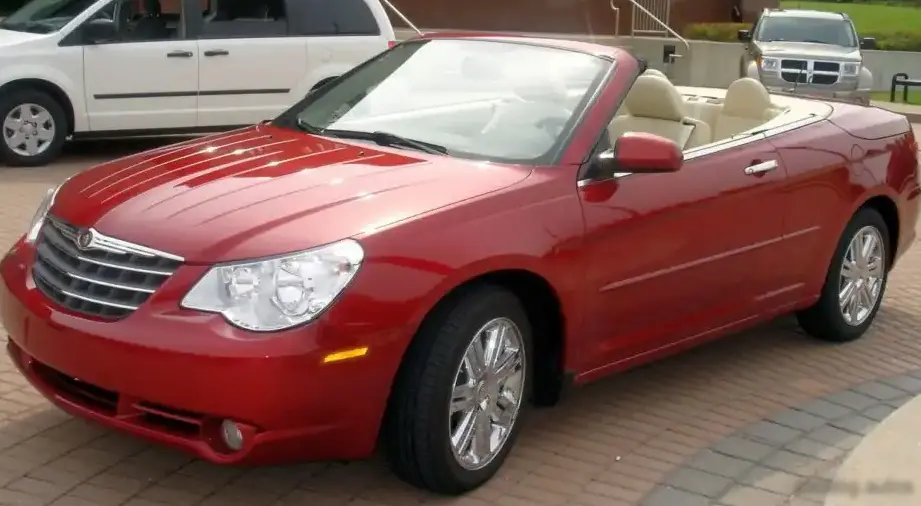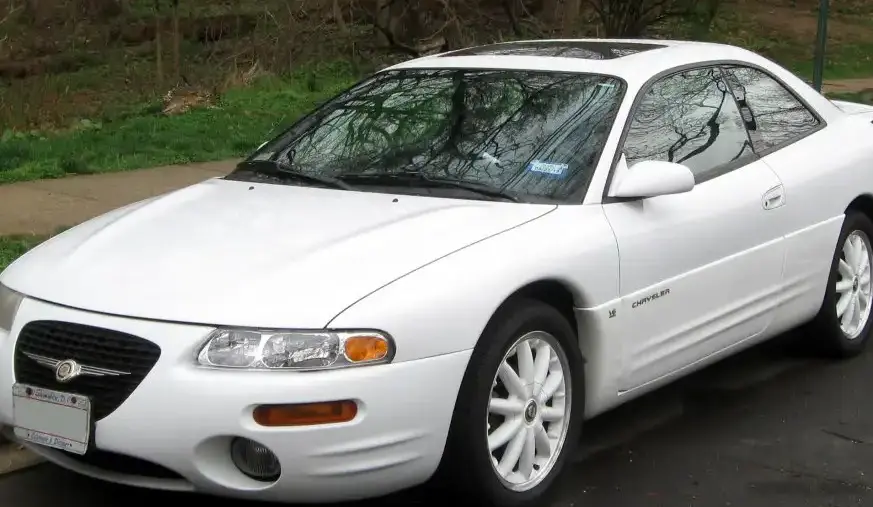
The Chrysler Sebring Coupe (FJ) 2.0i 16V, produced between 1994 and 2000, represented a distinct offering within the broader Sebring lineup. Positioned as a sporty coupe derivative of the Sebring sedan, the FJ generation aimed to attract buyers seeking a more dynamic and stylish alternative. This 2.0-liter, 16-valve variant served as a mid-range option, offering a balance between performance and affordability within the Sebring coupe family. It was part of the first generation of the Sebring coupe, built on Chrysler’s JH platform, and shared many components with the Dodge Avenger.
Technical Specifications
| Brand | Chrysler |
| Model | Sebring |
| Generation | Sebring Coupe (FJ) |
| Type (Engine) | 2.0 i 16V (147 Hp) |
| Start of production | 1994 |
| End of production | 2000 |
| Powertrain Architecture | Internal Combustion engine |
| Body type | Coupe |
| Seats | 5 |
| Doors | 2 |
| Fuel consumption (urban) | 10.3 l/100 km (22.8 US mpg) |
| Fuel consumption (extra urban) | 7.6 l/100 km (30.9 US mpg) |
| Fuel Type | Petrol (Gasoline) |
| Acceleration 0 – 100 km/h | 11 sec |
| Acceleration 0 – 62 mph | 11 sec |
| Acceleration 0 – 60 mph | 10.5 sec |
| Weight-to-power ratio | 9 kg/Hp |
| Weight-to-torque ratio | 7.6 kg/Nm |
| Power | 147 Hp @ 6600 rpm |
| Power per litre | 73.6 Hp/l |
| Torque | 174 Nm @ 5500 rpm (128.34 lb.-ft. @ 5500 rpm) |
| Engine layout | Front, Transverse |
| Engine displacement | 1996 cm3 (121.8 cu. in.) |
| Number of cylinders | 4 |
| Engine configuration | Inline |
| Cylinder Bore | 87.5 mm (3.44 in.) |
| Piston Stroke | 83 mm (3.27 in.) |
| Compression ratio | 9.8:1 |
| Number of valves per cylinder | 4 |
| Fuel injection system | Multi-port manifold injection |
| Engine aspiration | Naturally aspirated engine |
| Valvetrain | DOHC |
| Engine oil capacity | 4.4 l (4.65 US qt | 3.87 UK qt) |
| Coolant capacity | 7 l (7.4 US qt | 6.16 UK qt) |
| Kerb Weight | 1319 kg (2907.9 lbs.) |
| Trunk (boot) space – minimum | 371 l (13.1 cu. ft.) |
| Fuel tank capacity | 60 l (15.85 US gal | 13.2 UK gal) |
| Length | 4760 mm (187.4 in.) |
| Width | 1770 mm (69.69 in.) |
| Height | 1296 mm (51.02 in.) |
| Wheelbase | 2635 mm (103.74 in.) |
| Front track | 1510 mm (59.45 in.) |
| Rear track | 1505 mm (59.25 in.) |
| Drivetrain Architecture | Front wheel drive |
| Number of gears | 5 |
| Gearbox type | Manual transmission |
| Front suspension | Double wishbone |
| Rear suspension | Double wishbone |
| Front brakes | Ventilated discs |
| Rear brakes | Drum |
| Assisting systems | ABS (Anti-lock braking system) |
| Steering type | Steering rack and pinion |
| Power steering | Hydraulic Steering |
| Tires size | 195/70 R14 |
Powertrain & Engine Architecture
The heart of the Sebring Coupe 2.0i 16V is the Chrysler 2.0-liter inline-four cylinder engine. This engine, often referred to by its internal code, typically falls within the EDZ family. It features a double overhead camshaft (DOHC) valvetrain operating four valves per cylinder, contributing to improved breathing and higher-RPM performance. The engine utilizes a multi-port fuel injection system, delivering fuel directly to each intake port for precise fuel metering. The 9.8:1 compression ratio was a compromise between performance and the fuel quality available in the target markets. The five-speed manual transmission was the standard offering, providing drivers with direct control over the engine’s power. This transmission was chosen for its affordability and relative simplicity, though it wasn’t known for particularly sporty shift feel.
Driving Characteristics
The 147 horsepower and 128 lb-ft of torque produced by the 2.0-liter engine provided adequate, but not exhilarating, performance. Acceleration from 0-60 mph took around 10.5 seconds, placing it firmly in the realm of everyday transportation rather than a sports car. The five-speed manual transmission allowed drivers to keep the engine in its optimal power band, but the relatively tall gear ratios prioritized fuel economy over outright acceleration. Compared to the available V6 options, the 2.0-liter felt noticeably less powerful, especially when fully loaded or tackling steep inclines. However, the lighter weight of the 2.0L engine compared to the V6 models did contribute to slightly more nimble handling.
Equipment & Trim Levels
The 2.0i 16V Sebring Coupe typically came with a reasonable level of standard equipment. This included features like air conditioning, power steering, a basic audio system, and cloth upholstery. Optional extras included features like upgraded audio systems, power windows and locks, and a sunroof. The interior design was functional and relatively simple, reflecting the car’s price point. Trim levels were often differentiated by the addition of these optional packages, with higher trims offering more convenience and comfort features.
Chassis & Braking
The Sebring Coupe utilized a front-wheel-drive layout with independent double wishbone suspension at both the front and rear. This suspension setup provided a comfortable ride quality, though it wasn’t particularly sporty in its tuning. The front brakes were ventilated discs, offering adequate stopping power, while the rear brakes were drums, a cost-saving measure common in this class of vehicle. Anti-lock brakes (ABS) were often included as standard equipment, enhancing safety. The steering was rack and pinion, providing reasonably precise steering feel.
Market Reception & Comparison
The Sebring Coupe 2.0i 16V was generally well-received as an affordable and stylish coupe. Critics noted its comfortable ride and decent fuel economy. However, the engine’s performance was often criticized as being somewhat underwhelming, especially when compared to the more powerful V6 options. The 2.0-liter version was often seen as a good choice for buyers prioritizing fuel efficiency and affordability over outright performance. Compared to competitors like the Ford Escort Coupe or the Honda Civic Coupe, the Sebring offered a more spacious interior and a more comfortable ride, but lacked the same level of refinement or sporty handling.
Legacy
The Chrysler Sebring Coupe 2.0i 16V has become a relatively affordable and accessible classic car in the used market. The 2.0-liter engine is generally considered reliable, though regular maintenance is crucial to prevent issues. Common concerns include oil leaks and potential problems with the cooling system. Parts availability is generally good, as many components were shared with other Chrysler and Dodge models. While not a particularly collectible model, the Sebring Coupe 2.0i 16V remains a popular choice for those seeking an affordable and stylish coupe from the 1990s. Its simple mechanicals make it a relatively easy car to maintain and repair, appealing to DIY enthusiasts.