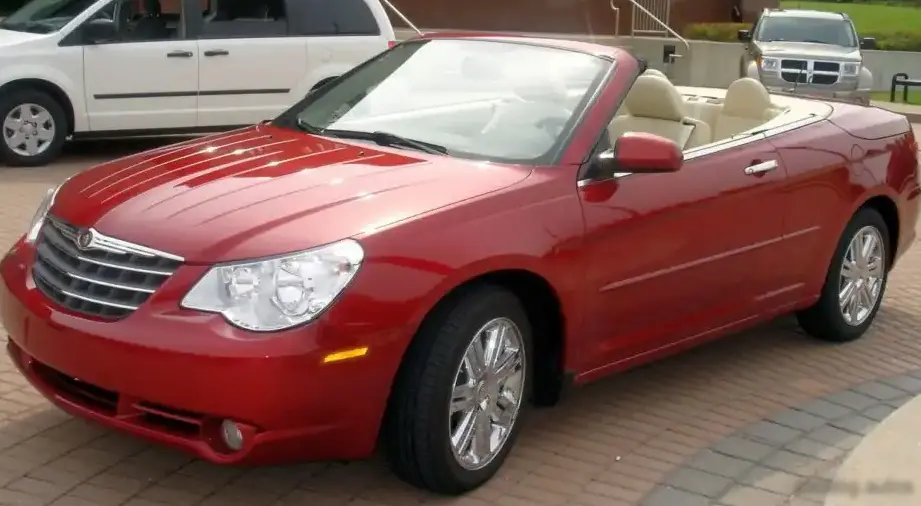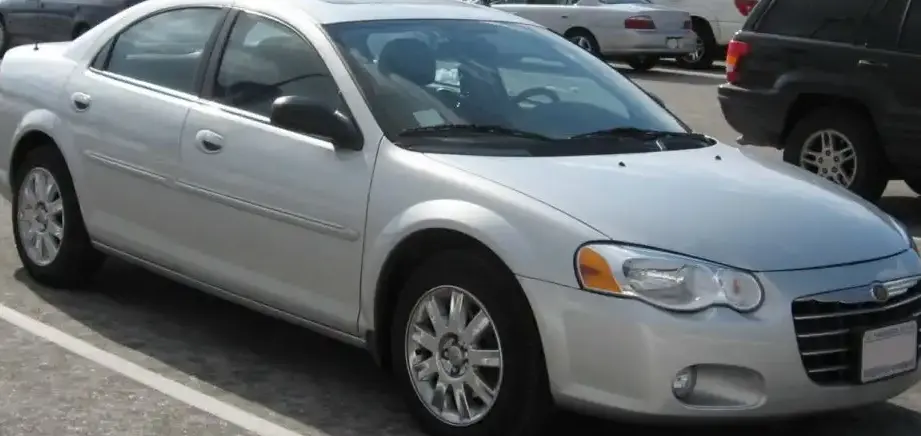
The Chrysler Sebring Sedan (JR) 2.0i 16V, produced from 2000 to 2006, represented a significant step in Chrysler’s mid-size sedan offerings. Positioned as a mainstream competitor in the North American market, the JR Sebring aimed to provide a balance of style, comfort, and affordability. This particular 2.0-liter, 141 horsepower variant served as a core model within the Sebring lineup, offering a more economical alternative to the higher-performance engine options. It was built on the DC platform, shared with the Dodge Stratus and Mitsubishi Galant, reflecting Chrysler’s alliance with Daimler-Benz and Mitsubishi during this period.
Technical Specifications
| Brand | Chrysler |
| Model | Sebring |
| Generation | Sebring Sedan (JR) |
| Type (Engine) | 2.0 i 16V (141 Hp) |
| Start of production | 2000 year |
| End of production | 2006 year |
| Powertrain Architecture | Internal Combustion engine |
| Body type | Sedan |
| Seats | 5 |
| Doors | 4 |
| Fuel consumption (urban) | 10.5 l/100 km (22.4 US mpg) |
| Fuel consumption (extra urban) | 6.6 l/100 km (35.6 US mpg) |
| Fuel consumption (combined) | 8.3 l/100 km (28.3 US mpg) |
| Fuel Type | Petrol (Gasoline) |
| Acceleration 0 – 100 km/h | 11 sec |
| Acceleration 0 – 62 mph | 11 sec |
| Acceleration 0 – 60 mph | 10.5 sec |
| Maximum speed | 205 km/h (127.38 mph) |
| Weight-to-power ratio | 10.3 kg/Hp |
| Weight-to-torque ratio | 7.7 kg/Nm |
| Power | 141 Hp @ 6000 rpm |
| Power per litre | 70.6 Hp/l |
| Torque | 188 Nm @ 4350 rpm (138.66 lb.-ft. @ 4350 rpm) |
| Engine layout | Front, Transverse |
| Engine Model/Code | ECC |
| Engine displacement | 1996 cm3 (121.8 cu. in.) |
| Number of cylinders | 4 |
| Engine configuration | Inline |
| Cylinder Bore | 87.5 mm (3.44 in.) |
| Piston Stroke | 83 mm (3.27 in.) |
| Compression ratio | 9.6:1 |
| Number of valves per cylinder | 4 |
| Fuel injection system | Multi-port manifold injection |
| Engine aspiration | Naturally aspirated engine |
| Valvetrain | DOHC |
| Engine oil capacity | 4.3 l (4.54 US qt | 3.78 UK qt) |
| Coolant | 7.5 l (7.93 US qt | 6.6 UK qt) |
| Kerb Weight | 1450 kg (3196.7 lbs.) |
| Max. weight | 1920 kg (4232.88 lbs.) |
| Max load | 470 kg (1036.17 lbs.) |
| Trunk (boot) space – minimum | 455 l (16.07 cu. ft.) |
| Fuel tank capacity | 61 l (16.11 US gal | 13.42 UK gal) |
| Length | 4845 mm (190.75 in.) |
| Width | 1790 mm (70.47 in.) |
| Height | 1395 mm (54.92 in.) |
| Wheelbase | 2745 mm (108.07 in.) |
| Front track | 1530 mm (60.24 in.) |
| Rear (Back) track | 1530 mm (60.24 in.) |
| Drivetrain Architecture | The Internal combustion engine (ICE) drives the front wheels of the vehicle. |
| Drive wheel | Front wheel drive |
| Number of gears and type of gearbox | 5 gears, manual transmission |
| Front suspension | Spring Strut |
| Rear suspension | Coil spring |
| Front brakes | Ventilated discs |
| Rear brakes | Disc |
| Assisting systems | ABS (Anti-lock braking system) |
| Steering type | Steering rack and pinion |
| Tires size | 205/65 R15 |
Powertrain & Engine Architecture
The heart of the Sebring 2.0i was the Chrysler ECC engine, a 1.996-liter inline-four cylinder powerplant. This engine featured a double overhead camshaft (DOHC) valvetrain with four valves per cylinder, contributing to its relatively efficient breathing. Fuel delivery was handled by a multi-port fuel injection system, providing precise fuel metering for improved combustion. The engine produced 141 horsepower at 6000 rpm and 188 Nm (138.66 lb-ft) of torque at 4350 rpm. The five-speed manual transmission was the standard offering, providing drivers with a degree of control over the engine’s powerband. The engine’s design prioritized reliability and affordability over outright performance, making it a suitable choice for everyday driving.
Driving Characteristics
The 2.0-liter Sebring offered adequate, though not exhilarating, performance. Acceleration from 0 to 60 mph took approximately 10.5 seconds, and top speed was around 127 mph. The five-speed manual transmission allowed drivers to keep the engine in its optimal power range, but the engine lacked the low-end torque of larger displacement options. Compared to the available 2.4-liter four-cylinder or the more powerful V6 engines, the 2.0i felt noticeably less responsive, particularly during highway merging or overtaking maneuvers. The gear ratios were tuned for fuel efficiency rather than aggressive acceleration. The ride quality was generally comfortable, prioritizing a smooth experience over sporty handling.
Equipment & Trim Levels
The 2.0i Sebring typically came standard with features such as air conditioning, power windows and locks, and an AM/FM stereo. Higher trim levels, such as the LX and Limited, added features like alloy wheels, upgraded interior upholstery, a CD player, and cruise control. Optional extras included a sunroof, leather seats, and a premium sound system. The interior design was functional and straightforward, with a focus on ergonomics and ease of use. The base model featured cloth upholstery, while higher trims offered leather options. Dashboard materials were generally durable, though not particularly luxurious.
Chassis & Braking
The Sebring JR utilized a front-wheel-drive layout with a MacPherson strut front suspension and a coil spring rear suspension. This setup provided a comfortable ride, but didn’t offer the same level of handling precision as more sophisticated suspension designs. The front brakes were ventilated discs, while the rear brakes were solid discs. Anti-lock Braking System (ABS) was standard, enhancing safety during emergency braking situations. The chassis was designed to balance ride comfort with reasonable handling characteristics, prioritizing stability over sporty dynamics. The standard tire size was 205/65 R15, offering a good compromise between ride comfort and grip.
Market Reception & Comparison
The 2.0i Sebring was generally well-received as an affordable and practical mid-size sedan. Critics noted its comfortable ride and spacious interior, but also pointed out its lack of performance compared to some competitors. Fuel economy was a strong point, with combined mileage averaging around 28 mpg. Compared to the 2.4-liter Sebring, the 2.0i offered lower running costs but sacrificed some performance. The V6-powered Sebring provided significantly more power but came with a higher price tag and reduced fuel efficiency. The Sebring competed with other mainstream mid-size sedans such as the Honda Accord, Toyota Camry, and Ford Fusion.
Legacy
The Chrysler Sebring 2.0i 16V, while not a standout performer, proved to be a reliable and economical option for many buyers. The ECC engine, while not known for its cutting-edge technology, was generally durable and relatively easy to maintain. Today, these vehicles are often found as affordable used cars, offering a practical and reasonably reliable transportation solution. Common issues include minor oil leaks and wear on suspension components, but overall, the powertrain has proven to be fairly robust. The Sebring JR, particularly the 2.0i variant, represents a snapshot of Chrysler’s mid-size sedan offerings during a period of significant change and collaboration within the automotive industry.