Technical Specifications
| Brand | Chrysler |
| Model | Sebring |
| Generation | Sebring Sedan (JR) |
| Type (Engine) | 2.0 i 16V (141 Hp) Automatic |
| Start of production | 2000 year |
| End of production | 2006 year |
| Powertrain Architecture | Internal Combustion engine |
| Body type | Sedan |
| Seats | 5 |
| Doors | 4 |
| Fuel consumption (urban) | 12.7 l/100 km (18.5 US mpg, 22.2 UK mpg, 7.9 km/l) |
| Fuel consumption (extra urban) | 7.5 l/100 km (31.4 US mpg, 37.7 UK mpg, 13.3 km/l) |
| Fuel consumption (combined) | 9.4 l/100 km (25 US mpg, 30.1 UK mpg, 10.6 km/l) |
| Fuel Type | Petrol (Gasoline) |
| Acceleration 0 – 100 km/h | 11 sec |
| Acceleration 0 – 62 mph | 11 sec |
| Acceleration 0 – 60 mph | 10.5 sec |
| Maximum speed | 180 km/h (111.85 mph) |
| Weight-to-power ratio | 10.3 kg/Hp, 97.2 Hp/tonne |
| Weight-to-torque ratio | 7.7 kg/Nm, 129.7 Nm/tonne |
| Power | 141 Hp @ 6000 rpm |
| Power per litre | 70.6 Hp/l |
| Torque | 188 Nm @ 4350 rpm (138.66 lb.-ft. @ 4350 rpm) |
| Engine layout | Front, Transverse |
| Engine Model/Code | ECC |
| Engine displacement | 1996 cm3 (121.8 cu. in.) |
| Number of cylinders | 4 |
| Engine configuration | Inline |
| Cylinder Bore | 87.5 mm (3.44 in.) |
| Piston Stroke | 83 mm (3.27 in.) |
| Compression ratio | 9.6:1 |
| Number of valves per cylinder | 4 |
| Fuel injection system | Multi-port manifold injection |
| Engine aspiration | Naturally aspirated engine |
| Valvetrain | DOHC |
| Engine oil capacity | 4.3 l (4.54 US qt | 3.78 UK qt) |
| Coolant | 7.5 l (7.93 US qt | 6.6 UK qt) |
| Kerb Weight | 1450 kg (3196.7 lbs.) |
| Max. weight | 1920 kg (4232.88 lbs.) |
| Max load | 470 kg (1036.17 lbs.) |
| Trunk (boot) space – minimum | 455 l (16.07 cu. ft.) |
| Fuel tank capacity | 61 l (16.11 US gal | 13.42 UK gal) |
| Length | 4845 mm (190.75 in.) |
| Width | 1790 mm (70.47 in.) |
| Height | 1395 mm (54.92 in.) |
| Wheelbase | 2745 mm (108.07 in.) |
| Front track | 1530 mm (60.24 in.) |
| Rear (Back) track | 1530 mm (60.24 in.) |
| Drivetrain Architecture | The Internal combustion engine (ICE) drives the front wheels of the vehicle. |
| Drive wheel | Front wheel drive |
| Number of gears and type of gearbox | 4 gears, automatic transmission |
| Front suspension | Spring Strut |
| Rear suspension | Coil spring |
| Front brakes | Ventilated discs |
| Rear brakes | Disc |
| Assisting systems | ABS (Anti-lock braking system) |
| Steering type | Steering rack and pinion |
| Tires size | 205/65 R15 |
| Wheel rims size | 15 |
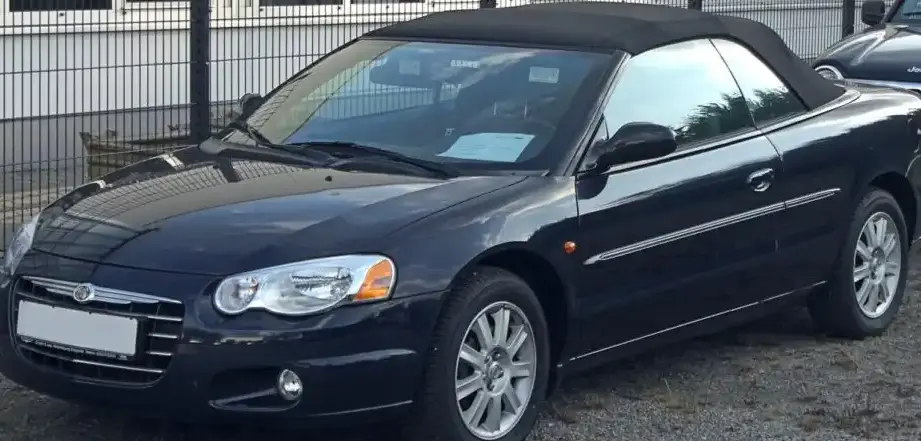
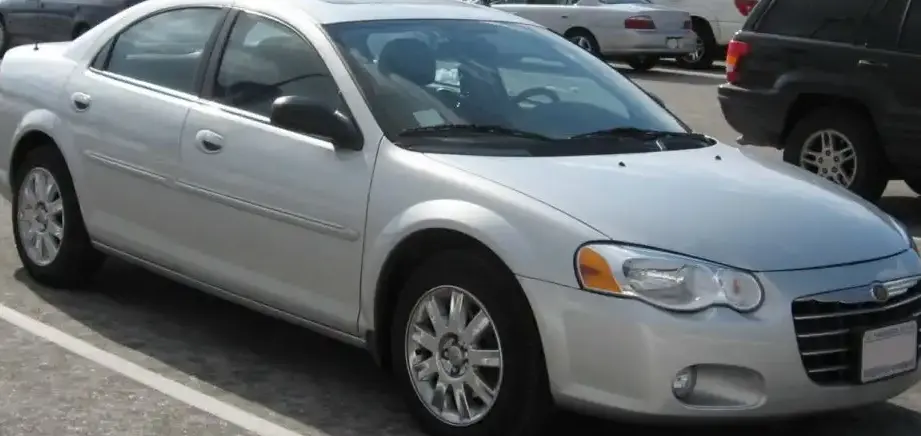
The Chrysler Sebring Sedan (JR) 2.0i 16V Automatic, produced from 2000 to 2006, was a significant model in Chrysler’s mid-size sedan range. Positioned as a mainstream, family-focused vehicle, this variant aimed to deliver a balance of affordability, comfort, and reasonable performance. It was part of the JR generation Sebring, which shared the DC platform with the Dodge Stratus and Mitsubishi Galant. The 2.0-liter engine coupled with an automatic transmission was designed to attract buyers who valued ease of driving over sporty performance, making it a popular choice in the American market.
Powertrain & Engine Architecture
The core of this Sebring variant was the Chrysler ECC 2.0-liter inline-four engine. This engine, part of Chrysler’s four-cylinder engine family, featured a double overhead camshaft (DOHC) valvetrain with four valves per cylinder, contributing to its respectable output for its displacement. The engine employed a multi-port fuel injection system, delivering fuel directly to each intake port for enhanced combustion efficiency. A 9.6:1 compression ratio was typical for naturally aspirated engines of the period, striking a balance between performance and fuel economy. The engine was paired with a four-speed automatic transmission, engineered for smooth and convenient operation. While not boasting the most advanced gear ratios, this transmission proved reliable and well-matched to the engine’s power characteristics.
Driving Characteristics
The 141 horsepower and 188 Nm (138.66 lb-ft) of torque generated by the 2.0-liter engine and automatic transmission resulted in adequate, though not thrilling, performance. Acceleration from 0 to 60 mph took approximately 10.5 seconds, and the car reached a top speed of 180 km/h (111.85 mph). The automatic transmission’s gear ratios were optimized for comfortable cruising and everyday driving, rather than aggressive acceleration. Compared to the more powerful V6 options available on the Sebring, this variant felt noticeably slower, especially when overtaking. However, the automatic transmission simplified driving in congested traffic compared to the manual transmission options found on other Sebring trims. Power delivery was relatively linear, with peak torque arriving at 4350 rpm.
Equipment & Trim Levels
The 2.0i Automatic Sebring generally came standard with features such as air conditioning, power windows and locks, an AM/FM stereo, and cloth upholstery. Higher trim levels, including the LX and Limited, added features like alloy wheels, a CD player, upgraded interior trim, and optional extras like a sunroof and leather seats. The base model prioritized providing essential features at an accessible price point. The interior design was functional and straightforward, emphasizing practicality over luxury. The dashboard layout was characteristic of early 2000s American sedans, featuring clearly marked controls and a relatively simple design.
Chassis & Braking
The Sebring JR utilized a front-wheel-drive layout with a MacPherson strut front suspension and a coil spring rear suspension. This suspension setup delivered a comfortable ride quality, though it wasn’t particularly sporty. The front brakes were ventilated discs, providing good stopping power, while the rear brakes were solid discs. Anti-lock Braking System (ABS) was standard, enhancing safety. The steering was rack and pinion, offering reasonably precise control. The 205/65 R15 tires provided a good compromise between ride comfort and grip for typical driving conditions.
Market Reception & Comparison
The 2.0i Automatic Sebring was generally well-received as an affordable and practical family sedan. Reviewers praised its comfortable ride and ease of use, but also noted its lack of sporty handling and modest performance. Compared to the V6-powered Sebring models, the 2.0-liter version offered significantly improved fuel economy, achieving around 25 US mpg in combined driving. However, it lacked the V6’s acceleration and overall refinement. The 2.0-liter engine was considered reasonably reliable, provided it received regular maintenance. It was often compared to similar offerings from Honda, Toyota, and Nissan in the mid-size sedan segment.
Legacy
The Chrysler Sebring 2.0i Automatic, while not a performance leader, remains a relatively common vehicle on the used car market today. The ECC engine, when properly maintained, can provide reliable service for many years. However, prospective buyers should be aware of potential issues such as oil leaks and sensor failures. The automatic transmission is generally durable, but may require fluid changes and occasional servicing. The Sebring JR, in its various trims, exemplifies typical early 2000s American automotive design, prioritizing comfort and affordability over outright performance and handling. Its enduring appeal lies in its practicality and relatively low cost of ownership.