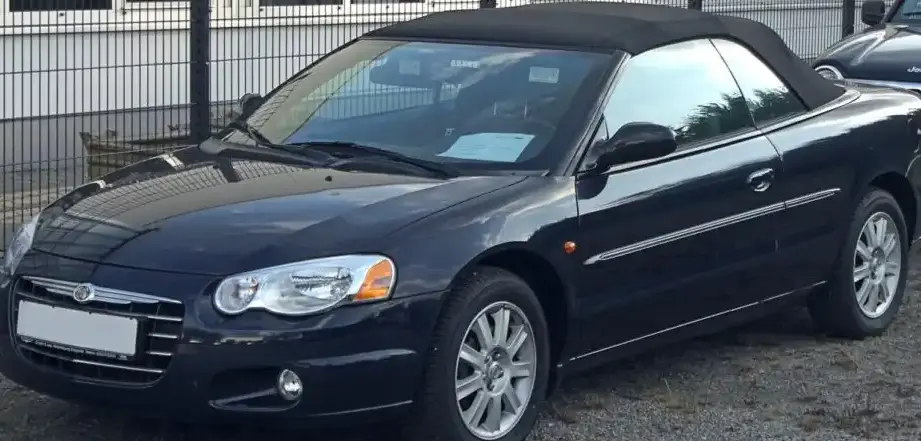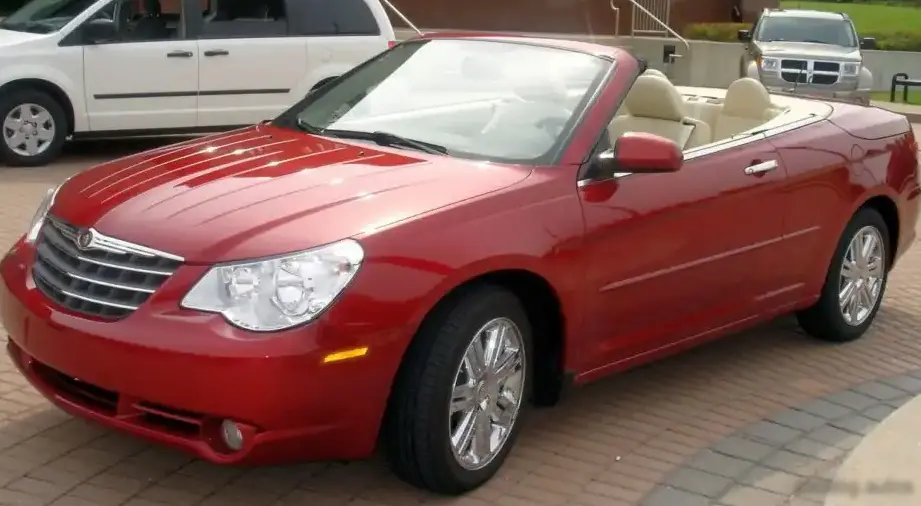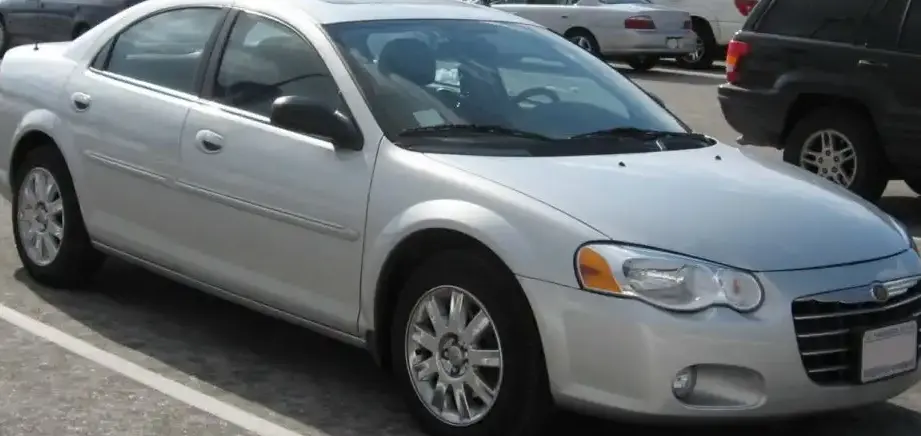
The Chrysler Sebring Sedan (JR) 2.7i V6 24V Automatic, produced from 2000 to 2006, represented a mid-cycle offering within the JR generation of the Sebring. Positioned as a step up from the base 2.4L four-cylinder models, the 2.7L V6 aimed to provide a balance of performance and affordability for American consumers seeking a comfortable and reasonably powerful mid-size sedan. This variant occupied the middle ground in the Sebring lineup, offering more power than the base engine but falling short of the range-topping models equipped with the 3.0L V6. It was a key player in Chrysler’s attempt to compete in the highly contested family sedan segment.
Technical Specifications
| Brand | Chrysler |
| Model | Sebring |
| Generation | Sebring Sedan (JR) |
| Type (Engine) | 2.7 i V6 24V (200 Hp) Automatic |
| Start of production | 2000 year |
| End of production | 2006 year |
| Powertrain Architecture | Internal Combustion engine |
| Body type | Sedan |
| Seats | 5 |
| Doors | 4 |
| Fuel consumption (economy) – urban | 11.2 l/100 km (21 US mpg, 25.2 UK mpg, 8.9 km/l) |
| Fuel consumption (economy) – extra urban | 8.4 l/100 km (28 US mpg, 33.6 UK mpg, 11.9 km/l) |
| Fuel consumption (economy) – combined | 10.7 l/100 km (22 US mpg, 26.4 UK mpg, 9.3 km/l) |
| Fuel Type | Petrol (Gasoline) |
| Acceleration 0 – 100 km/h | 9.3 sec |
| Acceleration 0 – 62 mph | 9.3 sec |
| Acceleration 0 – 60 mph | 8.8 sec |
| Maximum speed | 216 km/h (134.22 mph) |
| Weight-to-power ratio | 7.3 kg/Hp, 137.2 Hp/tonne |
| Weight-to-torque ratio | 5.7 kg/Nm, 177 Nm/tonne |
| Power | 200 Hp @ 5800 rpm |
| Power per litre | 73.1 Hp/l |
| Torque | 258 Nm @ 4850 rpm (190.29 lb.-ft. @ 4850 rpm) |
| Maximum engine speed | 6464 rpm |
| Engine layout | Front, Transverse |
| Engine Model/Code | EER |
| Engine displacement | 2736 cm3 (166.96 cu. in.) |
| Number of cylinders | 6 |
| Engine configuration | V-engine |
| Cylinder Bore | 86 mm (3.39 in.) |
| Piston Stroke | 78.5 mm (3.09 in.) |
| Compression ratio | 9.9:1 |
| Number of valves per cylinder | 4 |
| Fuel injection system | Multi-port manifold injection |
| Engine aspiration | Naturally aspirated engine |
| Valvetrain | DOHC |
| Engine oil capacity | 4.7 l (4.97 US qt | 4.14 UK qt) |
| Coolant | 9 l (9.51 US qt | 7.92 UK qt) |
| Kerb Weight | 1458-1464 kg (3214.34 – 3227.57 lbs.) |
| Max. weight | 1990 kg (4387.2 lbs.) |
| Max load | 526-532 kg (1159.63 – 1172.86 lbs.) |
| Trunk (boot) space – minimum | 453 l (16 cu. ft.) |
| Fuel tank capacity | 61 l (16.11 US gal | 13.42 UK gal) |
| Permitted trailer load with brakes (12%) | 454 kg (1000.9 lbs.) |
| Length | 4843 mm (190.67 in.) |
| Width | 1793 mm (70.59 in.) |
| Height | 1394 mm (54.88 in.) |
| Wheelbase | 2743 mm (107.99 in.) |
| Front track | 1529 mm (60.2 in.) |
| Rear (Back) track | 1529 mm (60.2 in.) |
| Drag coefficient (Cd) | 0.347 |
| Minimum turning circle (turning diameter) | 11.2 m (36.75 ft.) |
| Drivetrain Architecture | The Internal combustion engine (ICE) drives the front wheels of the vehicle. |
| Drive wheel | Front wheel drive |
| Number of gears and type of gearbox | 4 gears, automatic transmission |
| Front suspension | Spring Strut |
| Rear suspension | Coil spring |
| Front brakes | Ventilated discs, 282×23 mm |
| Rear brakes | Disc, 270×9 mm |
| Assisting systems | ABS (Anti-lock braking system) |
| Steering type | Steering rack and pinion |
| Tires size | 205/60 R16 |
| Wheel rims size | 6.5J x 16 |
Powertrain & Engine Architecture
The heart of this Sebring variant was the Chrysler’s 2.7L EER V6 engine. This engine, part of Chrysler’s modular engine family, featured a 60-degree V-angle and a dual overhead camshaft (DOHC) design with four valves per cylinder. The 2.7L engine utilized a multi-port fuel injection system, delivering fuel directly to each intake port. The engine produced 200 horsepower at 5800 rpm and 258 Nm (190.29 lb-ft) of torque at 4850 rpm. Paired with this engine was a four-speed automatic transmission, a common choice for American buyers prioritizing convenience over outright performance. This transmission was designed for smooth shifts and comfortable cruising, but lacked the responsiveness of a manual gearbox or more modern automatic transmissions with additional gears.
Driving Characteristics
The 2.7L V6 automatic Sebring offered adequate performance for everyday driving. Acceleration from 0-60 mph took approximately 8.8 seconds, making it competitive with other mid-size sedans of the era. However, it wasn’t a particularly sporty vehicle. The automatic transmission, while smooth, could feel somewhat sluggish during quick acceleration or when attempting to pass on the highway. The gear ratios were tuned for fuel economy and comfort rather than maximizing performance. Compared to the 3.0L V6 models, the 2.7L felt noticeably less powerful, especially at higher speeds. The 2.7L offered a more refined driving experience than the base 2.4L four-cylinder, providing sufficient power for most driving situations without feeling strained.
Equipment & Trim Levels
The 2.7L V6 Sebring typically came standard with features such as air conditioning, power windows and locks, a CD player, and cloth upholstery. Higher trim levels, such as the LX and Limited, added features like alloy wheels, a power driver’s seat, upgraded audio systems, and leather upholstery. Optional extras included a sunroof, premium sound system, and side airbags. The interior design was generally functional and comfortable, though the materials used were not particularly luxurious. The dashboard layout was straightforward and easy to use, with clearly labeled controls.
Chassis & Braking
The Sebring JR utilized a front-wheel-drive layout with an independent front suspension featuring spring struts and a coil spring rear suspension. The braking system consisted of ventilated discs on the front wheels and solid discs on the rear. Anti-lock brakes (ABS) were standard equipment. The suspension was tuned for a comfortable ride, prioritizing smoothness over sporty handling. The steering was relatively light and easy to use, making it well-suited for city driving. The 2.7L models, being heavier than the four-cylinder versions, sometimes exhibited a slight tendency towards understeer during cornering.
Market Reception & Comparison
The 2.7L V6 Sebring was generally well-received by critics as a competent and affordable mid-size sedan. It offered a good balance of features, comfort, and performance for the price. However, some reviewers noted that the automatic transmission could feel sluggish and that the interior materials were not as refined as those found in some competing models. Compared to the 2.4L four-cylinder, the 2.7L offered a significant improvement in performance, but at the cost of slightly lower fuel economy. The 3.0L V6 models provided even more power, but were also more expensive. Fuel economy averaged around 22 mpg combined, which was typical for a V6-powered sedan of that era.
Legacy
The 2.7L V6 engine, while generally reliable, was known to have some potential issues, including oil leaks and occasional problems with the timing chain tensioners. The four-speed automatic transmission, while durable, is not as efficient or refined as more modern transmissions. Today, the 2000-2006 Chrysler Sebring 2.7L V6 Automatic can be found on the used car market at relatively affordable prices. These vehicles are often sought after by buyers looking for a comfortable and reliable commuter car. However, potential buyers should be aware of the potential maintenance issues associated with the engine and transmission and should have the vehicle thoroughly inspected before purchase. Despite its age, the Sebring 2.7L remains a reasonably practical and affordable option for those seeking a basic, no-frills mid-size sedan.