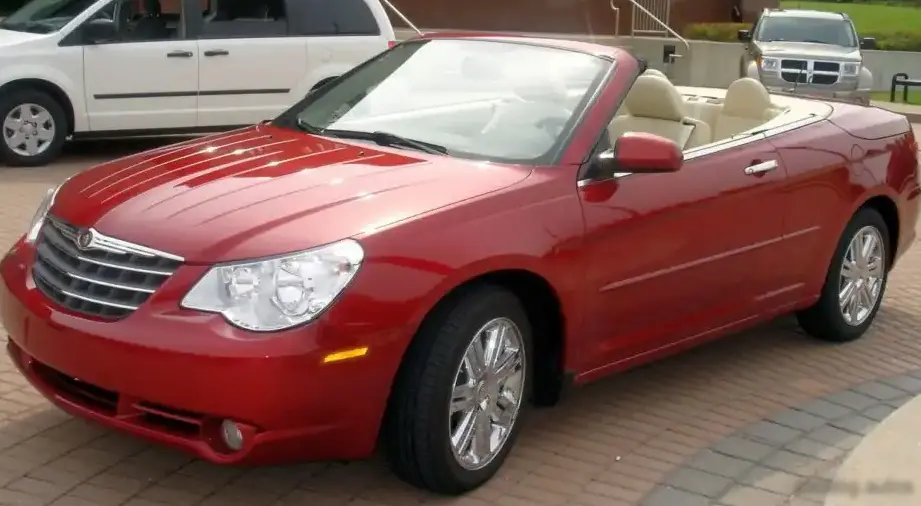
The Chrysler Sebring Sedan (JS) 2.4i 16V, produced from 2006 to 2010, represented a mid-cycle offering within the JS generation of the Sebring. Positioned as a mainstream, family-oriented sedan, it aimed to provide a balance of comfort, features, and affordability in the highly competitive American mid-size car market. This variant, powered by the 2.4-liter four-cylinder engine producing 172 horsepower, served as a popular choice for buyers seeking a more economical alternative to the available V6 options. It was a key component of Chrysler’s attempt to revitalize the Sebring nameplate and compete with established rivals like the Honda Accord and Toyota Camry.
Technical Specifications
| Brand | Chrysler |
| Model | Sebring |
| Generation | Sebring Sedan (JS) |
| Type (Engine) | 2.4i 16V (172 Hp) |
| Start of production | 2006 |
| End of production | 2010 |
| Powertrain Architecture | Internal Combustion engine |
| Body type | Sedan |
| Seats | 5 |
| Doors | 4 |
| Fuel consumption (urban) | 12.3 l/100 km (19.1 US mpg) |
| Fuel consumption (extra urban) | 6.9 l/100 km (34.1 US mpg) |
| Fuel consumption (combined) | 8.9 l/100 km (26.4 US mpg) |
| Fuel Type | Petrol (Gasoline) |
| Maximum speed | 200 km/h (124.27 mph) |
| Emission standard | Euro 5 |
| Weight-to-power ratio | 9.1 kg/Hp |
| Weight-to-torque ratio | 7 kg/Nm |
| Power | 172 Hp @ 5200 rpm |
| Power per litre | 70.8 Hp/l |
| Torque | 222 Nm @ 4000 rpm (163.74 lb.-ft. @ 4000 rpm) |
| Engine layout | Front, Transverse |
| Engine Model/Code | EDG |
| Engine displacement | 2429 cm3 (148.23 cu. in.) |
| Number of cylinders | 4 |
| Engine configuration | Inline |
| Cylinder Bore | 87.5 mm (3.44 in.) |
| Piston Stroke | 101 mm (3.98 in.) |
| Compression ratio | 9.4:1 |
| Number of valves per cylinder | 4 |
| Fuel injection system | Multi-port manifold injection |
| Engine aspiration | Naturally aspirated engine |
| Valvetrain | DOHC |
| Engine oil capacity | 4.26 l (4.5 US qt | 3.75 UK qt) |
| Coolant | 7.3 l (7.71 US qt | 6.42 UK qt) |
| Kerb Weight | 1560 kg (3439.21 lbs.) |
| Max. weight | 2040 kg (4497.43 lbs.) |
| Max load | 480 kg (1058.22 lbs.) |
| Trunk (boot) space – minimum | 441 l (15.57 cu. ft.) |
| Fuel tank capacity | 64 l (16.91 US gal | 14.08 UK gal) |
| Length | 4850 mm (190.94 in.) |
| Width | 1843 mm (72.56 in.) |
| Height | 1497 mm (58.94 in.) |
| Wheelbase | 2767 mm (108.94 in.) |
| Front track | 1570 mm (61.81 in.) |
| Rear (Back) track | 1570 mm (61.81 in.) |
| Drivetrain Architecture | Front wheel drive |
| Drive wheel | Front wheel drive |
| Number of gears and type of gearbox | 6 gears, manual transmission |
| Front suspension | Independent type McPherson |
| Rear suspension | Several levers and rods |
| Front brakes | Ventilated discs |
| Rear brakes | Disc |
| Assisting systems | ABS (Anti-lock braking system) |
| Steering type | Steering rack and pinion |
| Power steering | Hydraulic Steering |
| Tires size | 215/55 R18 |
| Wheel rims size | 7J x 18 |
Powertrain & Engine Architecture
The heart of the Sebring 2.4i was the Chrysler EDG engine, a 2.4-liter inline-four cylinder powerplant. This engine utilized a dual overhead camshaft (DOHC) valvetrain with four valves per cylinder, contributing to its relatively efficient breathing. Fuel delivery was managed by a multi-port fuel injection system, a common setup for the era. The engine produced 172 horsepower at 5200 rpm and 222 Nm (163.74 lb-ft) of torque at 4000 rpm. The 6-speed manual transmission was the standard offering, providing drivers with a degree of control over the engine’s powerband. The engine’s design prioritized fuel efficiency and smooth operation over outright performance, making it well-suited for everyday driving.
Driving Characteristics
The 2.4-liter engine, paired with the 6-speed manual transmission, offered adequate performance for typical commuting and highway driving. Acceleration was not particularly brisk, but the engine provided sufficient power for merging onto freeways and passing slower vehicles. The manual gearbox allowed drivers to keep the engine in its optimal power range, enhancing responsiveness. Compared to the available 2.7-liter V6 and 3.5-liter V6 options, the 2.4i offered a more fuel-efficient and engaging driving experience, albeit with a noticeable trade-off in outright power. The gear ratios were tuned for a balance between fuel economy and usability, with a relatively tall sixth gear for relaxed highway cruising.
Equipment & Trim Levels
The Sebring 2.4i typically came standard with features such as air conditioning, power windows and locks, a CD player with auxiliary input, and basic cloth upholstery. Higher trim levels, such as the Limited, added features like leather seats, a premium sound system, alloy wheels, and upgraded interior trim. Optional extras included a sunroof, navigation system, and remote start. The interior design was generally functional and comfortable, though materials quality was often criticized as being somewhat lacking compared to competitors. The Sebring aimed to provide a good value proposition, offering a reasonable level of equipment for its price point.
Chassis & Braking
The Sebring JS utilized an independent McPherson strut front suspension and a multi-link rear suspension. This setup aimed to provide a comfortable ride while maintaining reasonable handling characteristics. Front brakes were ventilated discs, while rear brakes were solid discs. Anti-lock Braking System (ABS) was standard. The suspension tuning was geared towards comfort, resulting in a relatively soft ride quality. Stabilizer bars were included to reduce body roll during cornering, but the Sebring was not designed to be a particularly sporty vehicle. The chassis was designed to provide a balance between ride comfort and handling stability.
Market Reception & Comparison
The Chrysler Sebring 2.4i received mixed reviews from automotive critics. While praised for its fuel efficiency and comfortable ride, it was often criticized for its bland styling, interior quality, and lack of engaging driving dynamics. Compared to the V6-powered Sebring models, the 2.4i offered better fuel economy but significantly less power. Against competitors like the Honda Accord and Toyota Camry, the Sebring often fell short in terms of refinement and overall driving experience. However, its lower price point made it an attractive option for budget-conscious buyers. Fuel economy figures of 26.4 US mpg combined were competitive for the segment.
Legacy
The Chrysler Sebring 2.4i, while not a standout performer in its class, remains a relatively affordable and accessible used car option today. The EDG engine is generally considered to be reliable, although regular maintenance is crucial. Common issues include oil leaks and occasional sensor failures. The 6-speed manual transmission is also generally durable. The Sebring 2.4i represents a snapshot of early 21st-century American mid-size sedan design, prioritizing practicality and affordability over outright performance and luxury. Its legacy lies in providing a reasonably reliable and fuel-efficient transportation option for a wide range of drivers.