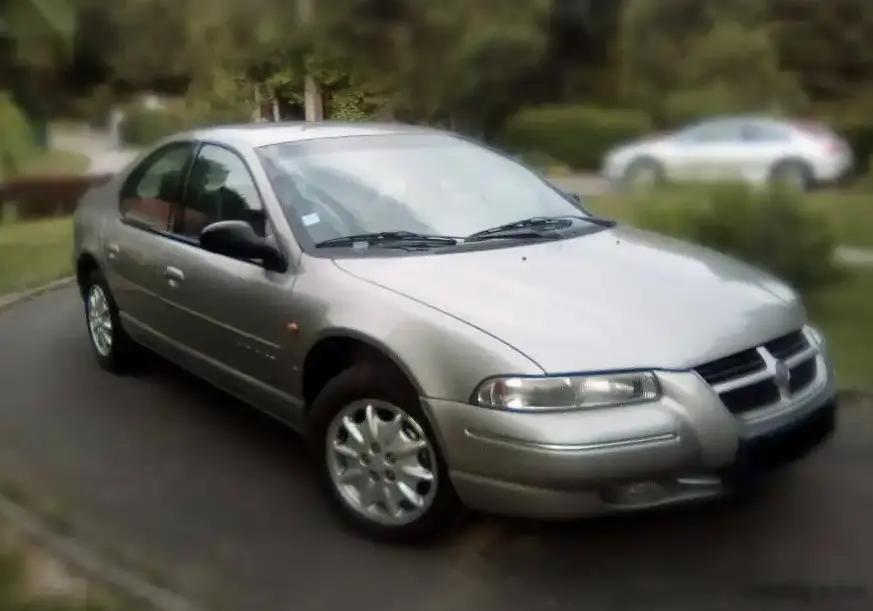
The Chrysler Stratus (JA) 2.5 LX V6, produced from 1995 to 2000, represented a mid-range offering within the first generation of the Stratus sedan. Positioned above the base 2.0L four-cylinder models, the 2.5 LX V6 aimed to provide a balance of performance and affordability for American families. The Stratus, as a whole, was Chrysler’s entry into the mid-size sedan segment, intended to compete with established rivals like the Honda Accord and Toyota Camry. This particular variant, with its 2.5-liter V6 engine and four-speed automatic transmission, was a popular choice for buyers seeking a more refined driving experience than the base models offered.
Technical Specifications
| Brand | Chrysler |
| Model | Stratus |
| Generation | Stratus (JA) |
| Type (Engine) | 2.5 LX V6 (163 Hp) |
| Start of production | 1995 |
| End of production | 2000 |
| Powertrain Architecture | Internal Combustion engine |
| Body type | Sedan |
| Seats | 5 |
| Doors | 4 |
| Fuel consumption (urban) | 15.7 l/100 km (15 US mpg, 18 UK mpg, 6.4 km/l) |
| Fuel consumption (extra urban) | 8.4 l/100 km (28 US mpg, 33.6 UK mpg, 11.9 km/l) |
| Fuel consumption (combined) | 11 l/100 km (21.4 US mpg, 25.7 UK mpg, 9.1 km/l) |
| CO2 emissions | 261 g/km |
| Fuel Type | Petrol (Gasoline) |
| Acceleration 0 – 100 km/h | 10.5 sec |
| Acceleration 0 – 62 mph | 10.5 sec |
| Acceleration 0 – 60 mph | 10 sec |
| Maximum speed | 210 km/h (130.49 mph) |
| Weight-to-power ratio | 8.8 kg/Hp, 113.9 Hp/tonne |
| Weight-to-torque ratio | 6.6 kg/Nm, 152.3 Nm/tonne |
| Power | 163 Hp @ 5850 rpm |
| Power per litre | 65.3 Hp/l |
| Torque | 218 Nm @ 4400 rpm (160.79 lb.-ft. @ 4400 rpm) |
| Engine layout | Front, Transverse |
| Engine Model/Code | 6G73 |
| Engine displacement | 2497 cm3 (152.38 cu. in.) |
| Number of cylinders | 6 |
| Engine configuration | V-engine |
| Cylinder Bore | 83.5 mm (3.29 in.) |
| Piston Stroke | 76 mm (2.99 in.) |
| Compression ratio | 9.4:1 |
| Number of valves per cylinder | 4 |
| Fuel injection system | Multi-port manifold injection |
| Engine aspiration | Naturally aspirated engine |
| Valvetrain | OHC |
| Engine oil capacity | 4.25 l (4.49 US qt | 3.74 UK qt) |
| Kerb Weight | 1431 kg (3154.81 lbs.) |
| Max. weight | 1930 kg (4254.92 lbs.) |
| Max load | 499 kg (1100.11 lbs.) |
| Trunk (boot) space – minimum | 445 l (15.72 cu. ft.) |
| Fuel tank capacity | 60 l (15.85 US gal | 13.2 UK gal) |
| Length | 4746 mm (186.85 in.) |
| Width | 1822 mm (71.73 in.) |
| Height | 1374 mm (54.09 in.) |
| Wheelbase | 2747 mm (108.15 in.) |
| Front track | 1518 mm (59.76 in.) |
| Rear (Back) track | 1518 mm (59.76 in.) |
| Drivetrain Architecture | The Internal combustion engine (ICE) drives the front wheels of the vehicle. |
| Drive wheel | Front wheel drive |
| Number of gears and type of gearbox | 4 gears, automatic transmission |
| Front suspension | Double wishbone |
| Rear suspension | Double wishbone |
| Front brakes | Ventilated discs |
| Rear brakes | Disc |
| Assisting systems | ABS (Anti-lock braking system) |
| Steering type | Steering rack and pinion |
| Power steering | Hydraulic Steering |
| Tires size | 185//65 R15 |
Powertrain & Engine Architecture
The heart of the Stratus 2.5 LX V6 is the Chrysler 6G73 engine, a 2.5-liter, 60-degree V6. This engine utilizes a cast iron block with an aluminum cylinder head, a common configuration for durability and weight reduction. The 6G73 features a single overhead camshaft (OHC) design, operating four valves per cylinder. Fuel delivery is managed by a multi-port fuel injection system, providing precise fuel metering for improved efficiency and performance. The engine’s 9.4:1 compression ratio strikes a balance between power output and the ability to run on readily available 87 octane gasoline. Paired with this engine is a four-speed automatic transmission, a Chrysler-built unit designed for smooth and reliable operation. This transmission featured electronic control for optimized shift points and a torque converter lock-up function to improve fuel economy at highway speeds.
Driving Characteristics
The 163 horsepower and 218 lb-ft of torque produced by the 2.5L V6 and automatic transmission combination provided adequate, though not exhilarating, performance. Acceleration from 0-60 mph took around 10 seconds, making it competitive with other mid-size sedans of the era. The automatic transmission, while smooth, did contribute to a slight loss of power compared to the available five-speed manual transmission. Gear ratios were tuned for comfortable cruising, prioritizing fuel economy over aggressive acceleration. The Stratus 2.5 LX V6 felt most at home on the highway, where its relaxed cruising ability and responsive engine made for a pleasant driving experience. It wasn’t a sports sedan, but it offered a noticeable step up in refinement and power compared to the base four-cylinder models.
Equipment & Trim Levels
The Stratus 2.5 LX V6 came standard with a respectable array of features for its time. These included air conditioning, power windows and locks, an AM/FM stereo with cassette player, and cloth upholstery. Optional extras included a power sunroof, upgraded sound system, cruise control, and alloy wheels. Interior trim was generally functional and durable, with a focus on practicality rather than luxury. The LX trim level represented a step up from the base model, offering a more comfortable and well-equipped interior.
Chassis & Braking
The Stratus utilized a front-wheel-drive layout with independent double wishbone suspension at both the front and rear. This suspension setup provided a comfortable ride quality, absorbing bumps and irregularities in the road surface effectively. Braking duties were handled by ventilated discs at the front and solid discs at the rear. An anti-lock braking system (ABS) was standard, enhancing safety by preventing wheel lockup during hard braking. Steering was rack-and-pinion, providing responsive and accurate handling. The Stratus’s chassis was designed to prioritize ride comfort and handling stability over outright sportiness.
Market Reception & Comparison
The Chrysler Stratus 2.5 LX V6 was generally well-received by automotive critics as a competent and affordable mid-size sedan. It was praised for its comfortable ride, spacious interior, and smooth-running V6 engine. However, some critics noted that its styling was somewhat bland and that its handling wasn’t as sharp as some of its competitors. Compared to the base 2.0L four-cylinder models, the 2.5 LX V6 offered a significant improvement in performance and refinement. Fuel economy was reasonable for a V6-powered sedan of its era, averaging around 21 mpg in combined driving. Reliability was generally considered average, with some reports of minor issues with the automatic transmission and electrical components.
Legacy
The Chrysler Stratus 2.5 LX V6, while not a groundbreaking vehicle, remains a popular choice among used car buyers seeking an affordable and reliable mid-size sedan. The 6G73 V6 engine is known for its durability and relatively simple maintenance requirements. Parts availability is generally good, and the engine is relatively easy to work on for experienced DIY mechanics. Today, these vehicles can be found in reasonable condition for relatively low prices, making them an attractive option for budget-conscious buyers. While not a collector’s item, the Stratus 2.5 LX V6 represents a solid and dependable example of American automotive engineering from the mid-1990s.