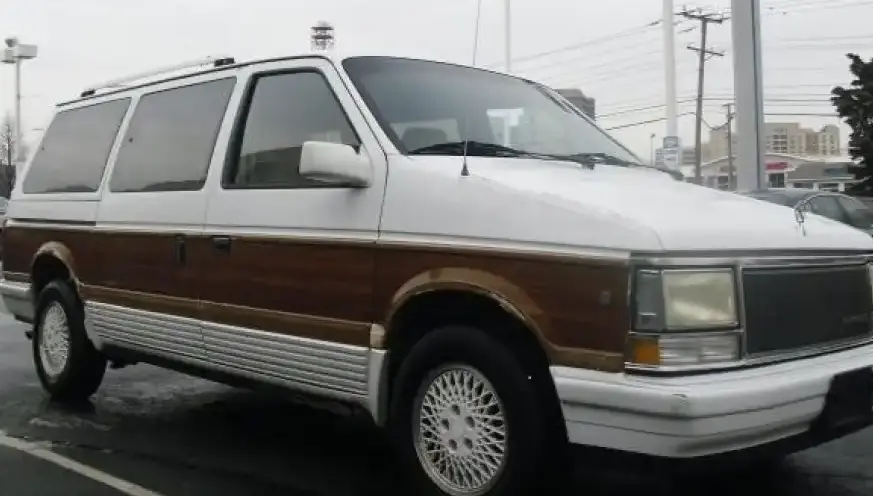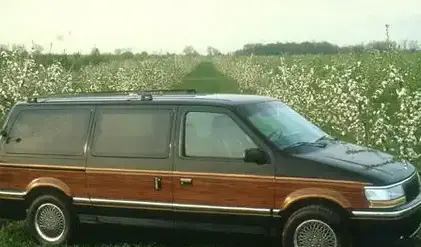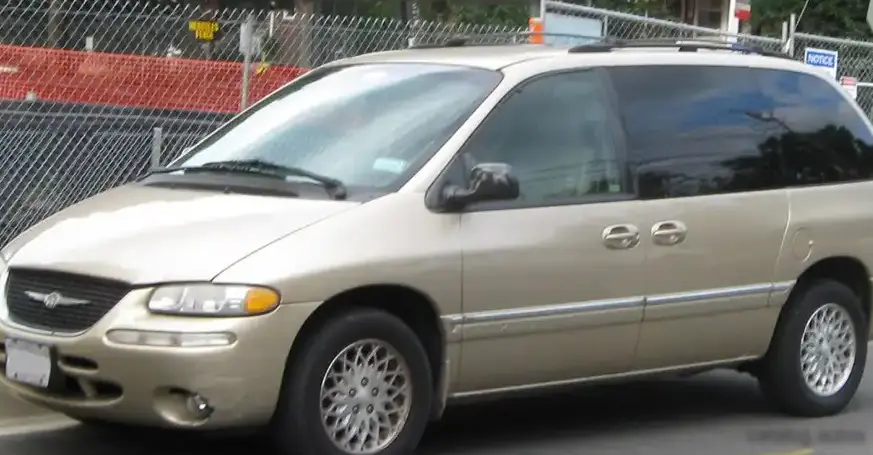
The Chrysler Town & Country III, specifically the variant equipped with the 3.8-liter V6 engine producing 166 horsepower and paired with a four-speed automatic transmission, was a mainstay of the American minivan market from 1996 to 2000. This generation (often referred to as the NS platform) represented a significant evolution for the Town & Country, moving towards a more refined and family-oriented vehicle. Positioned as a mid-range offering within the Town & Country lineup, it provided a balance between affordability and features, appealing to a broad spectrum of buyers seeking a practical and spacious vehicle. It was part of the broader Chrysler/Dodge minivan collaboration, sharing many components with the Dodge Caravan and Voyager.
Technical Specifications
| Brand | Chrysler |
| Model | Town & Country |
| Generation | Town & Country III |
| Type (Engine) | 3.8 V6 (166 Hp) Automatic |
| Start of production | 1996 |
| End of production | 2000 |
| Powertrain Architecture | Internal Combustion engine |
| Body type | Minivan |
| Seats | 7 |
| Doors | 5 |
| Fuel consumption (combined) | 11.8 l/100 km (19.9 US mpg, 23.9 UK mpg, 8.5 km/l) |
| Fuel Type | Petrol (Gasoline) |
| Weight-to-power ratio | 10.1 kg/Hp, 99.5 Hp/tonne |
| Weight-to-torque ratio | 5.4 kg/Nm, 184.5 Nm/tonne |
| Power | 166 Hp @ 4300 rpm |
| Power per litre | 43.9 Hp/l |
| Torque | 308 Nm @ 3100 rpm (227.17 lb.-ft. @ 3100 rpm) |
| Engine layout | Front, Transverse |
| Engine Model/Code | EGH |
| Engine displacement | 3778 cm3 (230.55 cu. in.) |
| Number of cylinders | 6 |
| Engine configuration | V-engine |
| Cylinder Bore | 96 mm (3.78 in.) |
| Piston Stroke | 87 mm (3.43 in.) |
| Compression ratio | 9:1 |
| Number of valves per cylinder | 2 |
| Fuel injection system | Multi-port manifold injection |
| Engine aspiration | Naturally aspirated engine |
| Engine oil capacity | 4.3 l (4.54 US qt | 3.78 UK qt) |
| Coolant | 9.5 l (10.04 US qt | 8.36 UK qt) |
| Kerb Weight | 1669 kg (3679.52 lbs.) |
| Trunk (boot) space – minimum | 671 l (23.7 cu. ft.) |
| Trunk (boot) space – maximum | 1764 l (62.3 cu. ft.) |
| Fuel tank capacity | 76 l (20.08 US gal | 16.72 UK gal) |
| Length | 5070 mm (199.61 in.) |
| Width | 1920 mm (75.59 in.) |
| Height | 1740 mm (68.5 in.) |
| Wheelbase | 3030 mm (119.29 in.) |
| Front track | 1600 mm (62.99 in.) |
| Rear (Back) track | 1626 mm (64.02 in.) |
| Drivetrain Architecture | Front wheel drive |
| Number of gears and type of gearbox | 4 gears, automatic transmission |
| Front suspension | Wishbone |
| Rear suspension | Rigid axle suspension |
| Front brakes | Ventilated discs |
| Rear brakes | Drum |
| Assisting systems | ABS (Anti-lock braking system) |
| Steering type | Steering rack and pinion |
| Power steering | Hydraulic Steering |
| Tires size | 215/65 R15 |
Powertrain & Engine Architecture
The heart of this Town & Country variant was the 3.8-liter (230.55 cubic inches) Chrysler EGH V6 engine. This engine, a member of Chrysler’s well-established LA engine family, was known for its durability and relatively smooth operation. It featured a 90-degree V-angle, two valves per cylinder, and a cast iron block with aluminum cylinder heads. The EGH version utilized multi-port fuel injection, contributing to improved fuel efficiency and throttle response compared to earlier carbureted versions. The 166 horsepower output was achieved at 4300 rpm, while peak torque of 308 Nm (227.17 lb-ft) arrived at 3100 rpm. The engine was transversely mounted in the front of the vehicle, driving the front wheels. Paired with the 3.8L was a four-speed automatic transmission (typically the 42RE), chosen for its ease of use and suitability for family transportation. This transmission wasn’t known for being particularly sporty, prioritizing smooth shifts and reliability over aggressive performance.
Driving Characteristics
The 166 hp, automatic transmission combination delivered adequate, but not exhilarating, performance. Acceleration was sufficient for everyday driving, but passing maneuvers required planning, especially when fully loaded with passengers and cargo. The four-speed automatic transmission, while smooth, had relatively wide gear ratios, which could sometimes feel sluggish. Compared to the higher-output 3.8L variants or the available diesel options, this configuration prioritized fuel economy and a comfortable ride over outright speed. The automatic transmission’s shift points were calibrated for fuel efficiency and smooth operation, rather than aggressive downshifts for performance. The front-wheel-drive layout provided predictable handling, but wasn’t particularly engaging for driving enthusiasts.
Equipment & Trim Levels
The 3.8L automatic Town & Country typically came standard with features like air conditioning, power windows and locks, an AM/FM stereo, and cloth upholstery. Higher trim levels, often denoted by “LX” or “LXi”, added features such as alloy wheels, upgraded sound systems, leather upholstery, and power-adjustable seats. Optional extras included a rear entertainment system (a popular choice for minivans), a sunroof, and upgraded interior trim packages. The interior design was functional and family-focused, with ample storage compartments and a relatively spacious cabin. The dashboard layout was straightforward and easy to use.
Chassis & Braking
The Town & Country III utilized a front-wheel-drive chassis with an independent wishbone suspension in the front and a solid axle suspension in the rear. This setup provided a comfortable ride, but wasn’t particularly sporty. The front brakes were ventilated discs, offering adequate stopping power, while the rear brakes were drums, a cost-saving measure common in this class of vehicle. Anti-lock brakes (ABS) were standard, enhancing safety. Steering was provided by a hydraulic power rack and pinion system, offering reasonable steering feel and ease of maneuverability. The tires were typically 215/65 R15 size, balancing ride comfort and handling.
Market Reception & Comparison
The 166 hp, automatic Town & Country was generally well-received by critics as a practical and affordable family vehicle. It was praised for its spacious interior, comfortable ride, and relatively smooth engine operation. However, it was often criticized for its lack of power compared to some competitors and the somewhat dated feel of the automatic transmission. Compared to the higher-output 3.8L versions, this variant offered better fuel economy but less performance. The diesel options, while less common, provided even better fuel economy but with a noticeable trade-off in refinement. Against competitors like the Honda Odyssey and Toyota Sienna, the Town & Country offered a competitive price point and a generous amount of space.
Legacy
The 3.8L V6 engine in the Town & Country III proved to be remarkably durable, with many examples exceeding 200,000 miles with proper maintenance. The four-speed automatic transmission, while not the most advanced, was also generally reliable. Today, these vehicles are readily available on the used car market at affordable prices. Common issues include minor oil leaks, corrosion in areas prone to rust, and wear and tear on suspension components. Despite its age, the Town & Country III remains a popular choice for budget-conscious buyers seeking a spacious and practical minivan. Its simple design and readily available parts make it relatively easy and inexpensive to maintain, contributing to its continued presence on the road.