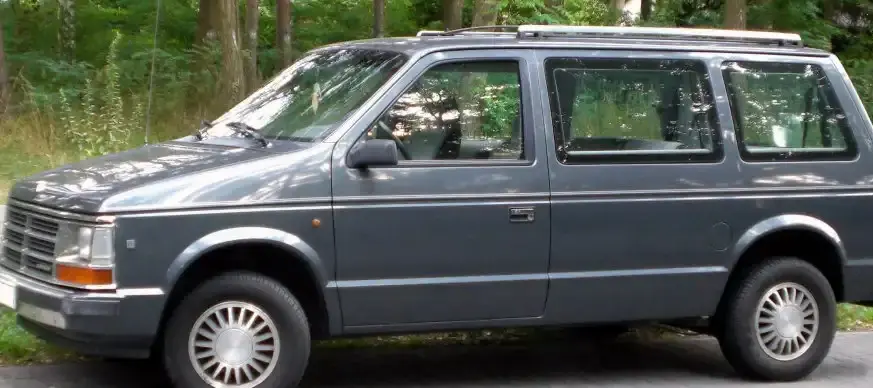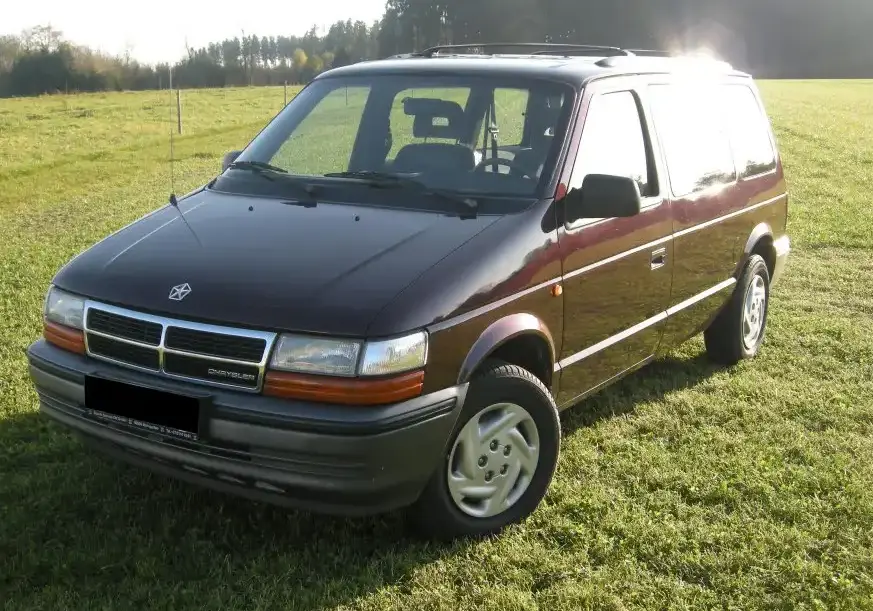
The Chrysler Voyager II 2.5i, produced between 1990 and 1995, represented Chrysler’s entry into the increasingly popular European minivan segment. Positioned as a more affordable alternative to larger, more luxurious MPVs, the 2.5i variant – equipped with a 2.5-liter inline-four engine producing 101 horsepower – served as the base model for the Voyager II range. It was a key offering for families seeking a practical and spacious vehicle, competing with models like the Renault Espace and Volkswagen Transporter. The Voyager II was essentially a rebadged and slightly modified version of the Dodge Caravan and Plymouth Voyager sold in North America, adapted for the European market.
Technical Specifications
| Brand | Chrysler |
| Model | Voyager |
| Generation | Voyager II |
| Type (Engine) | 2.5 i (101 Hp) |
| Start of production | 1990 |
| End of production | 1995 |
| Powertrain Architecture | Internal Combustion engine |
| Body type | Minivan |
| Seats | 7 |
| Doors | 3 |
| Fuel consumption (urban) | 14.2 l/100 km (16.6 US mpg, 19.9 UK mpg, 7 km/l) |
| Fuel consumption (extra urban) | 7.1 l/100 km (33.1 US mpg, 39.8 UK mpg, 14.1 km/l) |
| Fuel consumption (combined) | 9.6 l/100 km (24.5 US mpg, 29.4 UK mpg, 10.4 km/l) |
| Fuel Type | Petrol (Gasoline) |
| Acceleration 0 – 100 km/h | 16 sec |
| Acceleration 0 – 62 mph | 16 sec |
| Acceleration 0 – 60 mph | 15.2 sec |
| Maximum speed | 158 km/h (98.18 mph) |
| Weight-to-power ratio | 14.7 kg/Hp, 68 Hp/tonne |
| Weight-to-torque ratio | 8.1 kg/Nm, 123.2 Nm/tonne |
| Power | 101 Hp @ 4800 rpm |
| Power per litre | 40.4 Hp/l |
| Torque | 183 Nm @ 2800 rpm (134.97 lb.-ft. @ 2800 rpm) |
| Engine layout | Front, Transverse |
| Engine displacement | 2501 cm3 (152.62 cu. in.) |
| Number of cylinders | 4 |
| Engine configuration | Inline |
| Cylinder Bore | 87.5 mm (3.44 in.) |
| Piston Stroke | 104 mm (4.09 in.) |
| Compression ratio | 9:1 |
| Number of valves per cylinder | 2 |
| Fuel injection system | Single-point injection |
| Engine aspiration | Naturally aspirated engine |
| Valvetrain | OHC |
| Engine oil capacity | 3.8 l (4.02 US qt | 3.34 UK qt) |
| Coolant | 9 l (9.51 US qt | 7.92 UK qt) |
| Kerb Weight | 1485 kg (3273.86 lbs.) |
| Max. weight | 2395 kg (5280.07 lbs.) |
| Max load | 910 kg (2006.21 lbs.) |
| Trunk (boot) space – minimum | 671 l (23.7 cu. ft.) |
| Trunk (boot) space – maximum | 3250 l (114.77 cu. ft.) |
| Fuel tank capacity | 76 l (20.08 US gal | 16.72 UK gal) |
| Length | 4525 mm (178.15 in.) |
| Width | 1830 mm (72.05 in.) |
| Height | 1707 mm (67.2 in.) |
| Wheelbase | 2853 mm (112.32 in.) |
| Front track | 1522 mm (59.92 in.) |
| Rear (Back) track | 1578 mm (62.13 in.) |
| Drivetrain Architecture | The Internal combustion engine (ICE) drives the front wheels of the vehicle. |
| Drive wheel | Front wheel drive |
| Number of gears and type of gearbox | 5 gears, manual transmission |
| Front suspension | Wishbone |
| Rear suspension | Leaf spring |
| Front brakes | Ventilated discs |
| Rear brakes | Drum |
| Assisting systems | ABS (Anti-lock braking system) |
| Steering type | Steering rack and pinion |
| Power steering | Hydraulic Steering |
| Tires size | 195/75 R14 |
Powertrain & Engine Architecture
The Voyager II 2.5i was powered by Chrysler’s 2.5-liter inline-four cylinder engine, internally designated as the 525 engine family. This engine utilized a single overhead camshaft (OHC) design with two valves per cylinder. Fuel delivery was managed by a single-point fuel injection system, a relatively basic setup for the time, prioritizing cost-effectiveness over performance. The engine produced 101 horsepower at 4800 rpm and 183 Nm (135 lb-ft) of torque at 2800 rpm. The engine’s 9:1 compression ratio was typical for naturally aspirated gasoline engines of the era. The 2.5L engine was known for its relative simplicity and durability, though it wasn’t particularly refined or powerful. The standard transmission for this variant was a five-speed manual gearbox, although a three-speed automatic transmission was offered as an option, impacting performance and fuel economy.
Driving Characteristics
The 2.5i Voyager II, particularly with the five-speed manual transmission, offered adequate, if not exhilarating, performance. Acceleration from 0 to 100 km/h (0-62 mph) took around 16 seconds. The engine felt strained when fully loaded or attempting brisk acceleration. The manual gearbox allowed drivers to make the most of the available power, while the optional automatic transmission further dulled performance. Gear ratios were geared towards fuel efficiency rather than outright speed. The front-wheel-drive configuration provided predictable handling, but the Voyager II wasn’t designed for sporty driving. The leaf spring rear suspension, while cost-effective, contributed to a somewhat firm and less-than-sophisticated ride quality, especially when compared to competitors utilizing independent rear suspension.
Equipment & Trim Levels
The 2.5i Voyager II typically came with a fairly basic level of equipment. Standard features included power steering, central locking, and a basic stereo system. Interior upholstery was typically cloth, and the dashboard featured a functional, if somewhat utilitarian, design. Optional extras included air conditioning, electric windows, and upgraded stereo systems. The Voyager II was designed to be a practical family vehicle, and as such, comfort and convenience features were often offered as optional upgrades to keep the base price competitive. The trim level was generally considered the entry-level offering, with higher trims featuring more luxurious appointments and additional features.
Chassis & Braking
The Voyager II utilized a front-wheel-drive chassis with a wishbone front suspension and a leaf spring rear suspension. The front brakes were ventilated discs, providing adequate stopping power, while the rear brakes were drums. ABS (Anti-lock Braking System) was available as an option, enhancing safety. The suspension setup was tuned for comfort and practicality, prioritizing ride quality over handling precision. The relatively simple suspension design contributed to lower maintenance costs. The use of rear drum brakes was a cost-saving measure common in this segment at the time.
Market Reception & Comparison
The Chrysler Voyager II 2.5i was generally well-received as an affordable and spacious family vehicle. Critics noted its practicality and value for money, but also pointed out its lack of refinement and relatively modest performance. Compared to the higher-specification Voyager models with larger engines (like the 2.8L V6), the 2.5i offered significantly less power and a less refined driving experience. However, it also offered better fuel economy and lower running costs. Against competitors like the Renault Espace and Volkswagen Transporter, the Voyager II offered a competitive price point and a generous amount of interior space. The 2.5i variant appealed to budget-conscious buyers who prioritized practicality and space over performance and luxury.
Legacy
The Chrysler Voyager II 2.5i, while not a performance icon, proved to be a reliable and durable vehicle. The 2.5-liter engine, though simple in design, was generally robust and capable of high mileage with proper maintenance. Today, these vehicles are relatively rare and often sought after by enthusiasts looking for a classic, affordable MPV. Common issues include corrosion, particularly in colder climates, and wear and tear on suspension components. Parts availability can be a challenge, but many components are still available through aftermarket suppliers. The Voyager II 2.5i represents a significant chapter in Chrysler’s history, marking its entry into the European minivan market and providing a practical transportation solution for families during the early 1990s.