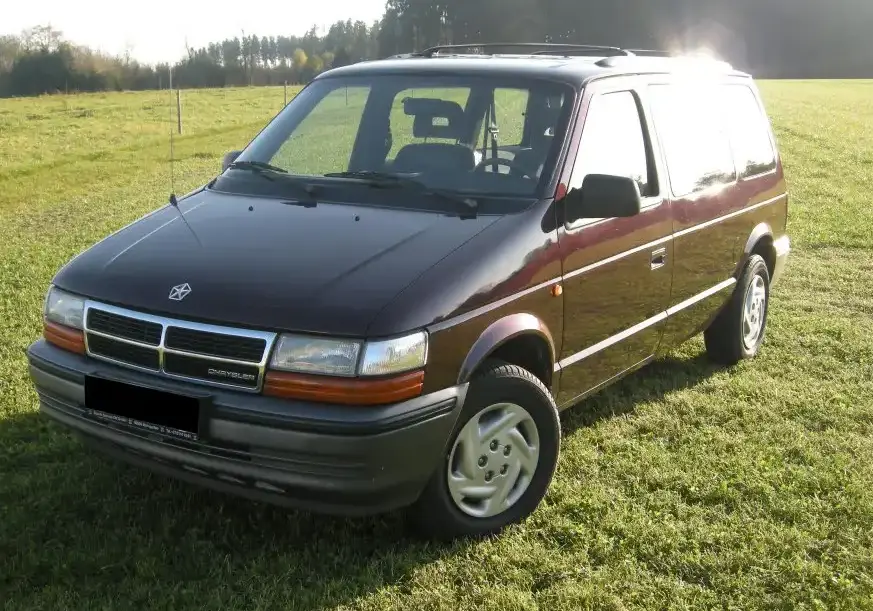
The Chrysler Voyager II 3.3i AWD Automatic, produced between 1990 and 1995, represented a significant offering in the burgeoning minivan segment. Part of the second generation of the Voyager line (internally designated as the NS platform), this variant aimed to provide all-weather capability and a comfortable driving experience for families. It occupied a mid-to-upper position within the Voyager II lineup, offering a step up in performance and features compared to the base 2.5L models, but remaining more accessible than the higher-trim, leather-appointed versions. The addition of all-wheel drive was relatively uncommon in minivans at the time, setting it apart from many competitors.
Technical Specifications
| Brand | Chrysler |
| Model | Voyager |
| Generation | Voyager II |
| Type (Engine) | 3.3 i (163 Hp) AWD Automatic |
| Start of production | 1990 |
| End of production | 1995 |
| Powertrain Architecture | Internal Combustion engine |
| Body type | Minivan |
| Seats | 7 |
| Doors | 3 |
| Fuel consumption (urban) | 15.4 l/100 km (15.3 US mpg, 18.3 UK mpg, 6.5 km/l) |
| Fuel consumption (combined) | 13.0 l/100 km (18.1 US mpg, 21.7 UK mpg, 7.7 km/l) |
| Fuel Type | Petrol (Gasoline) |
| Acceleration 0 – 100 km/h | 13.5 sec |
| Acceleration 0 – 62 mph | 13.5 sec |
| Acceleration 0 – 60 mph | 12.8 sec |
| Maximum speed | 174 km/h (108.12 mph) |
| Power | 163 Hp |
| Engine aspiration | Naturally aspirated engine |
| Engine oil capacity | 4.3 l (4.54 US qt, 3.78 UK qt) |
| Coolant capacity | 9.5 l (10.04 US qt, 8.36 UK qt) |
| Fuel tank capacity | 68 l (17.96 US gal, 14.96 UK gal) |
| Drivetrain | All wheel drive (4×4) |
| Number of gears | 4 |
| Gearbox type | Automatic transmission |
Powertrain & Engine Architecture
The heart of the Voyager II 3.3i AWD was the 3.3-liter V6 engine, internally known as the 3.3L VG. This engine was a member of Chrysler’s family of V6 engines, utilizing a 60-degree V-angle. It featured a cast iron block and aluminum cylinder heads. Fuel delivery was managed by a multi-port fuel injection system, providing improved efficiency and responsiveness compared to earlier carbureted or throttle-body injected engines. The engine employed a single overhead camshaft (SOHC) design per cylinder bank, operating two valves per cylinder. The 163 horsepower output, while not exceptional, was considered adequate for moving the relatively heavy minivan. The four-speed automatic transmission (typically the A727 or a variant thereof) was chosen for its smoothness and ease of use, catering to the family-oriented target audience. This transmission was known for its durability, but could sometimes feel sluggish during quick acceleration.
Driving Characteristics
The 3.3L V6 and automatic transmission combination in the Voyager II AWD delivered a comfortable, if not particularly sporty, driving experience. Acceleration was adequate for merging onto highways and passing slower traffic, but the 0-60 mph time of around 12.8 seconds reflects the vehicle’s weight and the transmission’s conservative gearing. The automatic transmission prioritized smooth shifts over aggressive performance. The all-wheel-drive system provided enhanced traction in inclement weather, making it a popular choice in regions with snow or rain. However, the AWD system did add weight and slightly reduced fuel economy compared to front-wheel-drive Voyager models. The steering was light and easy, typical of minivans, prioritizing ease of maneuverability over road feel.
Equipment & Trim Levels
The Voyager II 3.3i AWD Automatic typically included features such as air conditioning, power windows and locks, an AM/FM stereo, and cloth upholstery. The specific trim level could vary, but generally offered a step up in interior appointments compared to the base Voyager. Optional extras included a cassette player, upgraded sound systems, rear air conditioning, and a power sunroof. The interior design was functional and family-friendly, with ample storage compartments and comfortable seating for seven passengers. The dashboard layout was straightforward and easy to use, with clearly labeled controls.
Chassis & Braking
The Voyager II utilized a body-on-frame construction, which was common for minivans of that era. The suspension consisted of independent front suspension with MacPherson struts and a multi-link rear suspension. The AWD system added complexity to the rear suspension, requiring a transfer case and driveshaft. Braking was typically accomplished with power-assisted front disc brakes and rear drum brakes. Anti-lock brakes (ABS) were often available as an option, enhancing safety. Stabilizer bars were included at both the front and rear to reduce body roll during cornering, although the Voyager II was not designed for aggressive handling.
Market Reception & Comparison
The Chrysler Voyager II 3.3i AWD Automatic was generally well-received by critics and consumers. It was praised for its spacious interior, comfortable ride, and the added security of all-wheel drive. However, fuel economy was a common criticism, as the 3.3L V6 and AWD system consumed a significant amount of gasoline. Compared to the base 2.5L Voyager models, the 3.3i AWD offered a noticeable improvement in performance, but at a higher price point. Compared to the higher-trim Voyager LE models, it offered a similar level of performance but with fewer luxury features. The AWD system differentiated it from many competitors, such as the Dodge Caravan and Ford Windstar, which primarily offered front-wheel drive.
Legacy
The Chrysler Voyager II 3.3i AWD Automatic, while not a collector’s item, remains a reasonably reliable and affordable used vehicle. The 3.3L V6 engine is generally considered durable, although regular maintenance is essential to prevent issues such as oil leaks and coolant system failures. The automatic transmission is also known for its longevity, provided it has been properly serviced. The all-wheel-drive system can require more maintenance than a front-wheel-drive system, as it has more components that can wear out. Today, these Voyagers are often found as budget-friendly family transportation, appreciated for their practicality and spaciousness. Parts availability is generally good, and the relatively simple mechanical design makes them accessible for DIY repairs.