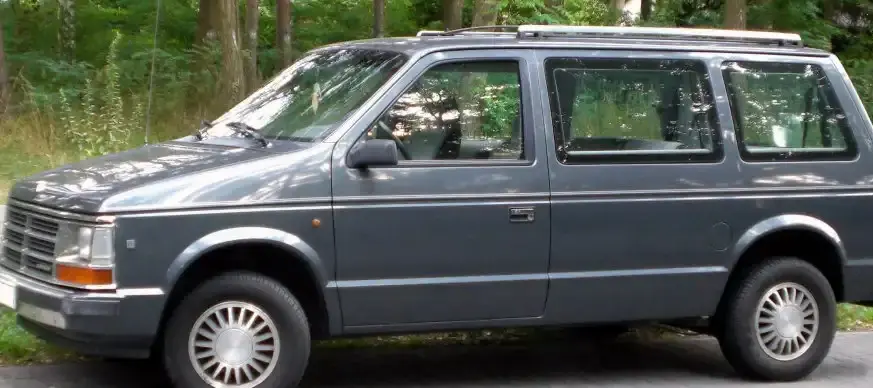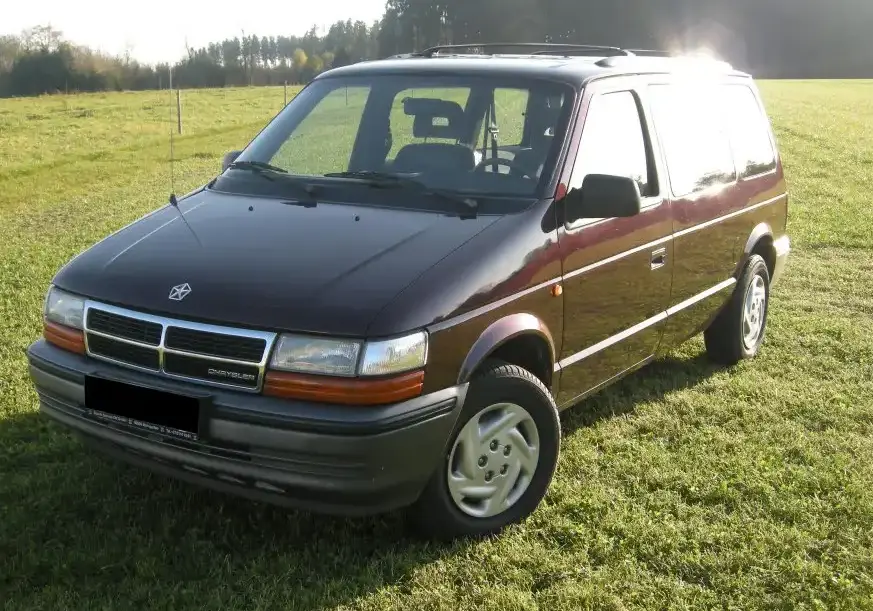
The Chrysler Voyager II 3.3 V6 Automatic, produced between 1990 and 1995, represented a significant offering in the burgeoning minivan segment. Part of the first generation of Voyager models (internally designated as the NS platform), this variant aimed to provide a balance of family practicality, reasonable performance, and affordability. It occupied a mid-range position within the Voyager II lineup, slotting between the base 2.5L four-cylinder models and the more powerful, though less common, 3.0L V6 options. The Voyager II, and its mechanically similar sibling the Dodge Caravan, were Chrysler’s response to the increasing popularity of minivans, challenging established players like the Plymouth Voyager and offering a more modern alternative.
Technical Specifications
| Brand | Chrysler |
| Model | Voyager |
| Generation | Voyager II |
| Type (Engine) | 3.3 V6 (152 Hp) Automatic |
| Start of production | 1990 |
| End of production | 1995 |
| Powertrain Architecture | Internal Combustion engine |
| Body type | Minivan |
| Seats | 7 |
| Doors | 3 |
| Fuel consumption (urban) | 15.2 l/100 km (15.5 US mpg, 18.6 UK mpg, 6.6 km/l) |
| Fuel consumption (extra urban) | 10.4 l/100 km (22.6 US mpg, 27.2 UK mpg, 9.6 km/l) |
| Fuel consumption (combined) | 12.5 l/100 km (18.8 US mpg, 22.6 UK mpg, 8 km/l) |
| Fuel Type | Petrol (Gasoline) |
| Acceleration 0 – 100 km/h | 12.8 sec |
| Acceleration 0 – 62 mph | 12.8 sec |
| Acceleration 0 – 60 mph | 12.2 sec |
| Maximum speed | 174 km/h (108.12 mph) |
| Weight-to-power ratio | 10.7 kg/Hp, 93.3 Hp/tonne |
| Weight-to-torque ratio | 6.5 kg/Nm, 154 Nm/tonne |
| Power | 152 Hp @ 4800 rpm |
| Power per litre | 46 Hp/l |
| Torque | 251 Nm @ 3600 rpm (185.13 lb.-ft. @ 3600 rpm) |
| Engine layout | Front, Transverse |
| Engine displacement | 3301 cm3 (201.44 cu. in.) |
| Number of cylinders | 6 |
| Engine configuration | V-engine |
| Cylinder Bore | 93 mm (3.66 in.) |
| Piston Stroke | 81 mm (3.19 in.) |
| Compression ratio | 8.9:1 |
| Number of valves per cylinder | 2 |
| Fuel injection system | Multi-port manifold injection |
| Engine aspiration | Naturally aspirated engine |
| Engine oil capacity | 4.3 l (4.54 US qt | 3.78 UK qt) |
| Coolant | 9.5 l (10.04 US qt | 8.36 UK qt) |
| Kerb Weight | 1630 kg (3593.53 lbs.) |
| Max. weight | 2395 kg (5280.07 lbs.) |
| Max load | 765 kg (1686.54 lbs.) |
| Trunk (boot) space – minimum | 671 l (23.7 cu. ft.) |
| Trunk (boot) space – maximum | 3250 l (114.77 cu. ft.) |
| Fuel tank capacity | 76 l (20.08 US gal | 16.72 UK gal) |
| Length | 4525 mm (178.15 in.) |
| Width | 1830 mm (72.05 in.) |
| Height | 1707 mm (67.2 in.) |
| Wheelbase | 2853 mm (112.32 in.) |
| Front track | 1522 mm (59.92 in.) |
| Rear (Back) track | 1578 mm (62.13 in.) |
| Drivetrain Architecture | The Internal combustion engine (ICE) drives the front wheels of the vehicle. |
| Drive wheel | Front wheel drive |
| Number of gears and type of gearbox | 4 gears, automatic transmission |
| Front suspension | Wishbone |
| Rear suspension | Leaf spring |
| Front brakes | Ventilated discs |
| Rear brakes | Drum |
| Assisting systems | ABS (Anti-lock braking system) |
| Steering type | Steering rack and pinion |
| Power steering | Hydraulic Steering |
| Tires size | 195/75 R14 |
Powertrain & Engine Architecture
The heart of the Voyager II 3.3 was the 3.3-liter V6 engine, specifically the Chrysler 3.3L V6 engine. This engine, part of the LA engine family, was a robust and relatively simple design. It featured a 60-degree V-angle, two valves per cylinder, and a cast iron block with aluminum cylinder heads. Fuel delivery was handled by a multi-port fuel injection system, providing improved efficiency and responsiveness compared to earlier carbureted designs. The engine produced 152 horsepower at 4800 rpm and 251 Nm (185 lb-ft) of torque at 3600 rpm. This power was routed through a four-speed automatic transmission, a common choice for family vehicles prioritizing ease of use over outright performance. The transmission was electronically controlled, offering smoother shifts than older hydraulically controlled units.
Driving Characteristics
The 3.3L V6 Automatic Voyager II offered adequate, though not exhilarating, performance. Acceleration to 60 mph took around 12.2 seconds, making it competitive with other minivans of the era. The automatic transmission, while convenient, did detract somewhat from the engine’s potential. The gear ratios were tuned for fuel economy and smooth cruising rather than rapid acceleration. Compared to the manual transmission options available on other Voyager trims, the automatic felt noticeably slower. However, the 3.3L provided a more refined driving experience than the base 2.5L four-cylinder, offering more effortless highway cruising and better performance when fully loaded with passengers and cargo.
Equipment & Trim Levels
The Voyager II 3.3 V6 Automatic typically came standard with features like air conditioning, power steering, a basic AM/FM radio, and cloth upholstery. Higher trim levels, such as the LE, added features like upgraded sound systems, alloy wheels, and more luxurious interior appointments. Optional extras included a rear window wiper, power windows and locks, and a sunroof. The interior was designed with practicality in mind, offering a spacious cabin with flexible seating configurations. The third-row seat could be folded flat or even removed entirely to maximize cargo space.
Chassis & Braking
The Voyager II utilized a front-wheel-drive layout with an independent wishbone suspension at the front and a leaf spring suspension at the rear. The leaf spring setup was a cost-saving measure, but it provided adequate ride comfort for most driving conditions. Braking duties were handled by ventilated discs at the front and drum brakes at the rear. Anti-lock brakes (ABS) were available as an option, enhancing safety in emergency braking situations. Steering was via a rack-and-pinion system with hydraulic power assistance, providing light and easy steering feel.
Market Reception & Comparison
The Voyager II 3.3 V6 Automatic was generally well-received by critics and consumers. It was praised for its spacious interior, comfortable ride, and reasonable price. However, some reviewers noted the engine’s lack of outright power and the somewhat dated feel of the interior. Compared to the 2.5L four-cylinder models, the 3.3L offered a significant performance upgrade, making it a more appealing choice for those who frequently carried passengers or cargo. Compared to the 3.0L V6, the 3.3L offered a similar level of performance at a slightly lower price point. Fuel economy was average for the class, around 18.8 US mpg combined.
Legacy
The Chrysler Voyager II 3.3 V6 Automatic, while not a particularly groundbreaking vehicle, played an important role in establishing Chrysler as a major player in the minivan market. The 3.3L V6 engine proved to be a reliable and durable powerplant, and many examples are still on the road today. While maintenance costs can increase with age, parts availability remains relatively good. The Voyager II’s simple design and robust construction make it a relatively easy vehicle to maintain and repair. In the used car market, these Voyagers are often sought after by those looking for an affordable and practical family vehicle.