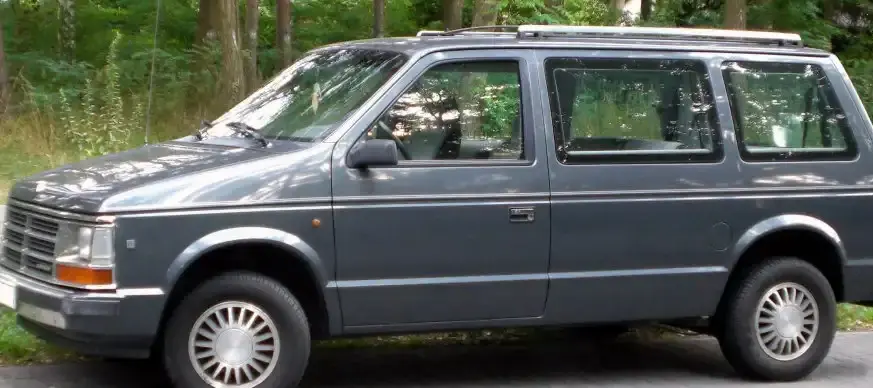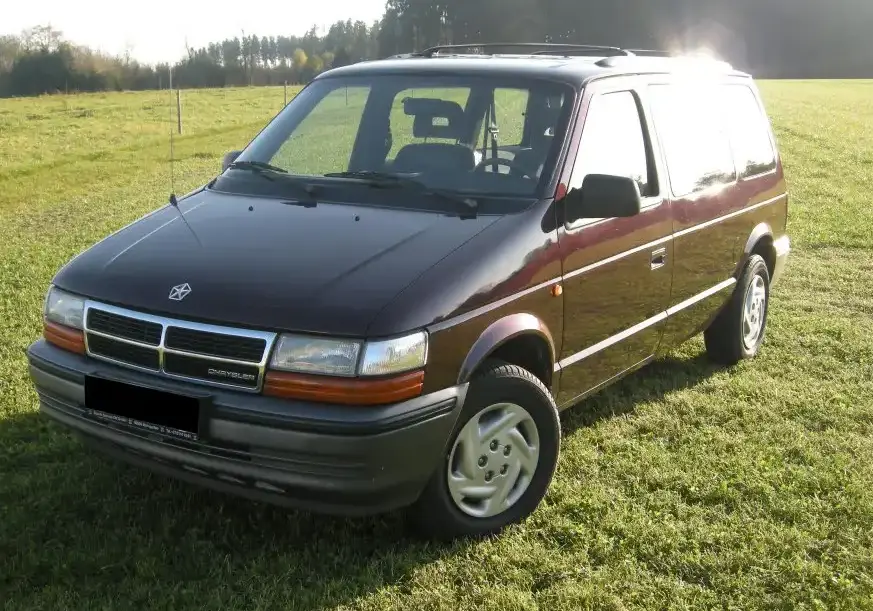
The Chrysler Voyager II 3.3 V6 AWD Automatic, produced between 1990 and 1995, represented a significant offering in the burgeoning minivan segment. Positioned as a mid-range to upper-mid-range trim within the Voyager II lineup, it combined a relatively powerful V6 engine with the added capability of all-wheel drive, appealing to families needing space and all-weather traction. This generation of Voyager, built on the Chrysler AS platform, aimed to provide a comfortable and practical transportation solution for American families, competing directly with established players like the Dodge Caravan and Ford Windstar.
Technical Specifications
| Brand | Chrysler |
| Model | Voyager |
| Generation | Voyager II |
| Type (Engine) | 3.3 V6 (152 Hp) AWD Automatic |
| Start of production | 1990 |
| End of production | 1995 |
| Powertrain Architecture | Internal Combustion engine |
| Body type | Minivan |
| Seats | 7 |
| Doors | 3 |
| Fuel consumption (urban) | 15.4 l/100 km (15.3 US mpg, 18.3 UK mpg, 6.5 km/l) |
| Fuel consumption (extra urban) | 10.4 l/100 km (22.6 US mpg, 27.2 UK mpg, 9.6 km/l) |
| Fuel consumption (combined) | 13.2 l/100 km (17.8 US mpg, 21.4 UK mpg, 7.6 km/l) |
| Fuel Type | Petrol (Gasoline) |
| Acceleration 0 – 100 km/h | 13.5 sec |
| Acceleration 0 – 62 mph | 13.5 sec |
| Acceleration 0 – 60 mph | 12.8 sec |
| Maximum speed | 174 km/h (108.12 mph) |
| Weight-to-power ratio | 11.6 kg/Hp, 86.1 Hp/tonne |
| Weight-to-torque ratio | 7 kg/Nm, 142.2 Nm/tonne |
| Power | 152 Hp @ 4800 rpm |
| Power per litre | 46 Hp/l |
| Torque | 251 Nm @ 3600 rpm (185.13 lb.-ft. @ 3600 rpm) |
| Engine layout | Front, Transverse |
| Engine displacement | 3301 cm3 (201.44 cu. in.) |
| Number of cylinders | 6 |
| Engine configuration | V-engine |
| Cylinder Bore | 93 mm (3.66 in.) |
| Piston Stroke | 81 mm (3.19 in.) |
| Compression ratio | 8.9:1 |
| Number of valves per cylinder | 2 |
| Fuel injection system | Multi-port manifold injection |
| Engine aspiration | Naturally aspirated engine |
| Engine oil capacity | 4.3 l (4.54 US qt | 3.78 UK qt) |
| Coolant | 9.5 l (10.04 US qt | 8.36 UK qt) |
| Kerb Weight | 1765 kg (3891.16 lbs.) |
| Max. weight | 2445 kg (5390.3 lbs.) |
| Max load | 680 kg (1499.14 lbs.) |
| Trunk (boot) space – minimum | 671 l (23.7 cu. ft.) |
| Trunk (boot) space – maximum | 3250 l (114.77 cu. ft.) |
| Fuel tank capacity | 68 l (17.96 US gal | 14.96 UK gal) |
| Length | 4525 mm (178.15 in.) |
| Width | 1830 mm (72.05 in.) |
| Height | 1707 mm (67.2 in.) |
| Wheelbase | 2853 mm (112.32 in.) |
| Front track | 1522 mm (59.92 in.) |
| Rear (Back) track | 1578 mm (62.13 in.) |
| Drive wheel | All wheel drive (4×4) |
| Number of gears and type of gearbox | 4 gears, automatic transmission |
| Front suspension | Wishbone |
| Rear suspension | Leaf spring |
| Front brakes | Ventilated discs |
| Rear brakes | Drum |
| Assisting systems | ABS (Anti-lock braking system) |
| Steering type | Steering rack and pinion |
| Power steering | Hydraulic Steering |
| Tires size | 205/70 R15 |
Powertrain & Engine Architecture
The heart of the Voyager II 3.3 AWD was the 3.3-liter V6 engine, internally designated as the 3.3L Magnum. This engine, a member of Chrysler’s LA engine family, featured a 60-degree V-angle and a cast iron block with aluminum cylinder heads. The engine utilized a multi-port fuel injection system, delivering fuel directly to each cylinder for improved efficiency and power delivery. The valvetrain employed two valves per cylinder, operated by a single overhead camshaft. The 152 horsepower output at 4800 rpm and 251 Nm (185 lb-ft) of torque at 3600 rpm provided adequate, though not exceptional, performance for the vehicle’s weight. Paired with this engine was a four-speed automatic transmission, providing smooth shifts but lacking the fuel efficiency of more modern transmissions. The all-wheel-drive system was typically a viscous coupling system, automatically distributing torque between the front and rear axles as needed, enhancing traction in slippery conditions.
Driving Characteristics
The 3.3L V6 and automatic transmission combination in the Voyager II AWD delivered a comfortable, if somewhat leisurely, driving experience. Acceleration to 60 mph took around 12.8 seconds, making it slower than some of its competitors with more powerful engines. The automatic transmission, while smooth, had relatively wide gear ratios, which could result in the engine feeling strained during acceleration or when climbing hills. The all-wheel-drive system provided noticeable improvements in handling and stability, particularly on wet or snowy roads. However, the added weight of the AWD system and components did contribute to a slightly less nimble feel compared to front-wheel-drive Voyager models. The suspension, tuned for comfort, absorbed bumps well but didn’t offer particularly sporty handling.
Equipment & Trim Levels
The Voyager II 3.3 V6 AWD Automatic typically included features such as air conditioning, power windows and locks, and an AM/FM stereo. Higher trim levels offered options like upgraded upholstery (often cloth or velour), a rear entertainment system, cruise control, and alloy wheels. The interior design was functional and family-oriented, with durable materials and ample storage space. The seven-passenger seating configuration was standard, with a removable second-row bench seat providing flexibility for cargo hauling. The dashboard layout was straightforward, with easy-to-read gauges and logically placed controls.
Chassis & Braking
The Voyager II utilized a body-on-frame construction, which contributed to its robust feel but also added weight. The front suspension employed an independent wishbone design, while the rear suspension utilized a leaf spring setup. This combination provided a comfortable ride but wasn’t particularly sophisticated in terms of handling. Braking duties were handled by ventilated discs at the front and drum brakes at the rear. An anti-lock braking system (ABS) was standard, enhancing safety by preventing wheel lockup during hard braking. Steering was rack-and-pinion, assisted by hydraulic power steering for ease of maneuverability.
Market Reception & Comparison
The Voyager II 3.3 V6 AWD Automatic was generally well-received by consumers seeking a practical and spacious minivan with all-weather capability. Critics noted its comfortable ride and ample interior space but also pointed out its relatively slow acceleration and average fuel economy (around 17.8 US mpg combined). Compared to the front-wheel-drive Voyager models, the AWD version offered superior traction but came at the cost of slightly reduced fuel efficiency and performance. Against competitors like the Dodge Caravan and Ford Windstar, the Voyager II held its own in terms of features and value, but often lagged behind in terms of outright performance.
Legacy
The Chrysler Voyager II 3.3 V6 AWD Automatic, while not a performance icon, remains a reasonably reliable and affordable option in the used car market. The 3.3L Magnum V6 engine is known for its durability, although regular maintenance is crucial to prevent issues such as oil leaks and coolant system failures. The automatic transmission, while generally reliable, can experience problems with the torque converter or valve body over time. The all-wheel-drive system, if properly maintained, can provide years of trouble-free operation. Today, these Voyagers are often sought after by families needing a spacious and practical vehicle for a budget price, and by those who appreciate a piece of 1990s American automotive history.