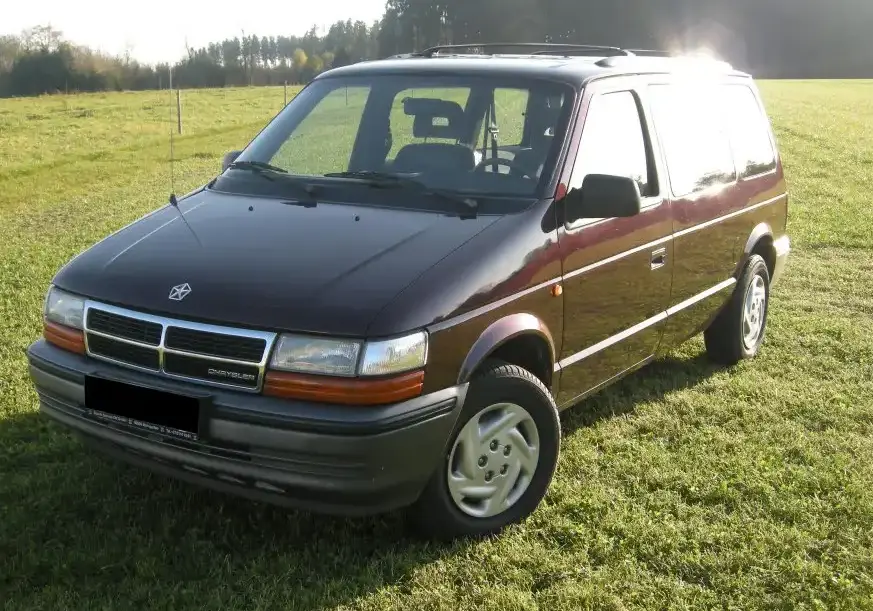
The Chrysler Voyager III 2.5 TD, produced between 1995 and 2000, represented a significant iteration of Chrysler’s popular minivan offering in the European market. Positioned as a practical and economical choice within the Voyager III range, the 2.5 TD model catered to buyers prioritizing fuel efficiency and torque for hauling passengers and cargo. It was part of the broader NS-platform family, sharing underpinnings with the Dodge Caravan and Plymouth Voyager sold in North America, but tailored to European preferences with its diesel engine option. This variant occupied a middle ground in the lineup, offering a balance between the base petrol engines and the more powerful, albeit more expensive, V6 options.
Technical Specifications
| Brand | Chrysler |
| Model | Voyager |
| Generation | Voyager III |
| Type (Engine) | 2.5 TD (116 Hp) |
| Start of production | 1995 |
| End of production | 2000 |
| Powertrain Architecture | Internal Combustion engine |
| Body type | Minivan |
| Seats | 7 |
| Doors | 4 |
| Fuel consumption (urban) | 11 l/100 km (21.4 US mpg) |
| Fuel consumption (extra urban) | 7.2 l/100 km (32.7 US mpg) |
| Fuel consumption (combined) | 8.6 l/100 km (27.4 US mpg) |
| CO2 emissions | 231 g/km |
| Fuel Type | Diesel |
| Acceleration 0 – 100 km/h | 13.8 sec |
| Acceleration 0 – 62 mph | 13.8 sec |
| Acceleration 0 – 60 mph | 13.1 sec |
| Maximum speed | 166 km/h (103.15 mph) |
| Weight-to-power ratio | 16.2 kg/Hp |
| Weight-to-torque ratio | 6.7 kg/Nm |
| Power | 116 Hp @ 4000 rpm |
| Power per litre | 46.4 Hp/l |
| Torque | 280 Nm @ 1800 rpm (206.52 lb.-ft. @ 1800 rpm) |
| Engine layout | Front, Transverse |
| Engine Model/Code | ENC |
| Engine displacement | 2499 cm3 (152.5 cu. in.) |
| Number of cylinders | 4 |
| Engine configuration | Inline |
| Cylinder Bore | 92 mm (3.62 in.) |
| Piston Stroke | 94 mm (3.7 in.) |
| Compression ratio | 21:1 |
| Number of valves per cylinder | 2 |
| Fuel injection system | Precombustion chamber injection |
| Engine aspiration | Turbocharger |
| Engine oil capacity | 6.5 l (6.87 US qt | 5.72 UK qt) |
| Coolant | 10 l (10.57 US qt | 8.8 UK qt) |
| Kerb Weight | 1880 kg (4144.69 lbs.) |
| Max. weight | 2540 kg (5599.74 lbs.) |
| Max load | 660 kg (1455.05 lbs.) |
| Trunk (boot) space – minimum | 450 l (15.89 cu. ft.) |
| Trunk (boot) space – maximum | 1439 l (50.82 cu. ft.) |
| Fuel tank capacity | 76 l (20.08 US gal | 16.72 UK gal) |
| Length | 4733 mm (186.34 in.) |
| Width | 1950 mm (76.77 in.) |
| Height | 1740 mm (68.5 in.) |
| Wheelbase | 2878 mm (113.31 in.) |
| Front track | 1600 mm (62.99 in.) |
| Rear (Back) track | 1626 mm (64.02 in.) |
| Drivetrain Architecture | Front wheel drive |
| Number of gears | 5 gears, manual transmission |
| Front suspension | Wishbone |
| Rear suspension | Rigid axle suspension |
| Front brakes | Ventilated discs |
| Rear brakes | Drum |
| Assisting systems | ABS (Anti-lock braking system) |
| Steering type | Steering rack and pinion |
| Power steering | Hydraulic Steering |
| Tires size | 215/65 R15 |
Powertrain & Engine Architecture
The heart of the Voyager III 2.5 TD was the ENC engine, a 2.5-liter inline-four cylinder diesel. This engine utilized a precombustion chamber injection system, a common technology for diesel engines of the era, designed to improve combustion efficiency and reduce noise. A turbocharger was employed to boost power output to 116 horsepower at 4000 rpm and 280 Nm (206.52 lb-ft) of torque at a relatively low 1800 rpm. This torque peak was crucial for providing strong pulling power, especially when fully loaded with passengers and luggage. The engine featured a compression ratio of 21:1, typical for turbocharged diesels, and two valves per cylinder. The engine was transversely mounted in the front of the vehicle, driving the front wheels. The five-speed manual transmission was the standard offering for this variant, providing a balance between fuel economy and drivability.
Driving Characteristics
The 2.5 TD Voyager III offered a distinctly different driving experience compared to its gasoline-powered siblings. While lacking the outright acceleration of the V6 models, the diesel engine’s abundant torque made it well-suited for everyday driving and long journeys. The five-speed manual transmission allowed drivers to keep the engine in its optimal power band, providing responsive acceleration. However, the engine could feel strained at higher speeds, and the overall driving experience was more focused on practicality than performance. The gear ratios were tuned for fuel efficiency and towing capability, rather than sporty acceleration. Compared to the automatic transmission options available on other Voyager trims, the manual gearbox offered more driver control and potentially better fuel economy.
Equipment & Trim Levels
The 2.5 TD trim generally represented a mid-range offering in the Voyager III lineup. Standard equipment typically included power steering, central locking, electric front windows, and an AM/FM radio. Interior upholstery was usually cloth, with a durable and practical design. Optional extras included air conditioning, alloy wheels, a sunroof, and upgraded audio systems. The dashboard layout was functional and straightforward, prioritizing ease of use over stylistic flair. The 2.5 TD was often chosen by families and those needing a versatile vehicle for both commuting and leisure activities.
Chassis & Braking
The Voyager III utilized a front-wheel-drive layout with a wishbone suspension at the front and a rigid axle suspension at the rear. This configuration provided a comfortable ride, although it wasn’t particularly sporty in handling. The front brakes were ventilated discs, offering good stopping power, while the rear brakes were drums, a cost-saving measure common in this class of vehicle. An Anti-lock Braking System (ABS) was included as standard, enhancing safety. The tires were typically 215/65 R15, providing a good balance between comfort and grip.
Market Reception & Comparison
The Chrysler Voyager III 2.5 TD was generally well-received in the European market as a practical and economical minivan. Critics praised its spacious interior, comfortable ride, and fuel-efficient diesel engine. However, some noted its lack of refinement compared to more premium minivans. Compared to the petrol-powered Voyager models, the 2.5 TD offered significantly better fuel economy, making it a popular choice for high-mileage drivers. Against competitors like the Renault Espace and Volkswagen Sharan, the Voyager III 2.5 TD offered a competitive package in terms of price, space, and practicality. The manual transmission version was favored by those seeking better fuel economy and driver engagement.
Legacy
The Chrysler Voyager III 2.5 TD has proven to be a relatively reliable vehicle, with many examples still on the road today. The ENC diesel engine, while not known for being particularly high-tech, is generally durable and capable of covering high mileages with proper maintenance. Common issues include wear and tear on suspension components and potential problems with the fuel injection system. In the used car market, the 2.5 TD Voyager III represents a good value proposition for buyers seeking a spacious and economical minivan. Its simplicity and robust construction make it a relatively easy vehicle to maintain and repair, contributing to its enduring popularity.