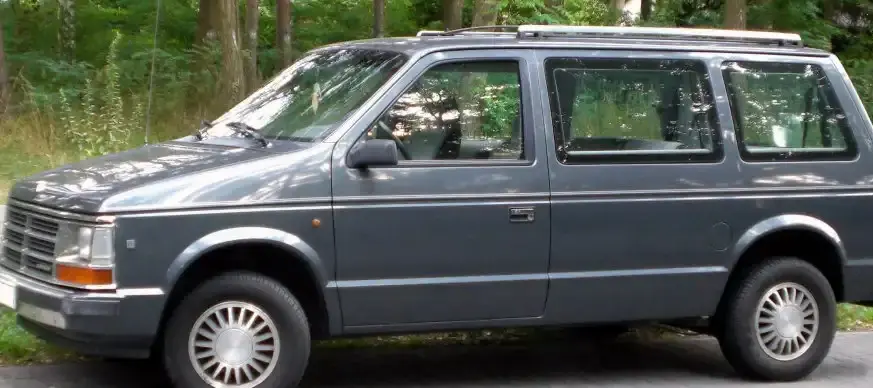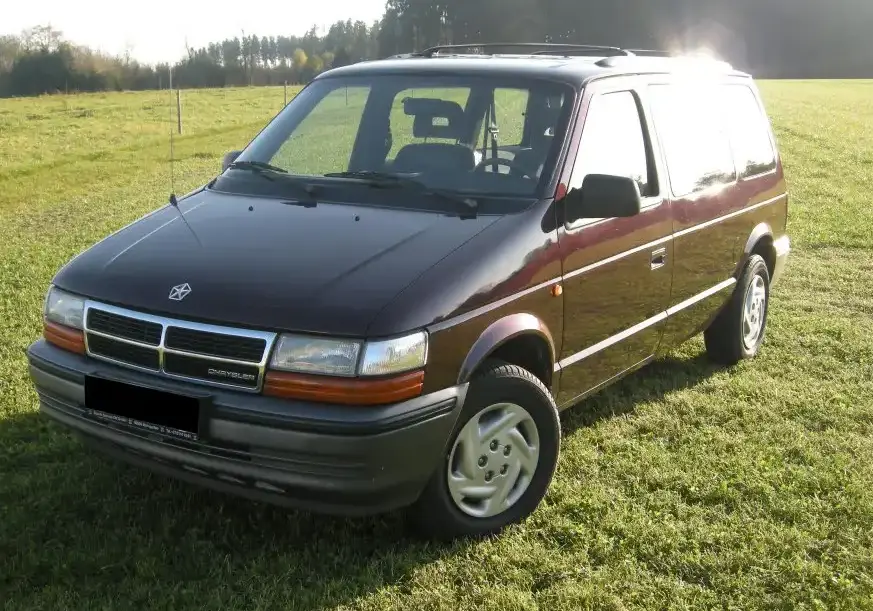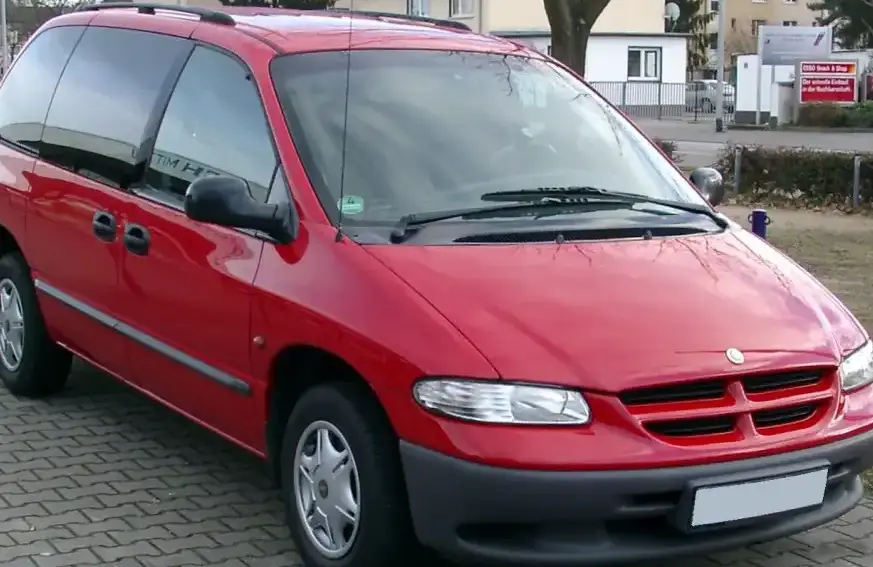
The Chrysler Voyager III 3.8i AWD Automatic, produced between 1995 and 2000, represented a significant offering in the North American minivan market. Part of the third generation of the Voyager (and its mechanically identical sibling, the Dodge Caravan), this variant combined a 3.8-liter V6 engine with a four-speed automatic transmission and all-wheel drive. It positioned itself as a more premium option within the Voyager lineup, appealing to families needing space, comfort, and enhanced traction, particularly in regions experiencing inclement weather. The Voyager III, built on the NS platform, aimed to improve upon its predecessors with a more refined interior and updated features.
Technical Specifications
| Brand | Chrysler |
| Model | Voyager |
| Generation | Voyager III |
| Type (Engine) | 3.8 i (178 Hp) AWD Automatic |
| Start of production | 1995 |
| End of production | 2000 |
| Powertrain Architecture | Internal Combustion engine |
| Body type | Minivan |
| Seats | 7 |
| Doors | 4 |
| Fuel consumption (urban) | 18.5 l/100 km (12.7 US mpg) |
| Fuel consumption (extra urban) | 10.8 l/100 km (21.8 US mpg) |
| Fuel consumption (combined) | 13.6 l/100 km (17.3 US mpg) |
| CO2 emissions | 348 g/km |
| Fuel Type | Petrol (Gasoline) |
| Acceleration 0 – 100 km/h | 12.6 sec |
| Acceleration 0 – 62 mph | 12.6 sec |
| Acceleration 0 – 60 mph | 12 sec |
| Maximum speed | 180 km/h (111.85 mph) |
| Weight-to-power ratio | 10.9 kg/Hp |
| Weight-to-torque ratio | 6 kg/Nm |
| Power | 178 Hp @ 4300 rpm |
| Torque | 325 Nm @ 3150 rpm (239.71 lb.-ft. @ 3150 rpm) |
| Engine layout | Front, Transverse |
| Engine Model/Code | EGH |
| Engine displacement | 3778 cm3 (230.55 cu. in.) |
| Number of cylinders | 6 |
| Engine configuration | V-engine |
| Cylinder Bore | 96 mm (3.78 in.) |
| Piston Stroke | 87 mm (3.43 in.) |
| Compression ratio | 9:1 |
| Number of valves per cylinder | 2 |
| Fuel injection system | Multi-port manifold injection |
| Engine aspiration | Naturally aspirated engine |
| Engine oil capacity | 4.3 l (4.54 US qt | 3.78 UK qt) |
| Coolant capacity | 9.5 l (10.04 US qt | 8.36 UK qt) |
| Kerb Weight | 1940 kg (4276.97 lbs.) |
| Max. weight | 2560 kg (5643.83 lbs.) |
| Max load | 620 kg (1366.87 lbs.) |
| Trunk (boot) space – minimum | 450 l (15.89 cu. ft.) |
| Trunk (boot) space – maximum | 1439 l (50.82 cu. ft.) |
| Fuel tank capacity | 76 l (20.08 US gal | 16.72 UK gal) |
| Length | 4733 mm (186.34 in.) |
| Width | 1950 mm (76.77 in.) |
| Height | 1740 mm (68.5 in.) |
| Wheelbase | 2878 mm (113.31 in.) |
| Front track | 1600 mm (62.99 in.) |
| Rear (Back) track | 1625 mm (63.98 in.) |
| Drive wheel | All wheel drive (4×4) |
| Number of gears | 4 |
| Gearbox type | Automatic transmission |
| Front suspension | Wishbone |
| Rear suspension | Rigid axle suspension |
| Front brakes | Ventilated discs |
| Rear brakes | Ventilated discs |
| Assisting systems | ABS (Anti-lock braking system) |
| Steering type | Steering rack and pinion |
| Power steering | Hydraulic Steering |
| Tires size | 215/65 R15 |
Powertrain & Engine Architecture
The heart of the Voyager III 3.8i AWD was the Chrysler EGH 3.8-liter (3778 cc) V6 engine. This engine, a member of Chrysler’s second-generation 3.8L family, featured a 90-degree V-angle and a cast iron block with aluminum cylinder heads. It utilized a multi-port fuel injection system, delivering fuel directly to each intake port for improved efficiency and power delivery. The engine produced 178 horsepower at 4300 rpm and 325 Nm (239.71 lb-ft) of torque at 3150 rpm. The four-speed automatic transmission (typically the 42RE) was chosen for its smooth operation and suitability for family hauling. The all-wheel-drive system was a viscous coupling system, automatically engaging the rear wheels when front wheel slippage was detected. This system wasn’t a true full-time AWD, but rather an on-demand system designed to enhance traction in adverse conditions.
Driving Characteristics
The 3.8L V6 and four-speed automatic combination in the Voyager III AWD provided adequate, though not exhilarating, performance. Acceleration from 0-60 mph took around 12 seconds, and top speed was limited to 111.85 mph. The automatic transmission was tuned for comfort and fuel economy, resulting in relatively relaxed gear changes. Compared to the base 2.4L four-cylinder engine, the 3.8L offered significantly more power, making highway merging and overtaking easier. However, it lacked the responsiveness of the higher-output engines available in other Voyager trims. The AWD system provided noticeable improvements in traction on slippery surfaces, enhancing stability and confidence in inclement weather. The gear ratios were optimized for cruising, but the transmission didn’t offer a sport mode or manual shift capability.
Equipment & Trim Levels
The 3.8i AWD trim typically included features such as air conditioning, power windows and locks, an upgraded sound system, and cloth upholstery. Alloy wheels were often standard, differentiating it from lower trims. Optional extras included a sunroof, leather upholstery, upgraded audio systems with CD players, and rear entertainment systems. Safety features included ABS brakes and driver and passenger airbags. The interior design was functional and family-oriented, with ample storage compartments and comfortable seating for seven passengers. The dashboard layout was straightforward, with easy-to-read gauges and intuitive controls.
Chassis & Braking
The Voyager III utilized a front-wheel-drive based chassis with an independent front suspension featuring wishbone components. The rear suspension employed a solid axle design, which was a cost-effective solution for minivan applications. Braking duties were handled by ventilated disc brakes on all four wheels, providing adequate stopping power for the vehicle’s weight. The ABS system helped to prevent wheel lockup during hard braking, enhancing stability and control. Steering was rack-and-pinion with hydraulic power assist, offering a comfortable and responsive driving experience.
Market Reception & Comparison
The Voyager III 3.8i AWD Automatic was generally well-received by critics as a practical and comfortable family vehicle. However, its fuel economy (17.3 US mpg combined) was a common criticism, especially compared to smaller vehicles. Compared to the base 2.4L Voyager, the 3.8i AWD offered a significant performance upgrade, but at a higher price point. The AWD system added to the cost and complexity, but provided a valuable benefit for drivers in regions with harsh winters or challenging road conditions. Reliability was generally good, although some owners reported issues with the automatic transmission and the viscous coupling in the AWD system.
Legacy
The Chrysler Voyager III 3.8i AWD Automatic remains a relatively common sight on used car lots today. The 3.8L V6 engine is known for its durability, although regular maintenance is crucial to prevent issues. The automatic transmission can be prone to wear and tear, so it’s important to inspect its condition before purchasing a used model. The AWD system, while effective, requires periodic servicing to ensure proper operation. Overall, the Voyager III 3.8i AWD Automatic represents a solid and dependable choice for families seeking a spacious and capable minivan, particularly in areas where all-wheel drive is a desirable feature.