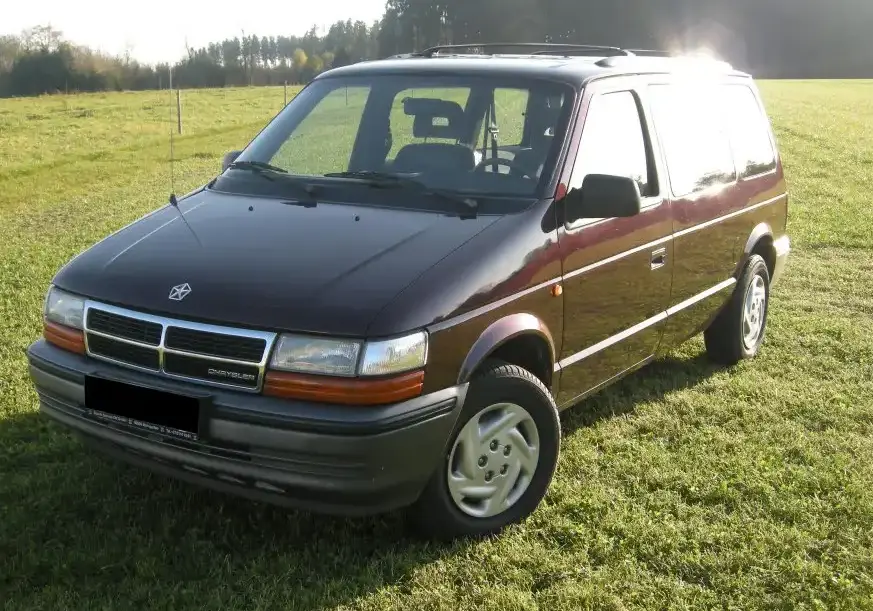
The Chrysler Voyager IV 2.4 i 16V Automatic, produced between 2001 and 2008, represents a significant iteration of Chrysler’s popular minivan offering. Positioned as a mid-range trim within the fourth-generation Voyager (often marketed as the Chrysler Voyager in Europe and other international markets, while the domestic US market primarily saw the Chrysler Town & Country), this variant aimed to balance affordability with a reasonable level of equipment and performance. It was built on the NS platform, shared with the Dodge Caravan and Plymouth Voyager, and served as a practical family vehicle in a competitive segment. This specific configuration – the 2.4-liter inline-four engine paired with a four-speed automatic transmission – was designed to appeal to buyers prioritizing fuel efficiency and ease of driving over outright performance.
Technical Specifications
| Brand | Chrysler |
| Model | Voyager |
| Generation | Voyager IV |
| Type (Engine) | 2.4 i 16V (147 Hp) Automatic |
| Start of production | 2001 |
| End of production | 2008 |
| Powertrain Architecture | Internal Combustion engine |
| Body type | Minivan |
| Seats | 7 |
| Doors | 5 |
| Fuel consumption (urban) | 16.2 l/100 km (14.5 US mpg, 17.4 UK mpg, 6.2 km/l) |
| Fuel consumption (extra urban) | 10.2 l/100 km (23.1 US mpg, 27.7 UK mpg, 9.8 km/l) |
| Fuel consumption (combined) | 12.5 l/100 km (18.8 US mpg, 22.6 UK mpg, 8 km/l) |
| CO2 emissions | 297 g/km |
| Fuel Type | Petrol (Gasoline) |
| Acceleration 0 – 100 km/h | 14.1 sec |
| Acceleration 0 – 62 mph | 14.1 sec |
| Acceleration 0 – 60 mph | 13.4 sec |
| Maximum speed | 177 km/h (109.98 mph) |
| Weight-to-power ratio | 11.9 kg/Hp, 84 Hp/tonne |
| Weight-to-torque ratio | 8 kg/Nm, 124.6 Nm/tonne |
| Power | 147 Hp @ 5200 rpm |
| Power per litre | 60.5 Hp/l |
| Torque | 218 Nm @ 4000 rpm (160.79 lb.-ft. @ 4000 rpm) |
| Engine layout | Front, Transverse |
| Engine Model/Code | EDZ |
| Engine displacement | 2429 cm3 (148.23 cu. in.) |
| Number of cylinders | 4 |
| Engine configuration | Inline |
| Cylinder Bore | 87.5 mm (3.44 in.) |
| Piston Stroke | 101 mm (3.98 in.) |
| Compression ratio | 9.5:1 |
| Number of valves per cylinder | 4 |
| Fuel injection system | Multi-port manifold injection |
| Engine aspiration | Naturally aspirated engine |
| Valvetrain | DOHC |
| Engine oil capacity | 4.7 l (4.97 US qt | 4.14 UK qt) |
| Coolant capacity | 10.7 l (11.31 US qt | 9.41 UK qt) |
| Kerb Weight | 1750 kg (3858.09 lbs.) |
| Max. weight | 2450 kg (5401.33 lbs.) |
| Max load | 700 kg (1543.24 lbs.) |
| Trunk (boot) space – minimum | 445 l (15.72 cu. ft.) |
| Trunk (boot) space – maximum | 4080 l (144.08 cu. ft.) |
| Fuel tank capacity | 75 l (19.81 US gal | 16.5 UK gal) |
| Length | 4805 mm (189.17 in.) |
| Width | 1995 mm (78.54 in.) |
| Height | 1750 mm (68.9 in.) |
| Wheelbase | 2880 mm (113.39 in.) |
| Front track | 1600 mm (62.99 in.) |
| Rear (Back) track | 1625 mm (63.98 in.) |
| Drivetrain Architecture | Front wheel drive |
| Number of gears | 4 |
| Gearbox type | Automatic transmission |
| Front suspension | Spring Strut |
| Rear suspension | Leaf spring |
| Front brakes | Ventilated discs |
| Rear brakes | Drum |
| Assisting systems | ABS (Anti-lock braking system) |
| Steering type | Steering rack and pinion |
| Power steering | Hydraulic Steering |
| Tires size | 215/65 R16 |
| Wheel rims size | 16 |
Powertrain & Engine Architecture
The heart of the Voyager IV 2.4 i is the Chrysler EDZ engine, a 2.4-liter inline-four cylinder powerplant. This engine utilizes a dual overhead camshaft (DOHC) valvetrain with four valves per cylinder, contributing to its relatively efficient breathing. Fuel delivery is managed by a multi-point fuel injection system, providing precise fuel metering for improved combustion. The EDZ engine, while not known for its high performance, was designed for durability and reliability. The four-speed automatic transmission, a common unit in Chrysler vehicles of this era, was selected for its smooth operation and ease of use, catering to a broader audience than a manual transmission. The transmission’s gear ratios were optimized for fuel economy and comfortable cruising, rather than rapid acceleration.
Driving Characteristics
The 2.4-liter engine and four-speed automatic combination in the Voyager IV delivered adequate, but not exhilarating, performance. Acceleration from 0-60 mph took approximately 13.4 to 14.1 seconds, making it slower than Voyager trims equipped with the 3.3-liter V6. The automatic transmission’s shift points were programmed for economy, resulting in a generally smooth but sometimes hesitant response during overtaking maneuvers. The relatively low horsepower and torque figures meant that fully loaded with passengers and cargo, the Voyager could feel strained, particularly when climbing hills. However, for everyday driving and city commuting, the powertrain proved perfectly serviceable. The focus was on providing a comfortable and predictable driving experience.
Equipment & Trim Levels
The 2.4 i Automatic trim typically included features such as air conditioning, power windows and locks, an AM/FM stereo with cassette player (often upgraded with a CD player), and basic cloth upholstery. Safety features included dual front airbags and ABS brakes. Optional extras included alloy wheels, a sunroof, upgraded audio systems, and rear air conditioning. The interior was generally functional and durable, prioritizing practicality over luxury. The Voyager IV offered a spacious cabin with seating for seven passengers, making it a popular choice for families.
Chassis & Braking
The Voyager IV utilized a front-wheel-drive layout with a relatively simple suspension setup. The front suspension employed a MacPherson strut design, while the rear suspension utilized a leaf spring configuration. This setup prioritized ride comfort and load-carrying capacity over sporty handling. Braking duties were handled by ventilated discs at the front and drum brakes at the rear. The ABS system provided enhanced braking control, particularly on slippery surfaces. The steering was rack-and-pinion with hydraulic power assistance, offering reasonably light and precise steering feel.
Market Reception & Comparison
The 2.4-liter Voyager IV Automatic received mixed reviews. Critics generally praised its affordability, spacious interior, and comfortable ride. However, the engine’s lack of power was a common complaint, particularly when compared to the more powerful V6 options. Fuel economy was considered average for its class. Compared to the 3.3-liter V6 models, the 2.4 i offered significantly lower performance but also a lower purchase price and slightly better fuel efficiency. The 2.4L was often seen as the entry-level option, appealing to budget-conscious buyers who didn’t require the extra power of the V6.
Legacy
The Chrysler Voyager IV 2.4 i Automatic, while not a performance standout, proved to be a reliable and practical family vehicle. The EDZ engine, while not without its quirks, generally held up well over time with proper maintenance. Today, these Voyagers can be found on the used car market at very affordable prices. Common issues include minor oil leaks, occasional transmission slippage, and wear and tear on suspension components. However, parts availability is generally good, and the relatively simple mechanical design makes it a relatively easy vehicle to maintain for DIY mechanics. The Voyager IV 2.4 i remains a viable option for those seeking an inexpensive and spacious minivan for basic transportation needs.