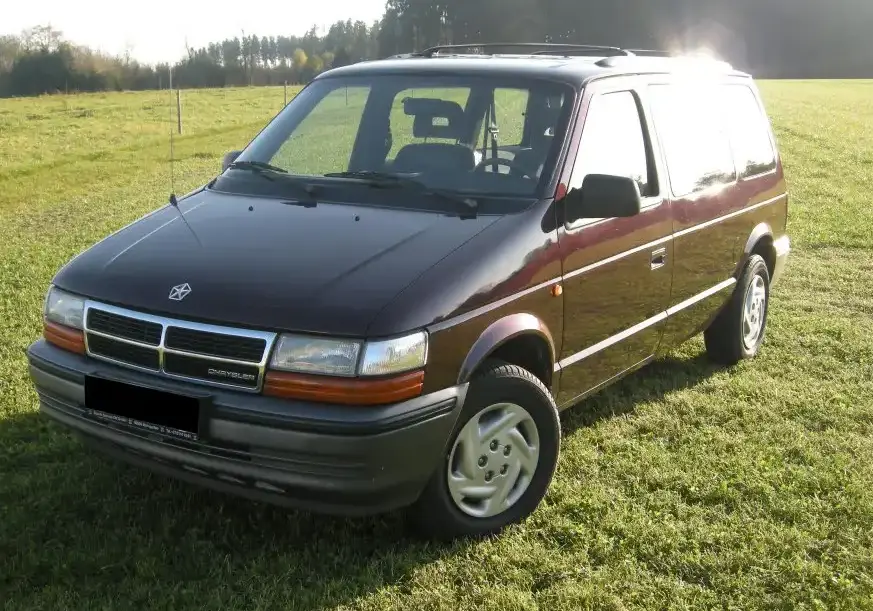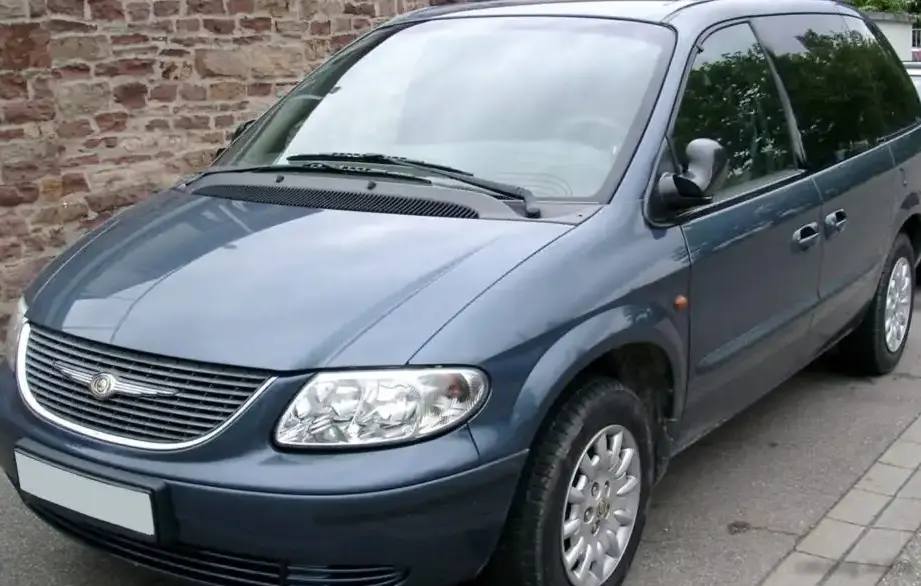
The Chrysler Voyager IV 2.5 CRD TD (143 hp) was a diesel-powered minivan produced between 2001 and 2008. Part of the fourth generation of the Voyager (often marketed as the Chrysler Grand Voyager in some regions), this variant occupied a middle ground in the lineup, offering a balance between fuel efficiency and practicality for families. It was primarily sold in European markets, where diesel engines were – and continue to be – highly popular for their economy and torque. The Voyager IV, built on the NS platform, represented a significant step forward in interior space and features compared to its predecessors.
Technical Specifications
| Brand | Chrysler |
| Model | Voyager |
| Generation | Voyager IV |
| Type (Engine) | 2.5 CRD TD (143 Hp) |
| Start of production | 2001 |
| End of production | 2008 |
| Powertrain Architecture | Internal Combustion engine |
| Body type | Minivan |
| Seats | 7 |
| Doors | 5 |
| Fuel consumption (urban) | 9.7 l/100 km (24.2 US mpg) |
| Fuel consumption (extra urban) | 6.4 l/100 km (36.8 US mpg) |
| Fuel consumption (combined) | 7.7 l/100 km (30.5 US mpg) |
| CO2 emissions | 203 g/km |
| Fuel Type | Diesel |
| Acceleration 0 – 100 km/h | 11.9 sec |
| Acceleration 0 – 62 mph | 11.9 sec |
| Acceleration 0 – 60 mph | 11.3 sec |
| Maximum speed | 185 km/h (114.95 mph) |
| Weight-to-power ratio | 12.9 kg/Hp |
| Weight-to-torque ratio | 5.8 kg/Nm |
| Power | 143 Hp @ 4000 rpm |
| Torque | 320 Nm @ 2000 rpm (236.02 lb.-ft. @ 2000 rpm) |
| Engine layout | Front, Transverse |
| Engine Model/Code | ENJ |
| Engine displacement | 2499 cm3 (152.5 cu. in.) |
| Number of cylinders | 4 |
| Engine configuration | Inline |
| Cylinder Bore | 92 mm (3.62 in.) |
| Piston Stroke | 94 mm (3.7 in.) |
| Compression ratio | 17.5:1 |
| Number of valves per cylinder | 2 |
| Fuel injection system | Diesel Commonrail |
| Engine aspiration | Turbocharger, Intercooler |
| Valvetrain | OHC |
| Engine oil capacity | 6 l (6.34 US qt | 5.28 UK qt) |
| Coolant | 13.8 l (14.58 US qt | 12.14 UK qt) |
| Kerb Weight | 1850 kg (4078.55 lbs.) |
| Max. weight | 2570 kg (5665.88 lbs.) |
| Max load | 720 kg (1587.33 lbs.) |
| Trunk (boot) space – minimum | 445 l (15.72 cu. ft.) |
| Trunk (boot) space – maximum | 4080 l (144.08 cu. ft.) |
| Fuel tank capacity | 75 l (19.81 US gal | 16.5 UK gal) |
| Length | 4805 mm (189.17 in.) |
| Width | 1995 mm (78.54 in.) |
| Height | 1750 mm (68.9 in.) |
| Wheelbase | 2880 mm (113.39 in.) |
| Front track | 1600 mm (62.99 in.) |
| Rear (Back) track | 1625 mm (63.98 in.) |
| Drivetrain Architecture | The Internal combustion engine (ICE) drives the front wheels of the vehicle. |
| Drive wheel | Front wheel drive |
| Number of gears and type of gearbox | 5 gears, manual transmission |
| Front suspension | Spring Strut |
| Rear suspension | Leaf spring |
| Front brakes | Ventilated discs |
| Rear brakes | Ventilated discs |
| Assisting systems | ABS (Anti-lock braking system) |
| Steering type | Steering rack and pinion |
| Power steering | Hydraulic Steering |
| Tires size | 195/65 R16 |
INTRODUCTION
The Chrysler Voyager IV 2.5 CRD TD, produced from 2001 to 2008, was a key offering in Chrysler’s European minivan lineup. It was built on the ‘NS’ platform, shared with other Chrysler and Dodge models of the era. This generation of Voyager aimed to provide a spacious and comfortable family vehicle, and the 2.5 CRD TD engine was introduced to cater to the European preference for diesel power. Positioned as a mid-range option, it sat below the more powerful petrol variants and above the base-level models, offering a compelling blend of economy and usability. The Voyager competed directly with other European MPVs like the Renault Espace, Ford Galaxy, and Volkswagen Sharan.
Powertrain & Engine Architecture
The heart of the Voyager IV 2.5 CRD TD is the ENJ engine, a 2.5-liter inline-four cylinder diesel. This engine utilizes a common rail direct injection (CRDI) system, a technology that significantly improved fuel efficiency and reduced noise compared to older diesel injection methods. The CRDI system, supplied by Bosch, injects fuel directly into the combustion chamber at extremely high pressure, resulting in a more complete burn and increased power output. The engine also features a turbocharger with an intercooler, which forces more air into the cylinders, further boosting performance. The overhead camshaft (OHC) valvetrain operates two valves per cylinder. The 2.5 CRD TD was paired with a five-speed manual transmission as standard, delivering power to the front wheels. The engine’s design prioritized torque delivery at lower RPMs, making it well-suited for hauling passengers and cargo.
Driving Characteristics
The 143 hp and 320 Nm (236 lb-ft) of torque produced by the 2.5 CRD TD engine provided adequate, though not exhilarating, performance for the Voyager IV. Acceleration from 0-60 mph took around 11.3 seconds, and top speed was limited to 185 km/h (115 mph). The five-speed manual transmission offered a reasonable spread of gears, but the engine’s relatively narrow power band meant frequent shifting was often necessary, especially when overtaking or climbing hills. Compared to the petrol-powered Voyagers, the 2.5 CRD TD offered significantly better fuel economy, but lacked the immediate responsiveness of the gasoline engines. The manual transmission, while efficient, didn’t offer the convenience of an automatic, which was available on some other Voyager trims. The suspension, tuned for comfort, provided a relatively smooth ride, but body roll was noticeable in corners due to the vehicle’s height and weight.
Equipment & Trim Levels
The 2.5 CRD TD Voyager IV typically came with a respectable level of standard equipment. This included air conditioning, power windows and locks, a basic audio system, and ABS brakes. Higher trim levels added features like alloy wheels, upgraded upholstery, a more sophisticated audio system with CD changer, and rear parking sensors. Interior upholstery was typically cloth, with optional leather available. The dashboard layout was functional and straightforward, with easy-to-read gauges and logically placed controls. The seven-seat configuration was standard, with the rear seats folding flat into the floor to maximize cargo space. Optional extras included a sunroof, cruise control, and a navigation system.
Chassis & Braking
The Voyager IV utilized a front-wheel-drive layout with a MacPherson strut suspension in the front and a leaf spring suspension in the rear. The leaf spring rear suspension was a cost-saving measure, and while it provided adequate load-carrying capacity, it didn’t offer the same level of ride refinement as a more sophisticated independent suspension. Braking duties were handled by ventilated discs on all four wheels, providing adequate stopping power. The ABS system helped to prevent wheel lockup during hard braking. Steering was via a hydraulic rack and pinion system, offering reasonable precision and feel. The Voyager IV’s tires were typically 195/65 R16, providing a good balance between comfort and handling.
Market Reception & Comparison
The Chrysler Voyager IV 2.5 CRD TD was generally well-received in European markets, particularly by families seeking a spacious and economical vehicle. Critics praised its fuel efficiency and practicality, but some noted its lack of outright performance compared to petrol-powered rivals. Compared to the higher-output petrol versions, the 2.5 CRD TD offered significantly better fuel economy – around 30.5 US mpg combined – but acceleration was noticeably slower. The diesel engine also tended to be noisier than the petrol engines, although the common rail injection system helped to mitigate this. Reliability was generally good, although some owners reported issues with the diesel particulate filter (DPF) and the fuel injection system.
Legacy
The Chrysler Voyager IV 2.5 CRD TD remains a relatively common sight on European roads today. The ENJ engine, while not without its quirks, proved to be reasonably durable with proper maintenance. The availability of spare parts is generally good, and the relatively simple mechanical design makes it accessible to independent mechanics. On the used car market, the 2.5 CRD TD Voyager IV represents a good value proposition for buyers seeking a spacious and economical family vehicle. However, potential buyers should be aware of the potential for DPF issues and ensure that the vehicle has been properly maintained. The Voyager IV, and specifically this diesel variant, helped solidify Chrysler’s presence in the European minivan market and paved the way for future generations of the vehicle.