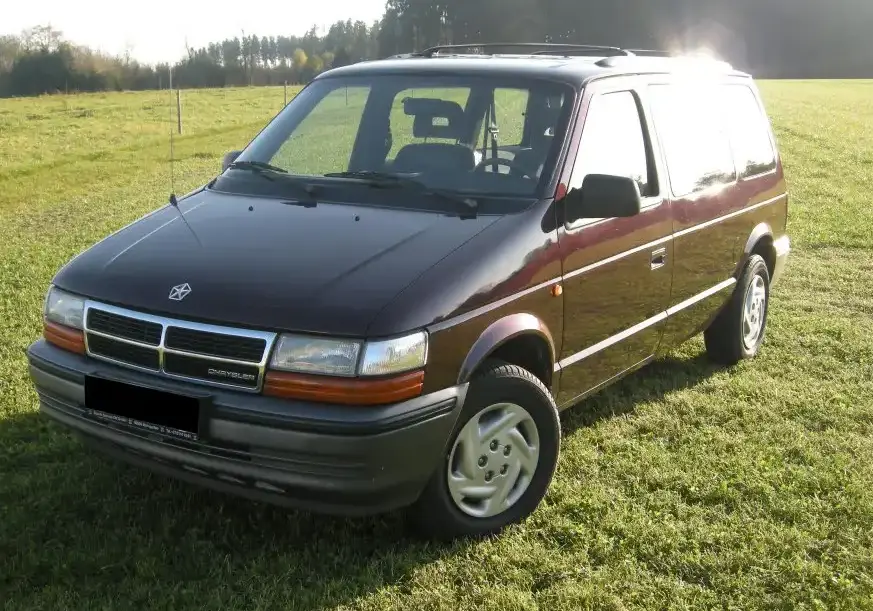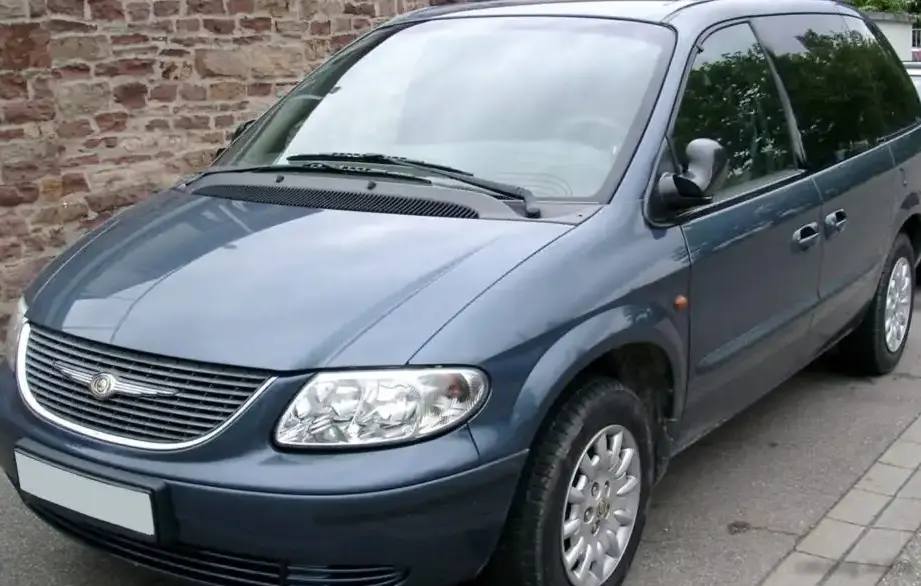
The Chrysler Voyager IV 2.8 CRD TD Automatic, produced between 2004 and 2007, represented a significant offering in the European minivan segment. Positioned as a practical and spacious family vehicle, this variant utilized a diesel engine paired with an automatic transmission, catering to buyers prioritizing convenience and fuel efficiency over outright performance. It was part of the fourth generation of the Voyager (known as the NS in Europe), built on the RG platform, and shared many components with the Dodge Caravan and Plymouth Grand Voyager sold in North America. This particular 2.8 CRD TD Automatic trim occupied a mid-range position within the Voyager IV lineup, offering a balance between features and cost, slotting below the more powerful petrol variants and above the base-level diesel models.
Technical Specifications
| Brand | Chrysler |
| Model | Voyager |
| Generation | Voyager IV |
| Type (Engine) | 2.8 CRD TD (150 Hp) Automatic |
| Start of production | 2004 |
| End of production | 2007 |
| Powertrain Architecture | Internal Combustion engine |
| Body type | Minivan |
| Seats | 7 |
| Doors | 5 |
| Fuel consumption (urban) | 11.3 l/100 km (20.8 US mpg, 25 UK mpg, 8.8 km/l) |
| Fuel consumption (extra urban) | 6.6 l/100 km (35.6 US mpg, 42.8 UK mpg, 15.2 km/l) |
| Fuel consumption (combined) | 8.4 l/100 km (28 US mpg, 33.6 UK mpg, 11.9 km/l) |
| CO2 emissions | 221 g/km |
| Fuel Type | Diesel |
| Acceleration 0 – 100 km/h | 11.9 sec |
| Acceleration 0 – 62 mph | 11.9 sec |
| Acceleration 0 – 60 mph | 11.3 sec |
| Maximum speed | 180 km/h (111.85 mph) |
| Weight-to-power ratio | 13.2 kg/Hp, 75.8 Hp/tonne |
| Weight-to-torque ratio | 5.5 kg/Nm, 181.8 Nm/tonne |
| Power | 150 Hp @ 3800 rpm |
| Power per litre | 54 Hp/l |
| Torque | 360 Nm @ 1800 rpm (265.52 lb.-ft. @ 1800 rpm) |
| Engine layout | Front, Transverse |
| Engine Model/Code | ENR |
| Engine displacement | 2776 cm3 (169.4 cu. in.) |
| Number of cylinders | 4 |
| Engine configuration | Inline |
| Cylinder Bore | 94 mm (3.7 in.) |
| Piston Stroke | 100 mm (3.94 in.) |
| Compression ratio | 17.5:1 |
| Number of valves per cylinder | 4 |
| Fuel injection system | Diesel Commonrail |
| Engine aspiration | Turbocharger, Intercooler |
| Engine oil capacity | 6 l (6.34 US qt | 5.28 UK qt) |
| Coolant | 13.8 l (14.58 US qt | 12.14 UK qt) |
| Kerb Weight | 1980 kg (4365.15 lbs.) |
| Max. weight | 2595 kg (5721 lbs.) |
| Max load | 615 kg (1355.84 lbs.) |
| Trunk (boot) space – minimum | 445 l (15.72 cu. ft.) |
| Trunk (boot) space – maximum | 4080 l (144.08 cu. ft.) |
| Fuel tank capacity | 75 l (19.81 US gal | 16.5 UK gal) |
| Length | 4805 mm (189.17 in.) |
| Width | 1995 mm (78.54 in.) |
| Height | 1750 mm (68.9 in.) |
| Wheelbase | 2880 mm (113.39 in.) |
| Front track | 1600 mm (62.99 in.) |
| Rear (Back) track | 1625 mm (63.98 in.) |
| Drivetrain Architecture | The Internal combustion engine (ICE) drives the front wheels of the vehicle. |
| Drive wheel | Front wheel drive |
| Number of gears and type of gearbox | 4 gears, automatic transmission |
| Front suspension | Spring Strut |
| Rear suspension | Leaf spring |
| Front brakes | Ventilated discs |
| Rear brakes | Ventilated discs |
| Assisting systems | ABS (Anti-lock braking system) |
| Steering type | Steering rack and pinion |
| Power steering | Hydraulic Steering |
| Tires size | 215/65 R16 |
Powertrain & Engine Architecture
The heart of the Voyager IV 2.8 CRD TD Automatic is the ENR engine, a 2.8-liter inline-four cylinder diesel. This engine utilized a common rail direct injection system, a technology that significantly improved fuel efficiency and reduced noise compared to older diesel injection methods. The common rail system, supplied by Bosch, maintained a high fuel pressure, allowing for precise fuel metering and optimized combustion. A turbocharger with an intercooler was employed to boost power output, increasing the engine’s air intake and improving torque. The engine produced 150 horsepower at 3800 rpm and a respectable 360 Nm (265.52 lb.-ft.) of torque at 1800 rpm. The automatic transmission was a four-speed unit, designed for smooth operation and ease of use. While not offering the efficiency of more modern transmissions, it was well-suited to the Voyager’s intended role as a comfortable family hauler.
Driving Characteristics
The 2.8 CRD TD Automatic Voyager IV offered a comfortable, if not particularly sporty, driving experience. The automatic transmission provided smooth gear changes, making it ideal for city driving and long journeys. Acceleration was adequate, with a 0-60 mph time of around 11.3 seconds, but it wasn’t designed for rapid acceleration. The engine’s torque delivery was strong at lower revs, making it easy to pull away from a standstill or overtake slower traffic. Compared to the petrol-powered Voyagers, the diesel offered significantly better fuel economy, but lacked the responsiveness of the higher-output gasoline engines. The four-speed automatic, while reliable, did result in higher engine speeds at highway cruising speeds compared to vehicles with more gears, potentially contributing to increased noise levels.
Equipment & Trim Levels
The 2.8 CRD TD Automatic trim typically included features such as air conditioning, power windows, power locks, and a basic audio system. Higher trim levels added features like alloy wheels, upgraded upholstery, a sunroof, and more advanced audio systems. Interior upholstery was generally cloth, with options for leather available on higher-spec models. The dashboard layout was functional and straightforward, prioritizing usability over aesthetics. Optional extras included rear entertainment systems, navigation systems, and parking sensors.
Chassis & Braking
The Voyager IV featured a front-wheel-drive layout with a MacPherson strut suspension at the front and a leaf spring suspension at the rear. The leaf spring rear suspension was a cost-effective solution for handling the vehicle’s weight and providing a comfortable ride, but it wasn’t as sophisticated as the independent suspension systems found on some competitors. Braking was provided by ventilated discs on all four wheels, along with an Anti-lock Braking System (ABS) for improved stopping power and control. The steering was rack and pinion with hydraulic power assistance, providing a reasonably light and responsive feel.
Market Reception & Comparison
The Chrysler Voyager IV 2.8 CRD TD Automatic was generally well-received in the European market as a practical and affordable family vehicle. Critics praised its spacious interior, comfortable ride, and fuel-efficient diesel engine. However, some reviewers noted the somewhat dated interior design and the lack of a more modern automatic transmission. Compared to other minivans in its class, such as the Renault Espace and the Volkswagen Sharan, the Voyager offered a competitive price point and a generous amount of space. The diesel engine provided better fuel economy than most of its petrol-powered rivals, making it an attractive option for high-mileage drivers.
Legacy
The Chrysler Voyager IV 2.8 CRD TD Automatic has proven to be a relatively reliable vehicle, with many examples still on the road today. The ENR diesel engine, while not without its quirks, is generally considered durable and capable of high mileage with proper maintenance. Common issues include fuel injector problems and wear on the turbocharger. The automatic transmission is also generally reliable, but regular fluid changes are essential to prevent premature failure. In the used car market, these Voyagers represent a good value for money, offering a lot of space and practicality for a relatively low price. However, potential buyers should be aware of the age of the vehicle and the potential for maintenance issues associated with older diesel engines and automatic transmissions.