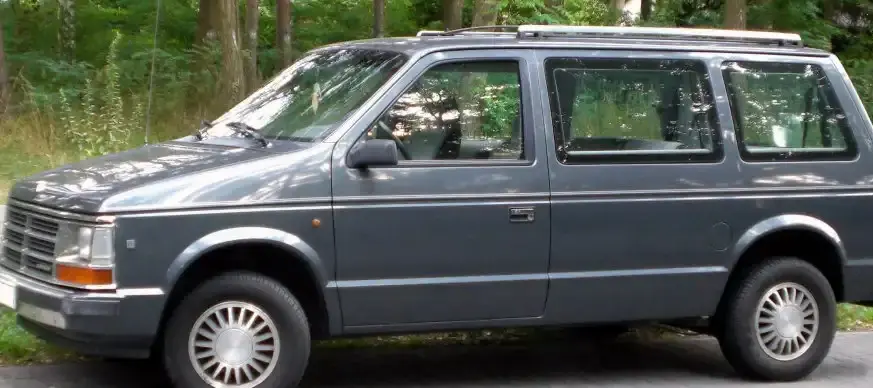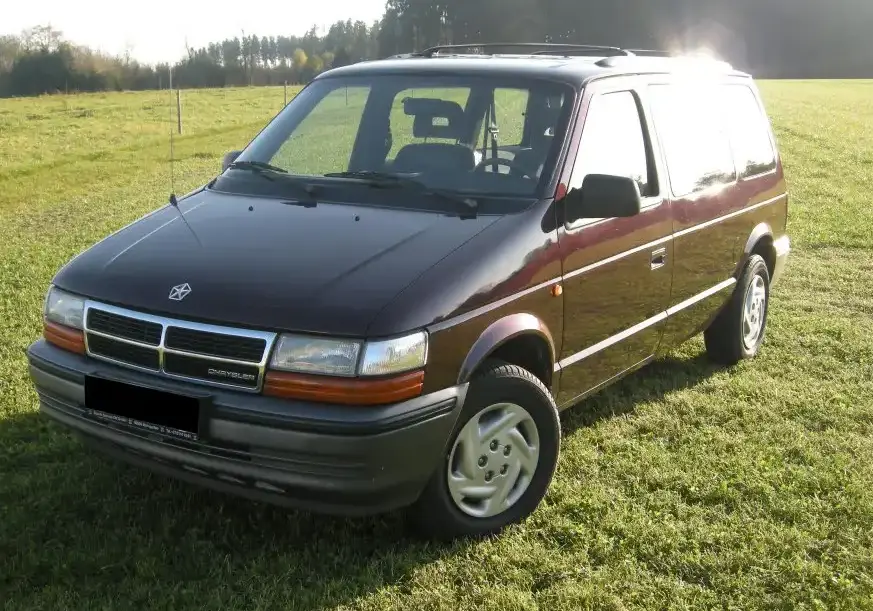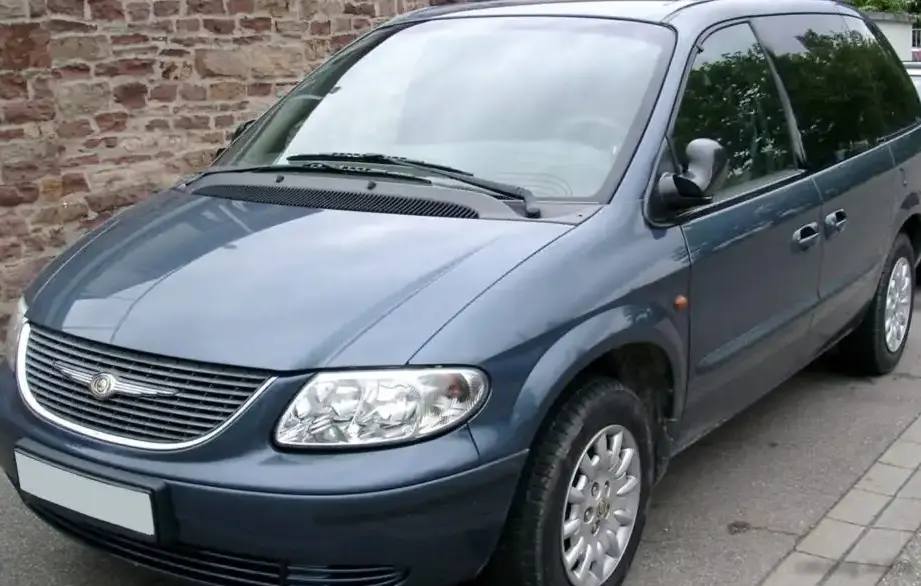
The Chrysler Voyager IV 3.3i V6 Automatic, produced between 2001 and 2007, represented a significant iteration of Chrysler’s popular minivan offering. Positioned as a mainstream, family-oriented vehicle, this variant occupied a middle ground within the Voyager IV lineup, offering a balance between performance and affordability. It was primarily sold in North America and Europe, competing with models like the Dodge Caravan, Honda Odyssey, and Toyota Sienna. The Voyager IV, built on the NS platform, aimed to provide a spacious and practical transportation solution for families, and the 3.3L V6 automatic powertrain was a common configuration for buyers prioritizing ease of use over outright performance.
Technical Specifications
| Brand | Chrysler |
| Model | Voyager |
| Generation | Voyager IV |
| Type (Engine) | 3.3 i V6 (174 Hp) Automatic |
| Start of production | 2001 |
| End of production | 2007 |
| Powertrain Architecture | Internal Combustion engine |
| Body type | Minivan |
| Seats | 7 |
| Doors | 5 |
| Fuel consumption (urban) | 17.3 l/100 km (13.6 US mpg) |
| Fuel consumption (extra urban) | 9.5 l/100 km (24.8 US mpg) |
| Fuel consumption (combined) | 12.4 l/100 km (19 US mpg) |
| CO2 emissions | 294 g/km |
| Fuel Type | Petrol (Gasoline) |
| Acceleration 0 – 100 km/h | 12.6 sec |
| Acceleration 0 – 62 mph | 12.6 sec |
| Acceleration 0 – 60 mph | 12 sec |
| Maximum speed | 179 km/h (111.23 mph) |
| Weight-to-power ratio | 10.3 kg/Hp |
| Weight-to-torque ratio | 6.5 kg/Nm |
| Power | 174 Hp @ 5100 rpm |
| Torque | 278 Nm @ 4000 rpm (205.04 lb.-ft. @ 4000 rpm) |
| Engine layout | Front, Transverse |
| Engine Model/Code | EGA |
| Engine displacement | 3301 cm3 (201.44 cu. in.) |
| Number of cylinders | 6 |
| Engine configuration | V-engine |
| Cylinder Bore | 93 mm (3.66 in.) |
| Piston Stroke | 81 mm (3.19 in.) |
| Compression ratio | 9.4:1 |
| Number of valves per cylinder | 2 |
| Fuel injection system | Multi-port manifold injection |
| Engine aspiration | Naturally aspirated engine |
| Valvetrain | OHC |
| Engine oil capacity | 4.7 l (4.97 US qt | 4.14 UK qt) |
| Coolant capacity | 12.6 l (13.31 US qt | 11.09 UK qt) |
| Kerb Weight | 1800 kg (3968.32 lbs.) |
| Trunk (boot) space – minimum | 445 l (15.72 cu. ft.) |
| Trunk (boot) space – maximum | 4080 l (144.08 cu. ft.) |
| Fuel tank capacity | 75 l (19.81 US gal | 16.5 UK gal) |
| Length | 4805 mm (189.17 in.) |
| Width | 1995 mm (78.54 in.) |
| Height | 1750 mm (68.9 in.) |
| Wheelbase | 2880 mm (113.39 in.) |
| Front track | 1600 mm (62.99 in.) |
| Rear track | 1625 mm (63.98 in.) |
| Drivetrain Architecture | Front wheel drive |
| Number of gears | 4 |
| Gearbox type | Automatic transmission |
| Front suspension | Spring Strut |
| Rear suspension | Leaf spring |
| Front brakes | Ventilated discs |
| Rear brakes | Drum |
| Assisting systems | ABS (Anti-lock braking system) |
| Steering type | Steering rack and pinion |
| Power steering | Hydraulic Steering |
| Tires size | 215/65 R15 |
INTRODUCTION
The Chrysler Voyager IV 3.3i V6 Automatic, manufactured from 2001 to 2007, was a key model in Chrysler’s minivan lineup. It was built on the NS platform, shared with the Dodge Caravan and Town & Country, and represented the fourth generation of the Voyager. This generation saw improvements in interior space, safety features, and overall refinement compared to its predecessors. The 3.3-liter V6 engine paired with a four-speed automatic transmission was a popular choice for buyers seeking a comfortable and practical family vehicle. It aimed to provide a balance between fuel economy and adequate power for everyday driving needs.
Powertrain & Engine Architecture
The heart of this Voyager variant is the 3.3-liter EGA V6 engine. This engine, a member of Chrysler’s robust V6 family, features a 90-degree V-configuration, two valves per cylinder, and a single overhead camshaft (OHC) design. It utilizes a multi-port fuel injection system, delivering fuel directly to each intake port for improved combustion efficiency. The engine produces 174 horsepower at 5100 rpm and 278 Nm (205 lb-ft) of torque at 4000 rpm. The four-speed automatic transmission (typically the 42RE) was chosen for its smooth operation and ease of use, catering to a broader audience than the available manual transmission options. The transmission’s gear ratios were optimized for comfortable cruising and adequate acceleration, though it wasn’t designed for sporty performance. The engine’s 9.4:1 compression ratio was a compromise between performance and the ability to run on regular unleaded gasoline.
Driving Characteristics
The 3.3L V6 automatic Voyager IV delivers a comfortable, if not particularly exhilarating, driving experience. Acceleration from 0-60 mph takes around 12 seconds, which is adequate for merging onto highways and navigating city streets. The four-speed automatic transmission provides smooth shifts, but can feel somewhat dated compared to more modern transmissions with additional gears. The torque converter multiplies engine torque, providing good low-end responsiveness for everyday driving. Compared to the higher-output 3.8L V6 versions, the 3.3L feels noticeably less powerful, especially when fully loaded with passengers and cargo. However, the 3.3L’s lower weight and simpler design contribute to slightly better fuel economy. The front-wheel-drive configuration provides predictable handling, but doesn’t offer the dynamic capabilities of all-wheel-drive systems found in some competitors.
Equipment & Trim Levels
The 3.3i V6 Automatic Voyager IV typically came standard with features such as air conditioning, power windows and locks, an AM/FM stereo with a CD player, and basic cloth upholstery. Higher trim levels, such as the EX, added features like alloy wheels, upgraded audio systems, power sliding doors, and leather upholstery. Optional extras included a rear entertainment system, sunroof, and upgraded seating configurations. The interior design was functional and family-friendly, with ample storage compartments and cupholders. Safety features included dual front airbags and anti-lock brakes (ABS).
Chassis & Braking
The Voyager IV utilized a front-wheel-drive chassis with an independent front suspension featuring MacPherson struts and a leaf spring rear suspension. This suspension setup prioritized ride comfort over sporty handling. The front brakes were ventilated discs, providing adequate stopping power, while the rear brakes were drum brakes, a cost-saving measure common in this class of vehicle. The steering system was a hydraulic rack-and-pinion setup, offering reasonable steering feel and responsiveness. The standard tire size was 215/65R15, providing a balance between ride comfort and handling.
Market Reception & Comparison
The Chrysler Voyager IV 3.3i V6 Automatic was generally well-received by critics as a practical and affordable family minivan. However, its performance was often criticized as being underwhelming compared to some competitors, particularly those with larger engines. Fuel economy was considered average for its class. Compared to the 3.8L V6 versions, the 3.3L offered a lower purchase price and slightly better fuel efficiency, but at the expense of performance. The 3.3L was also generally more reliable than the 3.8L, which was prone to certain engine issues. Against competitors like the Honda Odyssey and Toyota Sienna, the Voyager IV offered a more affordable price point but lacked some of the refinement and reliability of the Japanese models.
Legacy
The Chrysler Voyager IV 3.3i V6 Automatic remains a relatively common sight on used car lots today. The 3.3L V6 engine is generally considered to be a reliable powertrain, although regular maintenance is essential to prevent issues. Common maintenance items include oil changes, coolant flushes, and transmission fluid changes. The four-speed automatic transmission is also generally reliable, but can experience issues with age and high mileage. Overall, the Voyager IV 3.3i V6 Automatic represents a solid value for buyers seeking an affordable and practical family minivan, but potential buyers should be aware of the vehicle’s age and potential maintenance needs.